Categories
cardio cardio & endurance cycling exercises Fitness fitness-tips home workout men recovery & wellness running workouts

Cycling vs. Running: Which Is Better for Men?

When it comes to building cardio & endurance, few workouts compete with running and cycling. They’re both highly effective, scalable, and accessible for men at any fitness level. But how do you know which one suits your goals, body type, and schedule best?

This guide breaks down the benefits, differences, and real-world instructions to help you make the best decision for your training routine.

  1. Cardiovascular & Endurance Benefits

Both activities will boost heart health, stamina, and aerobic capacity—but they work your body differently.

Running

Benefit: Builds cardiovascular strength quickly

Best for: High-intensity workouts, fat loss, time-efficient routines

Instruction:

Start with a 20-minute jog at conversational pace, 3x/week.

Add one session of intervals (e.g., 30 sec sprint, 90 sec walk, repeat 6–8x).

Warm up and cool down with 5–10 minutes of walking.

Cycling

Benefit: Strengthens heart and lungs without joint stress

Best for: Long sessions, injury prevention, steady-state endurance

Instruction:

Start with 30-minute bike sessions at a comfortable, consistent pace, aiming for a smooth pedaling rhythm of around 80 to 90 revolutions per minute.

Gradually increase time/distance weekly by 10–15%.

Include one hill or resistance ride weekly to build leg power.

  1. Muscle Activation and Joint Impact

Running

Involves high-impact movement and activates key lower-body muscles like the calves, hamstrings, and glutes, while also requiring core stability.

Caution: May cause joint wear, especially in knees and hips.

Instruction:

Invest in high-quality running shoes with arch and heel support.

Stick to softer surfaces (dirt trails, tracks) 2–3 days/week.

Incorporate strength training (e.g., lunges, squats) twice a week to reduce injury risk.

Cycling

Low-impact; activates quads, glutes, and calves.

Ideal for recovery days or post-injury training.

Instruction:

Adjust seat height: When pedaling, your leg should be almost fully extended at the bottom.

Use clip-in pedals for efficiency once you’re comfortable.

Add core work (planks, bridges) to balance muscle engagement.

  1. Calorie Burn and Fat Loss

Running

Burns more calories per minute.

Best for quick fat reduction.

Instruction:

Combine steady-state runs (20–30 min) with intervals 1–2x/week.

Monitor effort using heart rate or RPE (Rate of Perceived Exertion: aim for 7–8 during intervals).

Keep rest days to recover and avoid burnout.

Cycling

Lower calorie burn per minute, but can ride longer and more often.

Instruction:

Aim for 45–60 min moderate rides or 30 min intense sessions.

Use apps like Strava or Zwift to track output (watts, distance, elevation).

Try fasted morning rides (if approved by a physician) for fat burning.

  1. Convenience and Lifestyle Fit

Running

Minimal gear and planning. Great for travel or urban life.

Instruction:

Keep a backup pair of running shoes in your car or office.

Use running apps with GPS tracking to find new routes wherever you are.

Don’t run on consecutive days at first — allow recovery time.

Cycling
More planning involved (gear, route, safety) but can be more enjoyable for longer durations.

Instruction:

Start with a hybrid or road bike — get a professional fit if possible.

Make sure to wear a helmet at all times, and equip your bike with lights or reflective accessories when riding in dim or dark conditions.

Join a local group ride once a week to stay motivated.

  1. Sample Weekly Routine (Beginner to Intermediate)

Day Workout

Monday Rest or 20-min light recovery ride

Tuesday 30-min run (moderate pace)

Wednesday 45-min cycle (steady pace)

Thursday Strength training + core

Friday 20-min interval run

Saturday 60-min cycle (with hills)

Sunday Active recovery walk/stretch

Final Thoughts: Which Is Better?

There’s no universal winner. Both cycling and running help men build cardio & endurance, stay lean, and improve mental focus. The right choice is the one you’ll stick with, enjoy, and benefit from long term.

TL;DR:

Choose Running if you want quick workouts, fat loss, and don’t mind impact.

Many men find the perfect mix by alternating both: running for intensity, cycling for recovery and endurance.

Pro Tips for Men Getting Started

Stretch after every session to improve recovery

Hydrate before, during, and after workouts

Fuel smart: Eat carbs 1–2 hours pre-workout; protein post

Aim for 7 to 8 hours of quality sleep each night to support recovery and maintain healthy hormone levels.

Stay consistent — results build with time, not perfection

Categories
cardio & endurance exercises Fitness flexibility men runners training

Beginner’s Guide to Running for Men

If you’re a man looking to boost your fitness, improve your cardio and endurance, and embrace a healthier lifestyle, running is one of the most accessible and effective ways to start. Whether you’re new to exercise or returning after a break, this guide will help you build a strong foundation with practical tips, proven techniques, and a clear understanding of the benefits that running offers.

Why Running?

Running isn’t just about pounding the pavement. It’s a powerful tool for enhancing your cardiovascular health, building endurance, managing weight, and even improving mental wellness. For men, consistent running supports overall fitness by strengthening the heart, lungs, and muscles — helping you feel energized throughout the day.

Step-by-Step Instructions to Start Running

Step 1: Prepare Your Gear

Footwear: Choose running shoes that match your foot shape and provide ample cushioning and stability. If you can, have your walking or running style evaluated at a specialized store to find the best fit.

Apparel: Opt for breathable, moisture-managing fabrics that help keep your body cool and prevent chafing during runs.

Step 2: Warm Up Properly

Begin your warm-up with gentle activities like a brisk walk or light jog for around 5 to 10 minutes to get your muscles ready for running.

Follow this with dynamic stretches, such as leg swings, walking lunges, or arm circles, to loosen muscles.

Step 3: Begin with a Run-Walk Routine

Begin your workout by alternating between running and walking to gradually increase your stamina while avoiding excessive strain. For example:

Run for 1 minute

Walk for 2 minutes

Repeat for 20-30 minutes

As your fitness level rises, slowly extend the periods of running while shortening the walking breaks.

Step 4: Focus on Running Form

Keep your posture upright but relaxed.

Look ahead rather than down.

Swing your arms naturally at your sides.

Land mid-foot or forefoot to reduce impact.

Step 5: Cool Down and Stretch

Following your run, spend about 5 minutes walking to help lower your heart rate gradually.

Stretch major muscle groups like calves, hamstrings, quads, and hips to improve flexibility and reduce soreness.

Step 6: Build a Routine

Aim to run 3 times a week, with rest or cross-training days in between.

Track your runs with a journal or app to monitor progress and stay motivated.

The Benefits of Cardio & Endurance Training for Men

Running is a top cardio exercise that challenges your heart and lungs, boosting their capacity over time. As your endurance improves, everyday tasks become easier, and you’re less likely to feel tired or sluggish.

Moreover, regular running can help:

Lower blood pressure and cholesterol levels

Improve insulin sensitivity

Support mental clarity and reduce stress

Enhance muscle tone and bone strength

Staying Motivated and Safe

Motivation can fluctuate, but setting small milestones, tracking progress with a running app, or joining a local running group can keep you accountable. Also, listen to your body — soreness is normal, but sharp pain isn’t. Rest days are essential for recovery and preventing burnout.

Wrapping Up

Running goes beyond exercise—it’s a way of life that promotes overall health and well-being for men at any stage. With steady commitment and mindful pacing, you’ll build both your stamina and mental strength. So put on your shoes, take it one step at a time, and embrace the path to a fitter, stronger you.

Categories
Bands Fitness fitness-tips gear & reviews home workout men mobility workouts

Top 5 Men’s Resistance Bands for Home Workouts

Looking to build strength, improve mobility, or just stay in shape at home? Resistance bands are an underrated powerhouse for men’s fitness. They’re affordable, portable, and surprisingly effective—whether you’re a beginner or serious about your training.

This guide covers the top 5 resistance bands for men, along with usage instructions, tips, and expert techniques to help you get the most from each workout.

Top 5 Resistance Bands for Men

  1. Rogue Monster Bands

Best for: Serious strength training

Why we like them: These are the gold standard for powerlifters and serious lifters. The thick latex offers a ton of resistance and can be used for banded squats, deadlifts, or push-up variations.

How to use:

Anchor under your feet for curls or overhead presses.

Wrap around a pull-up bar for assisted pull-ups.

Use to add tension during barbell lifts.

Pro Tip: Start with the red or black bands before jumping to the thicker ones.

  1. TRX Strength Bands

Best for: Functional, full-body workouts

Why we like them: TRX’s premium bands have great stretch and grip, perfect for multi-plane movements. They’re long enough for upper and lower body exercises without feeling restrictive.

How to use:

Step on the center and hold each end for squats, rows, or presses.

Attach to a door anchor for chest flies or face pulls.

Use in lateral walks or lunges for core and glute engagement.

Pro Tip: Combine bands with TRX’s digital workouts for guided sessions.

  1. Undersun Fitness Bands

Best for: Replacing a full home gym

Why we like them: Designed by fitness pro James Grage, these bands come with a full training program. They’re ideal for guys who want a no-excuses, high-performance home setup.

How to use:

Loop around feet or overhead anchors for full-body push/pull workouts.

Use progressive resistance by shortening the band’s length.

Pair with Undersun’s app for structured workouts.

Pro Tip: The orange and gray bands offer solid resistance for strength-focused routines.

  1. Iron Bull Strength Bands

Best for: Powerlifting support and bodybuilding

Why we like them: These bands are rugged and strong, perfect for accommodating resistance in compound lifts. If you’re looking to boost deadlift lockout or add intensity to squats, these are your go-to.

How to use:

Loop around a barbell for squats, bench, or deadlifts.

Attach to a rack for triceps pushdowns or lat pulldowns.

Anchor for explosive speed training.

Pro Tip: These are best used with racks, platforms, or stable anchors.

  1. Fit Simplify Loop Bands

Best for: Warm-ups, mobility, and recovery

Why we like them: These small-loop bands are ideal for glute activation, shoulder stability, and rehab. Lightweight but effective, they’re great for beginners or as part of your warm-up routine.

How to use:

Loop around legs for side steps or monster walks.

Use for shoulder or hip mobility drills.

Perform high-rep sets for muscle activation before lifting.

Pro Tip: Use the lightest band for joint prep, and double up for more resistance.

How to Train with Resistance Bands

No matter which band you choose, here are basic instructions and tips to get started:

Basic Setup

Choose your resistance: Start light and scale up.

Anchor properly: Use a secure door, rack, or your feet.

Control the movement: Maintain tension throughout the motion.

Full range of motion: Don’t shortchange reps—stretch the band fully.

Beginner Workout Example (Full Body – 20 Minutes)

Do 3 rounds of the following (rest 30–60 seconds between sets):

Band Squats – 12 reps

Resistance Band Rows – 10 reps each side

Push-Up with Band Resistance – 10 reps

Banded Lateral Walks – 12 steps each way

Overhead Press – 12 reps

Tips & Techniques

Warm up first: Use light bands for joint prep.

Breathe properly: Exhale during the effort (e.g., pushing or pulling).

Mix resistance levels: Use lighter bands for mobility, heavier ones for strength.

Track progress: Add reps or resistance weekly.

Anchor safely: Avoid snapping by securing bands properly and checking for wear.

Final Thoughts

Resistance bands are one of the best tools men can use for strength, flexibility, and recovery—all without leaving home. Whether you’re just starting out or building serious muscle, there’s a band (or set) here that can match your goals.

Ready to ditch the excuses? Grab a band, follow the tips above, and take your home workout to the next level.

Categories
busy schedules Fitness fitness-tips foam roller recovery recovery & wellness

How to Use a Foam Roller for Busy Schedules

In the rush of everyday life, recovery often gets pushed to the side. But the truth is, you don’t need an hour-long massage or a spa day to feel better. For those with busy schedules, foam rolling is one of the most efficient tools for maintaining your fitness and overall global recovery & wellness—and it takes just minutes.

Why Foam Rolling Matters When You’re Busy

Foam rolling, or self-myofascial release, helps reduce muscle tightness, improve circulation, and enhance mobility. It’s fast, low-effort, and you can do it virtually anywhere—perfect for people who don’t have time to spare.

3 Foam Rolling Routines You Can Fit Into Any Day

  1. Morning Wake-Up (5 Minutes)

Goal: Loosen up after sleep and get your blood flowing.

Instructions:

Upper Back (Thoracic Spine)

Lie down with the foam roller under your upper back, perpendicular to your spine.

Place your hands behind your head for support, raise your hips off the ground, and slowly roll from the shoulder blades toward the middle of your back

Roll for 30–60 seconds.

Quads (Front of Thighs)

Quads (Front of Thighs)

Start by lying on your stomach with the foam roller positioned beneath your thighs.

Gently roll from just above your knees up toward the tops of your thighs, near your hips.

For a deeper massage, try focusing on one leg at a time.

Aim to spend about 1 to 2 minutes total on this area.

Calves

Use your hands to lift your hips slightly, then roll slowly from your ankles to just below your knees.

Pause briefly on any tight or sore spots to release tension.

Lift your hips slightly off the floor and roll from your ankles to just below your knees.

Pause on tight spots.

Roll for 30–60 seconds per leg.

  1. Desk Break Routine (3 Minutes)

Goal: Counteract long sitting hours and improve circulation.

Instructions:

Hamstrings

Sit with one leg extended and the foam roller under your hamstring.

Slowly glide the roller from the area just behind your knee up toward your glute muscles.

Switch legs after 30 seconds.

Glutes (Hip Area)

Position yourself seated on the foam roller, then place your right ankle over your left knee to form a figure-four shape.

Lean slightly into the side you’re rolling.

Move gently in both directions for about 30 to 60 seconds on each side.

Mid-Back Stretch

Lie back on the roller and open your arms wide for a passive chest opener.

Hold this position for about 30 seconds to help release tension and gently open up your posture

  1. Evening Wind Down (10 Minutes)

Goal: Release tension and prepare your body for better sleep.

Instructions:

IT Band (Outer Thigh)

Position yourself on your side and place the foam roller beneath the outside of your thigh.

Roll from just below your hip to above your knee.

Use your opposite leg and arms for support.

Roll each side for 1 minute.

Upper Back / Shoulders

Lie back on the roller and focus more toward the upper traps and rear delts.

Gently move side-to-side to massage the area.

Roll for 1 minute.

Lower Back + Hips (Gently)

Sit on the roller and slowly move over the sacrum (just above your tailbone).

Stay gentle—this area is sensitive.

Roll for 30 seconds.

Feet (Optional)

Using a smaller roller or massage ball, gently massage the bottoms of your feet while sitting or standing.

Spend 30 seconds per foot—a great way to unwind.

Tips to Make Foam Rolling Stick with a Busy Schedule

Leave the Roller Out: Seeing it reminds you to use it.

Use Time Anchors: Pair foam rolling with routines you already have (like morning coffee or pre-bed stretching).

Short Sessions Matter: Even 2 minutes makes a difference.

Keep It Portable: A travel-sized foam roller fits in a gym bag, suitcase, or under your desk.

Final Thoughts

Recovery doesn’t need to be complicated or time-consuming. With just a few minutes a day, foam rolling supports global recovery & wellness, reduces the risk of injury, and helps you feel more mobile—even with a packed schedule.

Whether you’re chasing fitness goals or just trying to feel better after long workdays, this simple habit makes a lasting impact. Foam rolling isn’t just for athletes—it’s for anyone trying to stay active, healthy, and well.

Categories
cardio & endurance Fitness Treadmill yogis

Treadmill Workout for Yogis

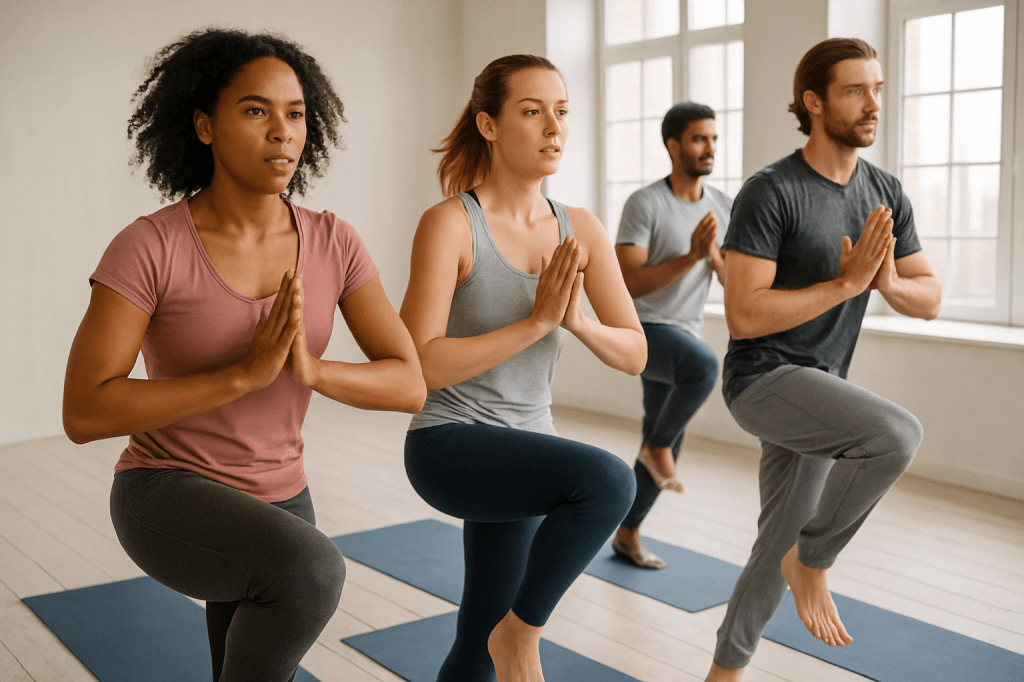
Yoga often centers on mindfulness, flexibility, and balance—but what if you could add cardio and endurance training that complements your practice without losing that sense of calm? A treadmill workout tailored for yogis can be the perfect way to boost your fitness while maintaining your mindful approach.

Why Yogis Should Add Cardio

While yoga enhances strength and flexibility, it doesn’t always provide enough cardiovascular challenge. Adding treadmill workouts helps build heart and lung endurance, improves circulation, and increases overall stamina—all of which support a more vibrant, longer-lasting yoga session.

How to Do a Treadmill Workout for Yogis: Step-by-Step

Instructions

This workout is designed to blend mindful movement with effective cardio. Take your time, focus on your breath, and move with intention.

  1. Warm-Up (5 minutes)

Set the treadmill to a gentle walking pace, around 2 to 2.5 miles per hour.

Focus: Breathe deeply and evenly, swinging your arms naturally.

Maintain an upright posture with relaxed shoulders and a lengthened spine, similar to the alignment in Mountain Pose (Tadasana).

Mindfulness: Tune into how your feet feel with each step.

  1. Interval Jog-Walk (15 minutes)

Cycle: Jog for 1 minute, then walk briskly for 2 minutes.

Jog speed: 4.5 to 5.5 mph, at a comfortable, sustainable pace.

Walk speed: 3.0 to 3.5 mph, brisk but controlled.

Breathing: Match your breath with steps — inhale for 3 steps, exhale for 3 steps.

Tip: Keep your gaze forward and relax your jaw and shoulders.

  1. Incline Walking (5 to 10 minutes)

Set incline: Start at 3%, gradually increasing to 6-8% as you feel comfortable.

Keep a consistent walking pace between 3 and 3.5 miles per hour.

Engagement: Draw your belly in slightly to activate your core.

Posture: Keep your chest open and spine straight, avoiding leaning forward.

Breath: Slow and controlled, as in Ujjayi breathing (soft constriction in the throat).

  1. Cool Down and Walking Meditation (5 minutes)

Speed: Gradually decrease to 1.5 to 2.0 mph.

Focus: Notice your breath, heartbeat, and how your body feels.

Mindfulness: Use this time like your Savasana — a moment to integrate the workout.

Optional: Close your eyes briefly if it feels safe, or soften your gaze.

Tips for Yogis on the Treadmill

Use a mantra like Inhale peace, exhale tension” to stay grounded.

Stay mindful of your posture — imagine lengthening your spine with every step.

Focus on steady, deep breaths to help maintain mental clarity and sustain your energy.

Listen to your body — if any movement feels off, slow down or take a break.

Benefits You’ll Notice

Adding treadmill cardio improves your endurance for longer yoga flows and helps keep your energy steady through extended poses. The focused breathing you practice on the treadmill also deepens your ability to stay present during challenging asanas. Together, they form a balanced approach to holistic fitness that nurtures both body and mind.

Categories
athletes cardio cardio & endurance exercises fat loss Fitness flexibility & mobility Gym yogis

Top Cardio Exercises for Yogis Lovers

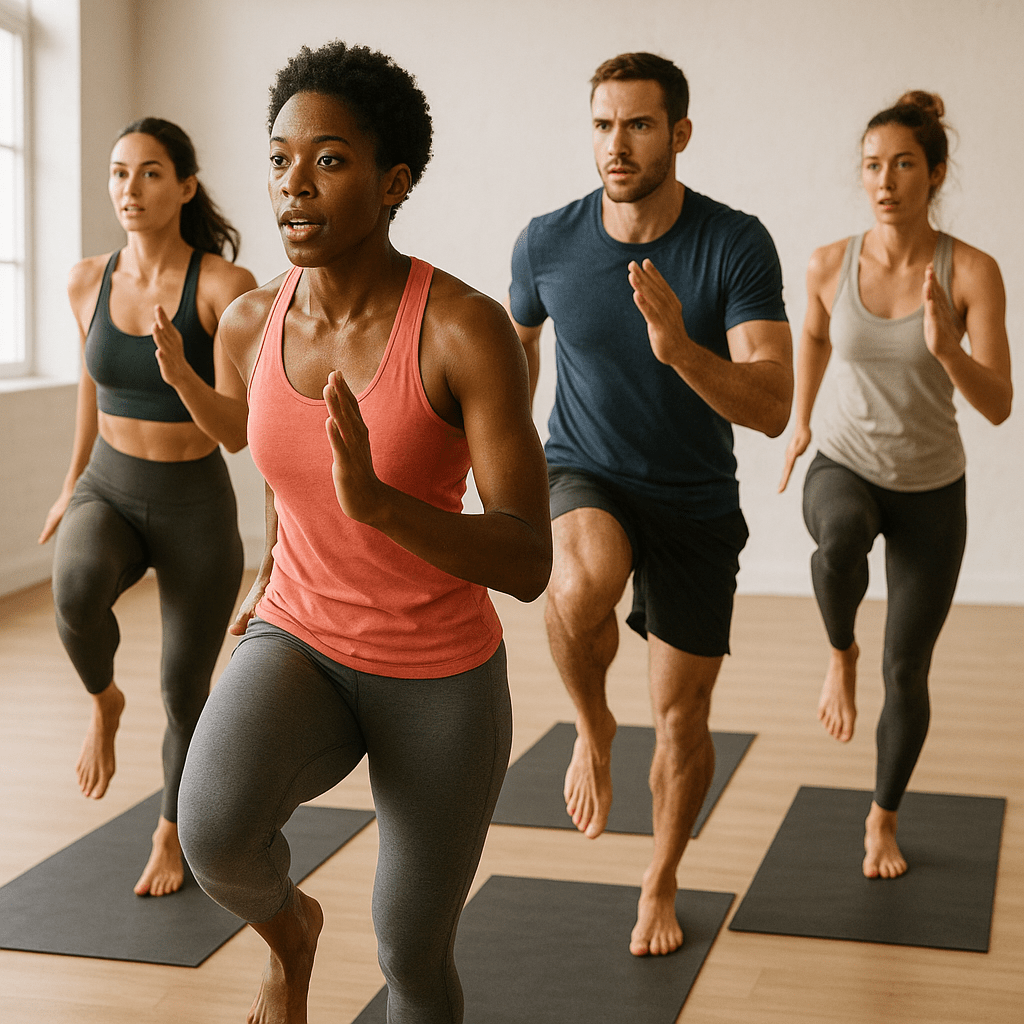
If your usual go-to is a calming yoga flow, you might not think of cardio as a natural fit. But if you’re looking to improve stamina, boost heart health, or simply find more energy throughout your day, mixing cardio & endurance work into your wellness routine can deeply enhance your overall fitness.

This guide is designed for yogis who want to maintain their mind-body connection while exploring movement that elevates the heart rate in a sustainable, mindful way.

Why Should Yogis Add Cardio?

Yoga builds strength, balance, and flexibility—but it often lacks the sustained intensity needed to challenge your cardiovascular system. Adding 2–3 cardio sessions per week can:

Boost your endurance for long practices

Improve oxygen flow for breathwork (pranayama)

Enhance circulation and cardiovascular health

Help with detoxification through sweat

Balance a sedentary lifestyle if you sit often during the day

Best Cardio Exercises for Yogis (With Instructions)

These exercises are gentle on the joints, accessible for all levels, and easy to integrate into a yoga-friendly lifestyle.

  1. Walking or Hiking

Why it works: Low-impact, meditative, and great for stamina.

How to do it:

Aim for 30–45 minutes, 3–4 times per week.

Focus on maintaining an upright posture and relaxed breath.

If you walk after yoga, let your body stay in “flow mode” by moving mindfully, not briskly.

Try breath syncing: inhale for 4 steps, exhale for 4 steps.

Tip: Nature walks offer grounding benefits—perfect for yogis who practice mindfulness or meditation.

  1. Jump Rope

Why it works: Builds coordination and raises your heart rate quickly.

How to do it:

How to Get Started with Jump Rope:

Begin with short bursts—jump for about 30 seconds, then take a 30-second break.

Complete 5 cycles to keep the session around 5 minutes.

Keep your elbows tucked in and aim for quick, light jumps—think of it more like bouncing than leaping.

Focus on soft landings to ease pressure on your joints; imagine you’re skipping quietly on a yoga mat.

Pro tip: Use jump rope as a warm-up before a vinyasa session to get your blood flowing and loosen up tight muscles.

  1. Swimming

Why it works: Full-body, low-impact, and breath-focused.

How to do it:

Swim laps for 20–30 minutes, mixing strokes (freestyle, breaststroke).

Focus on steady, rhythmic breathing—inhale through the mouth, exhale through the nose if possible.

Alternate your pace—swim two laps at a relaxed speed, then follow with one lap at a more vigorous effort.

Tip: Swimming pairs beautifully with yoga’s emphasis on breath control and fluid motion.

  1. Dance or Free Movement

Why it works: Cardio disguised as joy. Great for creativity and emotional release.

How to do it:

Put on your favorite playlist.

Set a timer for 10–20 minutes.

Move freely—there’s no “right” way.

Let your breath and body lead. Don’t think; just move.

Tip: Follow up with a short yin yoga sequence to integrate and settle your energy.

  1. Bodyweight Intervals (Yoga + HIIT Hybrid)

Why it works: Increases heart rate while using functional movement that supports yoga poses.

How to do it:

Perform the following as a 10-minute circuit, 2–3 rounds:

Exercise Duration Instruction
Jumping Jacks 30 seconds Keep shoulders relaxed, land lightly

High Knees 30 seconds Bring knees to hip height, engage your core

Mountain Climbers 30 seconds Keep a strong plank shape, drive knees forward

Rest 30 seconds Breathe deeply and reset posture

Chair Pose Pulses 30 seconds From utkatasana, pulse 2–3 inches up/down slowly

Plank to Down Dog 30 seconds Flow between poses for breath and shoulder mobility

Suggestion: Wrap up your session with a calming pose like savasana or a gentle reclining twist to help your body unwind.

How to Combine Cardio & Yoga

Below is a practical example of how you can organize your weekly schedule:

Day AM PM

Monday Light walk (30 min) Yin Yoga (20–30 min)

Tuesday Vinyasa Yoga (45 min) –

Wednesday Swimming (20–30 min) Gentle stretching

Thursday HIIT-style circuit (20 min) Meditation (10 min)

Friday Rest or easy hike Restorative Yoga

Saturday Free dance (15 min) Flow Yoga

Sunday Long walk or rest Journaling + breathwork

Final Thoughts
Cardio & endurance exercises don’t compete with your yoga—they complement it. When done mindfully, they boost energy, deepen awareness, and improve your resilience both on and off the mat. Start small, listen to your body, and let your practice evolve to support your full fitness potential.

Categories
busy schedules Fitness flexibility flexibility & mobility

Daily Mobility Routine to Prevent Busy Schedules

Modern life doesn’t leave much breathing room. Between tight calendars and digital overload, it’s easy to neglect your body’s basic need for movement. You don’t have to dedicate hours at the gym or join a yoga class to enhance your mobility and flexibility. With a short, daily routine, you can stay limber, reduce aches, and maintain physical well-being — even with the busiest schedule.

Why Flexibility & Mobility Matter

Often overlooked, mobility and flexibility are key components that support overall physical health and performance. While flexibility refers to your muscles’ ability to stretch, mobility is about how well your joints move through a range of motion. When you maintain both, you’re more likely to:

Move efficiently and pain-free

Prevent stiffness and long-term injury

Improve posture and circulation

Feel more energized during your day

For those balancing busy schedules, focusing on mobility is one of the most efficient ways to stay fit without the time commitment of traditional workouts.

Quick Daily Mobility Routine (5–7 Minutes)

This mobility routine is designed to be done anywhere — at home, the office, or even during travel. No equipment required. Just your body, a little space, and consistency.

  1. Neck Rolls (30 seconds)
    Purpose: Relieves neck stiffness from long hours at a desk.

Instructions:

Sit or stand tall with your shoulders relaxed.

Slowly lower your chin to your chest.

Gently circle your head to the right for roughly 15 seconds, maintaining a steady and fluid motion throughout.

Reverse direction for another 15 seconds.

Move slowly — no jerking or forcing.

  1. Shoulder Rolls (30 seconds)

Purpose: Loosens tight shoulders and improves posture.

Instructions:

Stand with arms relaxed at your sides.

Shoulder Rotations (30 seconds)

Start by moving your shoulders forward in large, deliberate circles for about 15 seconds.

Next, change direction and move your shoulders in backward circles for an additional 15 seconds.

As you move, breathe deeply and aim to exaggerate each rotation to release tension.

Hip Circles (1 minute)

Purpose: Loosens tight hips and alleviates tension in the lower back while promoting better joint movement.

Instructions:

Stand with your feet shoulder-width apart.

Place hands on your hips.

Slowly rotate your hips in wide circles to the right for 30 seconds, keeping the motion steady and controlled.

Repeat counter-clockwise for 30 seconds.

Keep your feet planted and upper body relaxed.

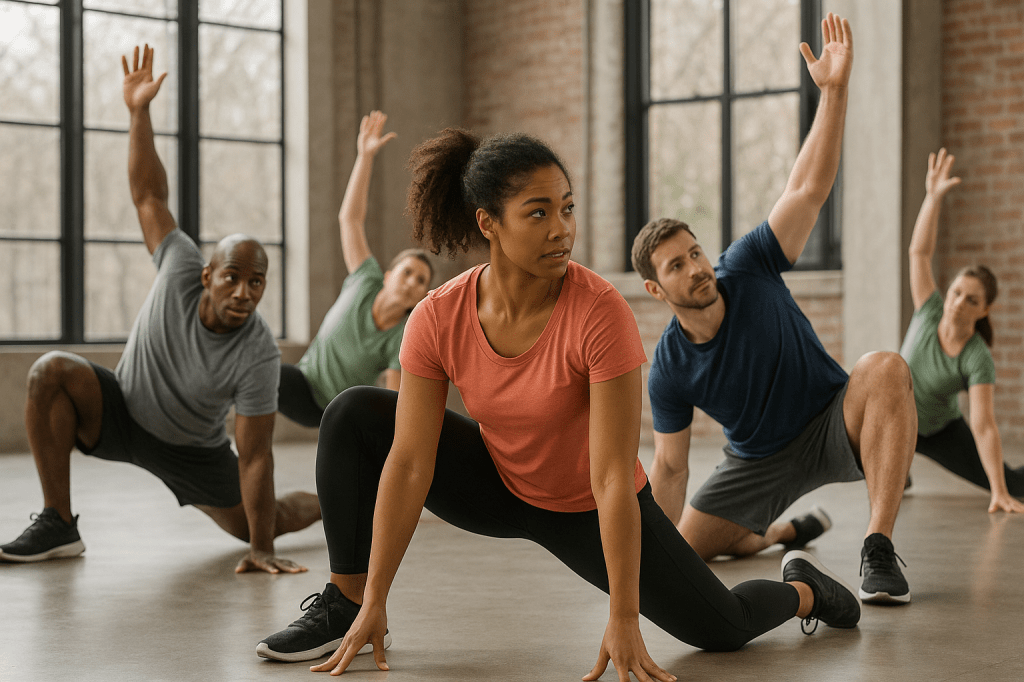
  1. World’s Greatest Stretch (1 minute per side)

Goal: A comprehensive stretch that focuses on the hips, hamstrings, spine, and shoulders.

Instructions:

Step your right foot forward into a lunge.

Bring your left hand down to the floor and gently lower your right elbow inside your right knee.

Pause here for about 10 seconds, allowing your hips to open.

Next, twist your upper body to the right and reach your right arm toward the sky. Hold this stretch for another 10 seconds.

Return to the starting lunge position, step back, and switch sides to repeat the movement on the left.

Do 2–3 reps per side.

  1. Downward Dog to Cobra Flow (1 minute)

Purpose: Increases spine, shoulder, and core flexibility.

Instructions:

Start in a push-up position.

Lift your hips upward and backward, creating an inverted V shape as you move into Downward Dog.

Stay in the position for about five seconds, concentrating on the stretch through your back and the backs of your legs.

Gently lift your chest upward into Cobra Pose, allowing a slight bend in your elbows and keeping your shoulders relaxed and away from your ears.

Alternate between the two positions for 1 minute, moving slowly and with control.

Tips to Make It a Daily Habit

Stack it with another habit (right after brushing your teeth or before lunch).

Create a regular alert on your phone or schedule to help you stay consistent.

Keep it visible – post the routine on your wall or desk.

Start small – even just 3 minutes a day is progress.

The Benefits You’ll Notice

Less stiffness and tightness, especially if you sit a lot

Better posture and spinal alignment

Easier movement during everyday tasks

Improved focus and mood, thanks to intentional movement breaks

Long-term injury prevention without a heavy time investment

Final Thoughts

It’s not about making time — just dedicating a few minutes and being ready to get moving. A daily mobility routine gives your body what it needs without stealing time from your priorities. Whether it’s before your morning coffee or as a midday reset, a little flexibility & mobility goes a long way toward feeling strong and capable, no matter how packed your schedule is.

Categories
Budget-Friendly Fitness Meals men nutrition

Budget-Friendly Meals for Men Nutrition

When it comes to men’s fitness and nutrition, eating well doesn’t have to mean breaking the bank or spending hours in the kitchen. Budget-friendly meals that support your fitness goals and overall health are entirely achievable with some smart planning and meal prep. This guide will walk you through practical tips, step-by-step instructions, and techniques to create nutritious, affordable meals designed specifically with men’s needs in mind.

Why Focus on Nutrition & Meal Prep?
Nutrition plays a critical role in muscle recovery, energy levels, and overall wellbeing — especially for men who are active or looking to improve their fitness. Meal prep helps streamline your week, reduces impulse eating, and ensures you have balanced meals ready to fuel your body. When done right, it’s not only healthier but also more cost-effective.

Step-by-Step Guide: How to Prep Budget-Friendly Meals for Men
Step 1: Plan Your Weekly Menu
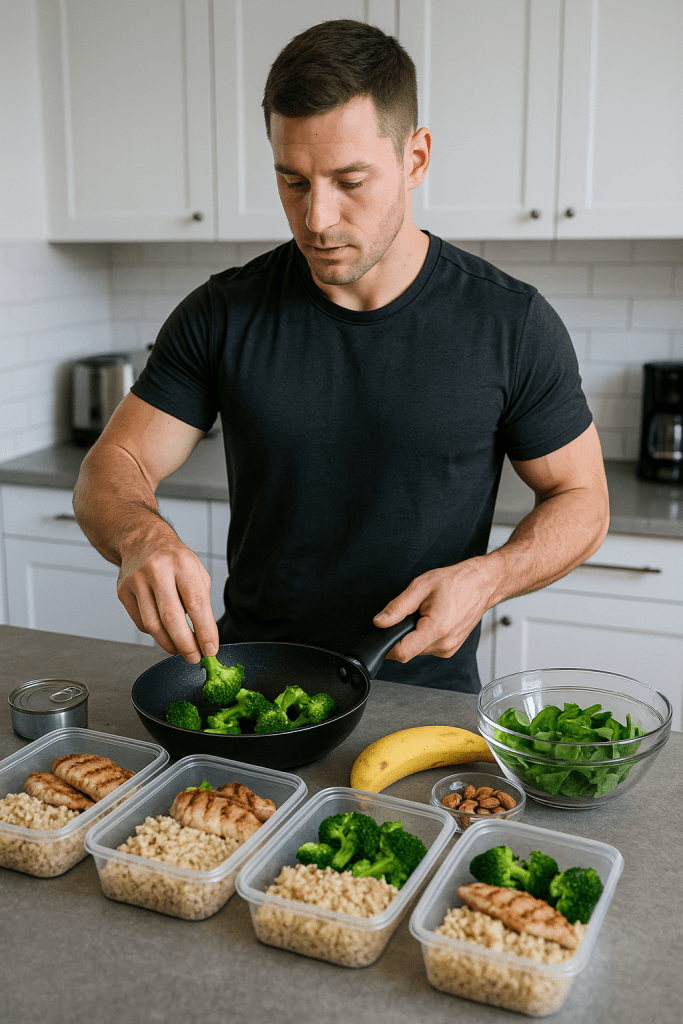
Start by choosing 3–4 meals that use overlapping ingredients to keep costs down and reduce waste. Focus on meals rich in lean protein, complex carbs, and vegetables. For example:

Grilled chicken with brown rice and steamed broccoli

Lentil chili with canned tomatoes and mixed beans

Tuna salad with whole grain bread and spinach

Write down your meals and snacks for the week to create a shopping list.

Step 2: Shop Smart
Use your list to buy ingredients in bulk where possible. Look for sales on frozen vegetables and discounted protein cuts. Avoid pre-packaged or convenience items, which tend to be pricier.

Step 3: Cook in Batches
Set aside 1–2 hours to cook multiple meals at once:

Cook grains (brown rice, quinoa, oats) in large batches.

Roast or grill proteins like chicken thighs or bake a tray of mixed vegetables.

Make a big pot of chili or stew to portion out for several meals.

Step 4: Portion and Store
Divide your cooked meals into single servings using reusable containers. Label each container with the date to keep track of freshness. Store some meals in the fridge for 3–4 days and freeze the rest to extend shelf life.

Step 5: Prepare Healthy Snacks
Make quick grab-and-go snacks such as:

Hard-boiled eggs (boil a dozen at once)

Cut veggies with hummus

Greek yogurt with nuts or berries

Having these ready prevents unhealthy cravings and supports consistent energy levels.

Step 6: Reheat and Enjoy
When it’s mealtime, simply reheat your prepared meals and enjoy a balanced, nutritious dish without the hassle of cooking from scratch.

Key Tips for Budget-Friendly Meal Prep

Mix and match ingredients: Use staples like eggs, beans, and frozen veggies to keep meals varied yet affordable.

Cook once, eat twice: Batch cooking saves time and reduces food waste.

Use versatile seasonings: Basic herbs and spices (garlic, paprika, cumin) add flavor without extra cost.

Hydrate smartly: Drink plenty of water and limit sugary drinks to complement your nutrition efforts.

Benefits of Nutrition & Meal Prep for Men


Consistent Energy: Well-balanced meals help maintain steady energy levels throughout the day.

Improved Fitness Results: Proper nutrition supports muscle growth and faster recovery post-workout.

Reduced Stress: Knowing your meals are ready reduces the daily decision-making load.

Financial Savings: Cooking at home with budget-friendly ingredients beats eating out or relying on convenience foods.

Final Thoughts
Eating well on a budget is definitely doable, especially when you combine smart meal prep with nutrition tailored to men’s fitness goals. By planning meals, shopping strategically, cooking in batches, and prepping snacks ahead of time, you can enjoy delicious, nourishing meals that support your health without stretching your wallet.

Are you ready to take control of your nutrition and meal prep? Start small, stay consistent, and watch your fitness and wellbeing thrive without breaking the bank.

Categories
busy schedules Fitness gear & reviews

Easy Busy Schedules Fitness Trackers Compared

We get it — you’re juggling a packed calendar, maybe running from school drop-offs to Zoom calls, barely getting time to sit down, let alone squeeze in a workout. But here’s the good news: today’s fitness trackers are built to keep up with busy lives, helping you stay active and mindful without demanding hours you don’t have.

Here’s a handy rundown of the top fitness trackers for busy folks, along with simple tips to help you get the most out of them—even when your schedule’s packed.

Top Fitness Trackers for Busy Schedules

  1. Fitbit Charge 6
    Best For: Easy tracking that actually pays off without a lot of hassle
    Why It Works: The Charge 6 covers the basics—heart rate, steps, sleep, and stress—without drowning you in numbers.

How to Use It Efficiently:

Step 1: Download the Fitbit app and pair your device (takes under 10 minutes).

Step 2: Set your daily movement goal (e.g., 6,000 steps) based on your real lifestyle.

Step 3: Enable reminders to move — these gently nudge you if you’ve been inactive for too long.

Step 4: At night, wear the band to automatically track your sleep without any extra steps.

Battery Life: Up to 7 days
Busy Schedule Bonus: Swipe up to see your stats instantly without diving into menus.

  1. Garmin Vivosmart 5
    Best For: Data-minded people with little time
    Why It Works: Offers advanced metrics like oxygen levels, respiration, and stress, without being overly “techy.”

Quick Start Instructions:

Step 1: Charge it fully, then connect to the Garmin Connect app.

Step 2: Select your goals: fitness, stress, or sleep — the app will adjust your dashboard.

Step 3: Use the Body Battery feature to know when to push and when to rest — a lifesaver if you often feel drained.

Battery Life: Up to 7 days
Busy Life Perk: Get important updates at a glance—without falling into a social media scroll trap.

  1. WHOOP Strap 4.0
    Best For: Prioritizing recovery and balance
    Why It Works: WHOOP is screen-free, focused solely on performance and rest — making it ideal if you hate distractions.

Instructions for Success:

Step 1: Charge the strap (you can wear it while charging with the battery pack).

Step 2: Download the WHOOP app and fill out the quick setup survey — that way, it can tailor your recovery scores just for you.

Step 3: Keep it on around the clock — WHOOP really shines when it’s tracking you nonstop.

Want it a little more laid-back or with some fun flair?

Happy to keep them coming if you want!

Let me know if you want it even more playful or laid-back!

Craving something more laid-back or a bit playful?

Step 4: Each morning, peek at your recovery score — think of it as your daily energy check: green means full steam ahead, red means take it easy and rest up.

Efficiency Edge: The minimalist, screen-free build keeps distractions away while still giving you meaningful performance data.

  1. Apple Watch SE (2nd Gen)
    Best For: Multitaskers who want fitness + functionality
    Why It Works: It tracks workouts, sends reminders, manages your calendar, and even answers calls.

Fast Setup Guide:

Step 1: Pair with your iPhone and set your activity goals (Move, Exercise, Stand).

Step 2: Enable Siri so you can start a workout or set a reminder hands-free.

Step 3: Use the pre-loaded workout app — select from Quick Start, HIIT, yoga, or even 5-minute walk breaks.

Battery Life: About 18 hours (charge it while you shower or prep dinner)
Busy Schedule Bonus: Respond to texts or reschedule meetings while on your walk.

Real-Life Tips for Getting the Most From Your Tracker
Whether you choose Fitbit, Garmin, WHOOP, or Apple, these simple steps can help you build consistency:

Anchor movement to daily routines.
Try 5 minutes of walking after lunch or squats while brushing your teeth — let your tracker nudge you.

Check your stats at the same time each day.
Mornings work best for most — look at sleep, readiness, or movement goals during your coffee.

Log short sessions instead of skipping entirely.
Got 7 minutes? Use the Quick Workout feature on Apple Watch or Fitbit to log a burst of activity.

Don’t chase perfection — track progress.
Let your device help you notice trends, like improved sleep or reduced resting heart rate, not just step counts.

The Real Benefit? More Awareness in Less Time
Fitness trackers aren’t about obsessing over steps — they’re about staying connected to your body in a world that pulls you in every direction.

With the right tool and a few minutes of setup, you can make wellness fit into your life, not fight for space in it. Whether you’re sprinting through deadlines or just trying to carve out 10 minutes of calm, these devices are built to support you — not stress you out.

Curious about more time-saving gear and honest reviews?
Stick around — we’re diving into everything from compact recovery tools to kitchen gadgets that keep up with your pace.

Categories
cardio Fitness men Muscle Gain recovery & wellness

Top Cardio Exercises for Men Lovers

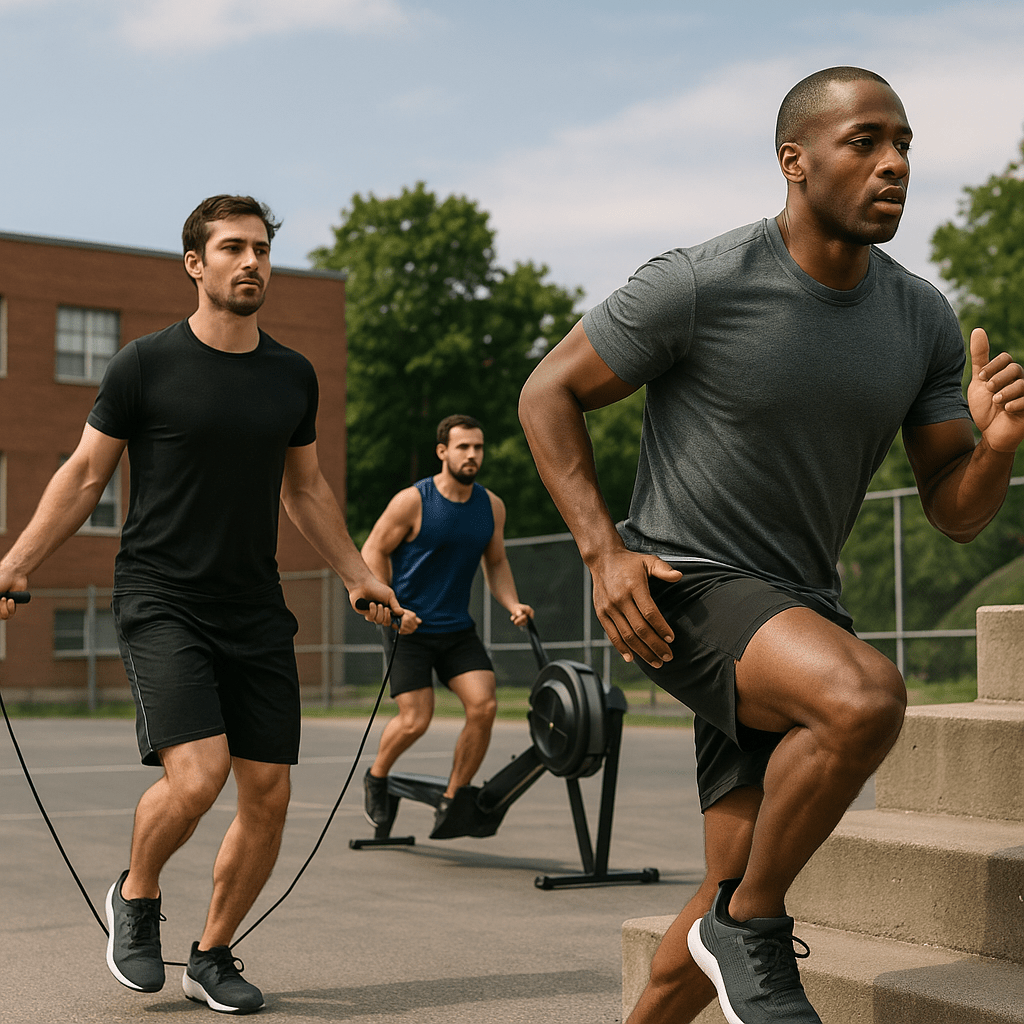
Whether you’re just starting your fitness journey or looking to level up your endurance game, cardio plays a crucial role in overall health and performance. For men who are passionate about fitness—or those who simply want to feel more energized, stronger, and healthier—finding the right cardio exercises is key. This guide explores some of the top cardio workouts that boost endurance, build stamina, and support long-term fitness goals.

Why Cardio Matters for Men
Cardiovascular exercise isn’t just for weight loss—it’s foundational for heart health, stamina, and overall energy. Men often focus on strength training, but adding regular cardio to your routine can elevate your performance, enhance recovery, and even improve mental clarity.

Top Cardio Exercises for Men
Here’s a breakdown of high-impact and versatile cardio options that combine effectiveness with variety.

  1. Running (Outdoors or Treadmill)
    Simple, accessible, and powerful—running helps build endurance quickly. Whether you prefer trail runs, sprint intervals, or steady-state jogs, running challenges your cardiovascular system while also supporting muscle tone in the legs and core.

Tip: Alternate between sprints and jogs to incorporate HIIT and avoid plateaus.

  1. Rowing
    Rowing is a full-body workout that emphasizes both upper and lower body strength while improving cardiovascular endurance. It’s low-impact and especially effective for men looking to improve posture and core stability.

Technique Tip: Focus on driving through the legs and finishing with a strong pull from the back and arms for maximum benefit.

  1. Jump Rope
    The jump rope might look simple, but it’s one of the most effective cardio tools out there. It sharpens coordination, builds agility, and gets your heart rate up in seconds. Great as a quick warm-up or powerful enough to stand alone as a full workout.

Pro Tip: Jump for 30 seconds, rest for 15, and repeat to boost intensity without burning out Repeat for 10 minutes.

  1. Cycling (Indoor or Outdoor)
    Cycling builds endurance effectively without putting extra stress on your joints. It’s also a great option for those who enjoy long rides and want to explore new environments.

Bonus: Indoor cycling classes can add intensity and motivation through structured routines.

  1. Stair Climbing or Hills
    Whether it’s a stair machine or an actual flight of stairs, climbing builds lower body strength while elevating your heart rate fast. For men focused on leg power and conditioning, this is a game changer.

Movement Tip: Keep a steady flow, power through your glutes, and stay tall to avoid unnecessary tension.

Incorporating Cardio Into Your Routine
How Often: Target 3 to 5 workouts each week, adjusting based on what you’re working toward.

Duration: 20–45 minutes is ideal for most workouts.

Variety: Mix modalities to keep things interesting and prevent overuse injuries.

The Benefits Go Beyond Fitness
The effects of cardio go far past the gym—it helps you feel stronger, sharper, and more energized day to day. Improved sleep, reduced stress, enhanced mood, and better focus at work are just a few rewards. For men who want to maintain energy and sharpness as they age, cardio & endurance training is non-negotiable.

Final Thoughts
Whether you’re training for a marathon or just want to feel less winded on the stairs, cardio should be a core part of your fitness plan. Choose the exercises that excite you, challenge yourself, and stay consistent. Your body—and your mind—will thank you.