Categories
athletes cardio cardio & endurance exercises Fitness fitness-tips HIIT home workout men runners running

Top Cardio Exercises for Athlete Lovers

When it comes to performance and long-term athletic success, cardio & endurance training isn’t just helpful — it’s essential. Whether you’re training for a race, a sport, or just love feeling strong and energized, integrating smart cardio exercises can make all the difference.

Here’s a lineup of top cardio workouts, complete with easy-to-follow instructions, so you can build fitness with intention.

  1. High-Intensity Interval Training (HIIT)

A go-to for athletes who want to burn fat, boost endurance, and build speed.

Instructions:

Choose an exercise (e.g., sprinting, cycling, or bodyweight moves like burpees).

Go all out for 30 seconds.

Recover at a slower pace for 60–90 seconds.

Repeat the sequence for 20 to 30 minutes, tailoring the duration to match your fitness ability and endurance.

Start and finish your workout with 5 minutes of light activity to prepare your body and aid recovery.

Expert advice: Keep your bursts brief but powerful — training with intention beats simply doing more.

  1. Long-Distance Running

Ideal for building mental and physical endurance — key for athletes in any discipline.

Instructions:

Start with a warm-up jog for 5–10 minutes.

Run at a steady, moderate pace (where you can still talk) for 30–60 minutes.

Gradually increase your weekly mileage by no more than 10% to avoid injury.

Stretch post-run and stay hydrated.

Tip: Use a running app or watch to track pace and progress.

  1. Swimming

A full-body, joint-friendly cardio option that builds lung capacity and total endurance.

Instructions:

Begin with 2–4 easy laps to warm up.

Switch up your swim strokes—such as freestyle, breaststroke, and backstroke—to keep your workout balanced and engaging.

Swim continuously at a moderate pace for 20 to 40 minutes, taking short breaks of 30 to 60 seconds as needed.

Use equipment like a kickboard or pull buoy to concentrate on specific muscle groups and improve technique.

Tip: Focus on controlled breathing — exhale underwater, inhale quickly during turns.

  1. Rowing (Machine or Water)

Combines strength and cardio in a single, low-impact workout.

Instructions (on a rowing machine):

Start with 5 minutes of light rowing to warm up.

Maintain proper form: drive with your legs, lean back slightly, then pull the handle to your chest.

Try 5 intervals of 500m sprints with 1-minute rest between.

Cool down with 3–5 minutes of easy rowing.

Tip: Set the damper (resistance) between 3–5 for endurance work.

  1. Cycling (Indoor or Outdoor)

Great for leg strength, cardio health, and building steady-state endurance.

Instructions:

Warm up with 5–10 minutes of easy pedaling.

Ride for 30–60 minutes at a moderate pace.

Include intervals: 2 minutes hard pedaling, 3 minutes easy — repeat 5–8 times.

If indoors, use a spin bike and follow a guided session or playlist.

Tip: To make longer rides more comfortable, opt for a seat with extra padding or try wearing cycling shorts with built-in cushioning.

Jump Rope

An energetic, skillful cardio exercise that enhances both your coordination and endurance.

Instructions:

Use a rope that reaches your armpits when stepped on.

Warm up by skipping slowly for 1–2 minutes.

Perform 3–5 sets of 1 minute jumping + 30 seconds rest.

Helpful hint: Maintain a relaxed grip and keep your elbows tucked in to improve control and efficiency.

Final Thoughts

Whether you’re training on the field or simply love moving with purpose, incorporating a mix of these cardio & endurance exercises will build a rock-solid fitness foundation. The key is consistency — doing the work week after week, while listening to your body.

Mix things up, challenge yourself, and most importantly — enjoy the journey. Cardio doesn’t have to be boring or repetitive. It can be powerful, fun, and transformative when done right.

Categories
athletes beginners cardio & endurance cycling exercises fat loss Fitness fitness-tips flexibility flexibility & mobility home workout men mobility Muscle Gain recovery & wellness runners strength training stretching women

Cycling vs. Running: Which Is Better for Athletes?

For athletes serious about fitness and performance, cardio & endurance training is non-negotiable. Two of the most effective—and debated—methods are cycling and running. Each offers unique benefits, but the best choice depends on your body, your sport, and your training goals.

Below, we break down the benefits of each and include step-by-step instructions so you can integrate them into your fitness routine effectively.

Running: High-Impact, High-Return

Why athletes use it: Running is a classic way to build cardio endurance, shed fat, and enhance mental resilience.

How to Use Running for Athletic Training

  1. Start with short, slow runs:

Beginner: 2–3 runs per week, 20–30 minutes each.

Focus on easy pace, where you can still hold a conversation.

  1. Build endurance safely:

Increase your distance by no more than 10% per week to avoid injury.

Add one longer run per week for endurance-building.

  1. Add intervals for performance:

1–2x/week, include short sprints (e.g., 30s fast, 90s recovery x 6 rounds).

This improves speed and cardiovascular capacity.

  1. Recovery is key:

Use foam rolling, stretching, and rest days.

Always listen to your body—shin splints and knee pain are early warning signs.

Cycling: Low-Impact Power Builder

Why athletes use it: Cycling builds serious leg strength and cardio fitness with less impact on joints.

How to Use Cycling for Athletic Training

  1. Choose your setup:

Outdoor bike for long rides and natural terrain challenges.

Stationary or spin bike for convenience and interval workouts.

  1. Begin with base rides:

3x/week, 45–60 minutes at a steady, moderate pace.

Keep RPMs (cadence) between 80–100 for efficiency.

  1. Incorporate interval training:

Example: 5 rounds of 1-minute sprint + 2 minutes easy pedaling.

Builds both speed and endurance while staying joint-friendly.

  1. Add resistance:

Use hills or gear tension to simulate climbing.

Great for strength and sport-specific conditioning (e.g., soccer, skiing).

  1. Don’t skip recovery rides:

Easy 30-minute spin sessions on off-days help promote blood flow and aid muscle repair.

Choosing What’s Best for You

Here’s a quick guide to help you decide:

Goal Go With Why
Max calorie burn Running Higher energy output per minute
Joint health Cycling Less impact on knees/ankles
Build mental toughness Running Pushes through physical discomfort
Cross-train or rehab Cycling Safe for injured or sore athletes
Explosive leg strength Cycling Simulates power output sports like sprinting or skating

Tips for Balancing Both in Your Routine

  1. Mix it up:

Alternate running and cycling days to avoid burnout or injury.

  1. Prioritize based on season:

In off-season? Use cycling to maintain endurance with lower impact.

Pre-season? Focus more on running for sport-specific conditioning.

  1. Track progress:

Use a fitness tracker or app to monitor distance, pace, heart rate, and recovery.

  1. Hydrate and fuel properly:

Endurance workouts demand serious nutrition. Don’t neglect pre- and post-training meals.

Final Thoughts

There’s no universal winner between running and cycling—they’re both powerful tools for building cardio & endurance. The smart athlete knows when and how to use each to complement performance, reduce injury risk, and meet specific fitness goals.

Whether you’re sprinting down a track or grinding up a hill on two wheels, the key is consistency, smart programming, and listening to your body.

Categories
athletes exercises Fitness Muscle Gain strength training

Build Muscle with These Athletes’ Compound Exercises

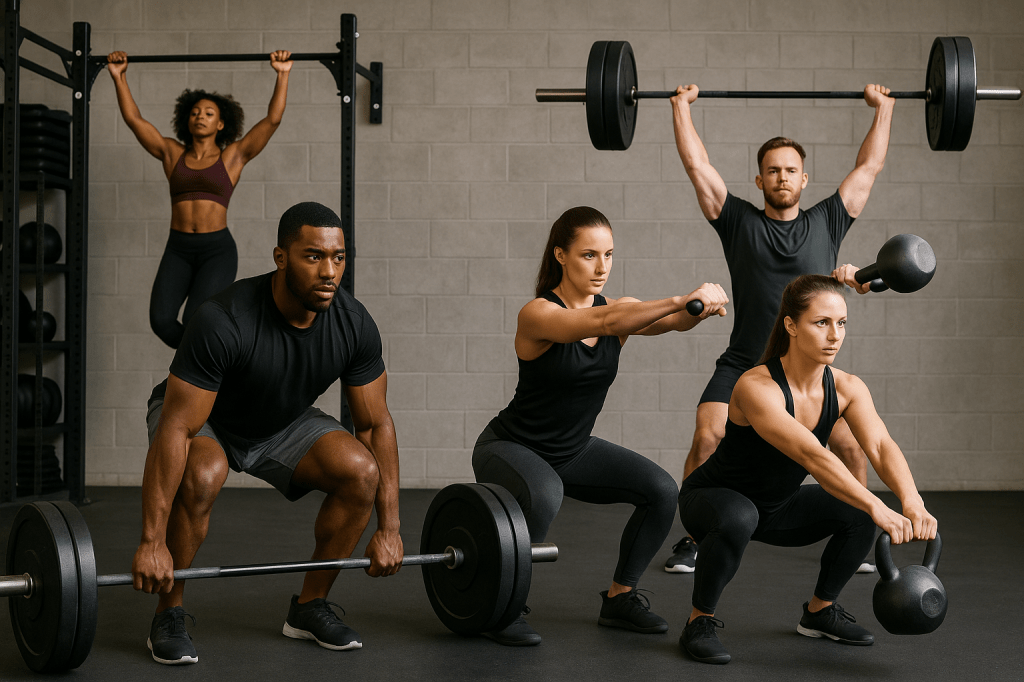
When it comes to building muscle and enhancing athletic performance, compound exercises are the cornerstone of effective strength training. Unlike isolation moves that target a single muscle, compound exercises engage multiple muscle groups simultaneously, making them a time-efficient and powerful way for athletes to increase strength, improve fitness, and reduce injury risk.

Why Compound Exercises Matter for Athletes

Athletes rely on functional strength — the ability to perform movements that mimic real-world activities or their specific sport. Compound exercises perfectly align with this goal because they replicate multi-joint motions, promote muscle coordination, and boost overall power.

By incorporating compound lifts into your training routine, you stimulate greater muscle activation, leading to improved muscle growth and strength gains. Additionally, these exercises enhance core stability and joint health, essential for athletic longevity.

Top Compound Exercises for Muscle Building and Athletic Fitness

Here are some foundational compound exercises every athlete should consider, along with step-by-step instructions to perform them safely and effectively:

  1. Squats

Targets: Quadriceps, hamstrings, glutes, core, and stabilizing muscles.

How to Perform a Squat:

Place your feet roughly between hip and shoulder width, allowing your toes to angle outward slightly.

Engage your core and keep your chest up.

Gradually lower yourself by bending at the hips and knees, as though you’re lowering into a seated position.

Lower yourself until your thighs are roughly parallel to the floor, or as far as your flexibility comfortably permits.

Drive upward by pressing firmly through your heels to rise back to the starting stance.

Make sure your knees stay aligned with your toes during the entire motion.

  1. Deadlifts

Targets: Hamstrings, glutes, lower back, traps, and grip.

How to Perform a Deadlift:

Set your feet about hip-width apart and position the barbell just in front of your shins.

Hinge at your hips and bend your knees to grasp the bar with hands just outside your knees.

Tighten your core muscles, maintain a straight back, and keep your chest upright.

Drive upward by pushing firmly through your heels, extending your hips and knees while keeping the barbell close to your body during the lift.

Once fully upright, begin lowering the bar by first hinging at your hips, followed by bending your knees in a controlled manner.

  1. Bench Press

Targets: Chest, shoulders, triceps.

How to Perform a Bench Press:

Position yourself flat on the bench with your feet planted solidly on the ground for stability.

Grip the bar with your hands placed slightly wider than shoulder distance.

Carefully lift the bar off the rack and begin lowering it in a controlled motion toward the center of your chest.

As you lower the bar, keep your elbows angled roughly 45 degrees away from your body.

Press the bar upward until your arms are extended, keeping the motion steady and controlled.

Avoid snapping your elbows straight; instead, stop just short of full lockout to maintain muscle tension.

  1. Pull-Ups and Chin-Ups

Targets: Upper back, biceps, grip strength.

How to Perform a Pull-Up:

Grab the pull-up bar with your palms facing away for a pull-up or toward you for a chin-up, placing your hands roughly shoulder-width apart.

Hang with your arms fully extended.

Activate your upper back muscles and begin pulling yourself upward by bending your elbows, aiming to bring your chest close to the bar.

Perform the movement with control, avoiding any swinging or using momentum to assist.

Lower yourself down slowly and with control until your arms are fully extended.

Overhead Press
Muscle Groups Worked: Shoulders, triceps, upper chest.

How to Perform the Overhead Press:

Position your feet about shoulder-width apart and hold a barbell or dumbbells at shoulder level, keeping your palms facing forward.

Tighten your core muscles and maintain a neutral, straight spine throughout the movement.

Raise the weight above your head until your arms are fully extended.

Avoid arching your back; keep your ribs down and core tight.

Slowly lower the weight back to shoulder height.

Tips for Effective Strength Training with Compound Movements

Focus on Form First: Proper technique is critical. Begin with lighter loads to perfect your technique before increasing the weight.

Progressive Overload: Gradually increase weights or reps to continuously challenge muscles and stimulate growth.

Balanced Routine: Incorporate compound exercises targeting all major muscle groups to avoid imbalances and reduce injury risk.

Adequate Recovery: Strength training is intense; allow muscles time to repair and grow with rest days and proper nutrition.

The Benefits Beyond Muscle Growth

Compound exercises do more than build muscle. For athletes, they:

Enhance coordination and balance by requiring multiple muscles and joints to work together.

Improve cardiovascular fitness due to their demand on large muscle groups.

Support functional movement patterns, making athletic performance more efficient and powerful.

Reduce injury risk through strengthened muscles and improved joint stability.

Incorporating compound exercises into your strength training routine is a proven way to build muscle and elevate your athletic fitness. By focusing on these foundational movements and following smart training principles, you can unlock your full potential and enjoy the benefits of enhanced strength, performance, and overall wellness.

Categories
athletes Fitness Muscle Gain recovery & wellness

Mindfulness Techniques for Athletes

In high-performance sports, we often focus on physical training, nutrition, and recovery tools—but there’s a key component that often gets overlooked: the mind. Mindfulness is more than just a wellness buzzword; it’s a practical, science-backed tool that can dramatically enhance athletic performance and overall well-being.

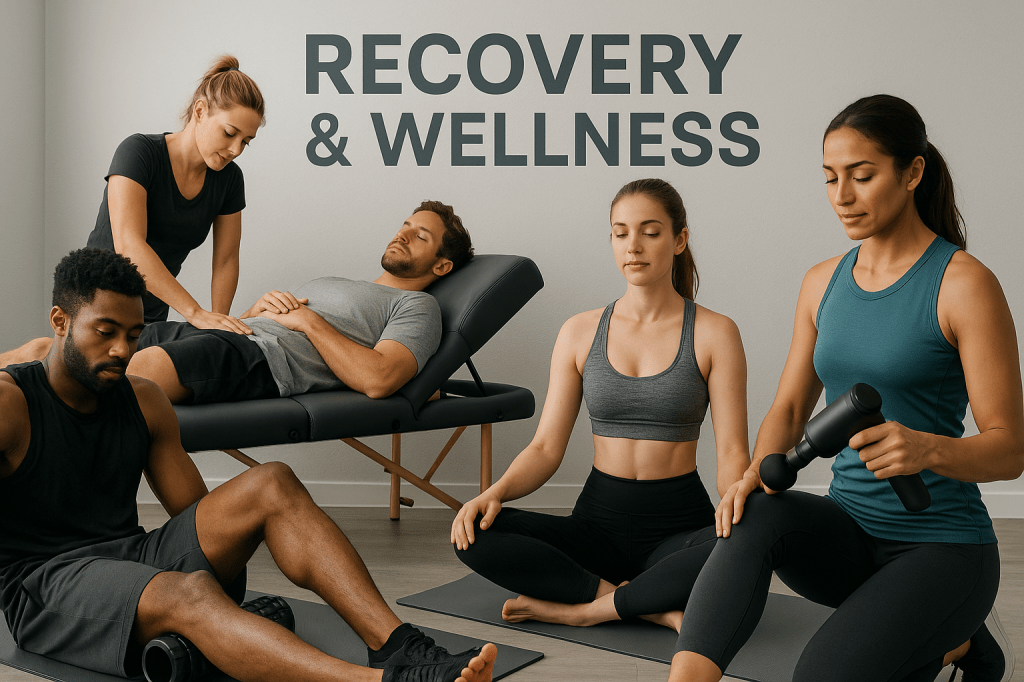
Whether you’re a competitive athlete, a weekend warrior, or just passionate about fitness, integrating mindfulness into your routine can be a game-changer for your recovery & wellness.

Why Mindfulness Matters in Fitness
For athletes, practicing this awareness often leads to enhanced concentration, clearer choices during competition, and quicker, more effective recovery.

Stress, anxiety, and physical fatigue can cloud your mental clarity. Mindfulness cuts through that noise. It’s not just about calming down—it’s about showing up, mentally, for every rep, every race, every moment.

Benefits of Mindfulness for Athletes
Here’s what athletes are discovering:

Faster Recovery: Studies have shown that mindfulness practices like meditation can lower cortisol levels and reduce inflammation—both of which help your body bounce back after workouts.

Improved Focus & Performance: Being present in the moment means fewer distractions and better execution of skills.

Better Emotional Regulation: Mindfulness helps you manage stress, anxiety, and pressure—so you stay composed during high-stakes moments.

Injury Prevention: Listening to your body’s cues can help you avoid overtraining and catch signs of burnout before they escalate.

Practical Mindfulness Techniques
You don’t need hours of spare time or a retreat in the mountains. These methods are straightforward, convenient, and can be effortlessly added to your everyday habits:

  1. Body Scan Meditation
    Take 5 to 10 minutes after exercising or before sleep to mentally check in with your body, moving your attention slowly from your head down to your toes. This helps increase body awareness and encourages physical relaxation.
  2. Box Breathing
    Widely practiced by high-performing athletes and Navy SEALs, this method involves a steady inhale for four seconds, a four-second hold, a controlled exhale for four seconds, and a final pause of the same length. It works to calm the nervous system and boost mental sharpness.
  3. Mindful Movement
    Turn your warm-up or cooldown into a mindfulness practice. Focus entirely on the rhythm of your breath and how your body feels with each stretch or step.
  4. Journaling
    After practice or training, jot down how your body and mind felt, what went well, and what you noticed. It’s a low-effort way to reflect and reset.
  5. Visualization
    Before a competition or challenging workout, close your eyes and mentally rehearse what success looks and feels like. Picture your movements, the sounds around you, and how it feels to perform at your best.

Make Mindfulness a Habit
Like any other aspect of fitness, mindfulness takes consistency. Start small—just five minutes a day. Link it to something you already do: after your workout, before bed, or first thing in the morning. With time, you’ll notice not just physical gains, but a mental edge that carries you through training, competition, and recovery.

Final Thoughts
Athletic success isn’t just about how hard you push—it’s also about how well you recover. Mindfulness gives athletes a practical way to tune in, slow down, and rebuild from the inside out. In a world obsessed with go-go-go, learning when to pause might be your most powerful performance tool yet.