Categories
exercises Fitness Gym home workout men mobility Muscle Gain strength training stretching training women workouts yogis

How to Increase Bench Press in Yogis Weeks

Yoga develops functional strength, flexibility, and mindfulness—but it often lacks targeted resistance work for upper body pushing strength. That’s where the bench press comes in. Adding it to your weekly practice can help build shoulder and chest strength, balance your muscular system, and support advanced yoga postures like arm balances, chaturanga, and handstands.

This guide is for yogis who want to increase their bench press in just a few weeks—without sacrificing mobility or their commitment to mindful movement.

Benefits of Bench Press for Yogis

Before we dive into the plan, here are a few reasons to start bench pressing:

Improves upper body strength for transitions and holds

Builds muscular endurance and postural control

Balances out push-pull muscle groups (important for injury prevention)

Supports stronger and more stable shoulder joints

What You Need to Begin

Equipment:

Barbell or dumbbells

Weight bench

Access to a squat rack or power rack (optional, but safer)

Yoga mat and mobility tools (foam roller, resistance band)

Baseline Assessment:

If you’re new to bench pressing, test your 5-rep max (a weight you can lift 5 times with good form). This will guide your starting load.

How to Bench Press – Step-by-Step Instructions

Position yourself on the bench . Your eyes should be directly under the bar.

Grip the bar slightly wider than shoulder-width. Wrists should be stacked over elbows.

Draw your shoulder blades together and create a gentle arch in your upper back while keeping your glutes and shoulders firmly in contact with the bench.

Unrack the bar and hold it over your chest with straight arms.

Breathe in as you slowly lower the bar toward the middle of your chest, keeping your elbows angled slightly away from your sides—around 45 degrees.

Exhale and press the bar upward, driving through your feet and engaging your core.

Form Tips:

Keep your head, shoulders, and glutes in contact with the bench.

Avoid flaring elbows too wide.

Use a spotter if lifting heavy.

4-Week Bench Press Plan for Yogis

Use this weekly layout to increase strength without sacrificing your yoga schedule.

Week 1–2: Build the Foundation

Goal: Improve neuromuscular control and form.

Frequency: 2x/week

Sets/Reps: 3 sets of 8–10 reps

Load: 60–70% of 1-rep max (1RM)

Rest: 60–90 seconds between sets

Yoga Integration:

Focus on mobility and core-focused classes.

Include shoulder openers like Puppy Pose, Eagle Arms, and Thread the Needle.

Week 3: Increase Volume

Goal: Begin challenging the muscles with more workload.

Frequency: 2–3x/week

Sets/Reps: 4 sets of 6–8 reps

Load: 70–75% of 1RM

Accessory Work: Add 2–3 sets of dumbbell chest flys, incline bench, and tricep dips

Rest: 90–120 seconds between sets

Yoga Integration:

Include 1–2 slower-paced flows with shoulder stability drills.

Use Child’s Pose and Downward Dog as recovery.

Week 4: Focus on Strength

Goal: Maximize force production and build pure strength.

Frequency: 2x/week

Sets/Reps: 5 sets of 4–6 reps

Load: 75–85% of 1RM

Rest: 2 minutes between sets

Include: Close-grip bench press or push-ups as finishers

Yoga Integration:

Additional Tips for Success

Warm-Up Before Each Session

5–10 mins of light cardio

Dynamic stretches (arm swings, shoulder circles)

1–2 warm-up sets with light weights

Track Your Progress

Use a workout journal or app to record weights, reps, and how you felt.

Fuel Your Body

Get 20–30g of protein post-lift to support muscle repair.

Stay hydrated and eat whole, balanced meals.

Recover Intentionally

Be sure to schedule at least one full day off each week to allow your body to fully recover.

Use foam rolling, restorative yoga, and long savasana sessions.

Final Thoughts: Merging Strength and Stillness

You don’t need to choose between yoga and weightlifting—especially when done mindfully. Incorporating gradual strength training exercises such as the bench press can enhance the effectiveness, safety, and longevity of your yoga practice.

By following this 4-week program, you’ll likely notice more ease in your flows, better posture, and a deeper connection between power and presence.

Now it’s time to unroll your mat, rack the bar, and embrace both sides of the practice.

Categories
exercises Fitness fitness-tips flexibility flexibility & mobility Gym home workout men recovery & wellness strength training stretching women yogis

Pre-Workout Stretching Plan for Yogis: Enhancing Flexibility & Mobility

For yogis, preparing the body before any intense workout or practice session is essential—not only to prevent injury but to maximize flexibility and mobility. Stretching is often seen as a simple warm-up step, but when done mindfully and with intention, it becomes a powerful tool to enhance your fitness journey and deepen your practice.

In this article, we’ll explore a practical pre-workout stretching plan tailored specifically for yogis. Whether you’re preparing for a vigorous yoga flow, strength training, or cardio session, these targeted stretches will set the stage for optimal performance and wellness.

Why Focus on Flexibility & Mobility?

Flexibility refers to the ability of your muscles to lengthen, while mobility is about the range of motion in your joints. Together, they form the foundation of functional movement and injury prevention. For yogis, maintaining both is crucial—not just to perform asanas with grace but to safeguard the body during dynamic workouts.

When you prioritize flexibility and mobility in your pre-workout routine, you increase blood flow, reduce muscle stiffness, and enhance joint lubrication.

The Pre-Workout Stretching Plan for Yogis

  1. Dynamic Cat-Cow Flow (Spinal Mobility)

Instructions:

Start on all fours, placing your hands directly below your shoulders and your knees beneath your hips.

Take a deep breath in as you gently curve your spine downward, dropping your abdomen toward the mat, lifting your chest, and raising your hips.

Exhale as you round your back toward the ceiling, tuck your chin in, and engage your abdominal muscles lightly (Cat Pose).

Repeat this motion with your breath for 8–10 cycles, allowing each movement to feel smooth and intentional.

Benefits: Helps loosen the spine, enhances range of motion, and encourages smooth, controlled movement.

  1. Standing Side Stretch (Lateral Flexibility)

Instructions:

Position yourself upright, feet spaced roughly at shoulder distance, with your arms resting comfortably alongside your body.

Inhale and raise your right arm overhead, keeping your shoulders relaxed.

Exhale as you lean gently to the left, feeling a stretch along your right side body. Keep your hips squared forward.

Hold this stretch for 15–20 seconds, then return to standing.

Repeat on the opposite side.

Benefits: Opens up the side body, improves lateral flexibility and breathing capacity.

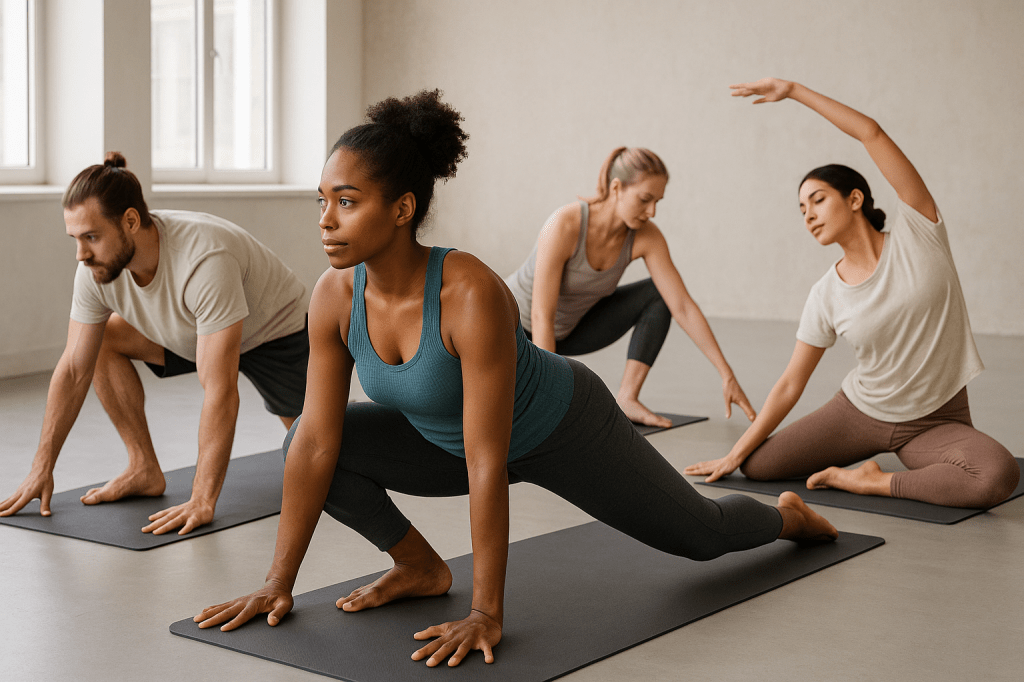
  1. Low Lunge with Twist (Hip Mobility & Spinal Rotation)

Instructions:

Step your right foot forward between your hands, lowering your left knee to the mat into a low lunge position.

Look up toward your extended hand and maintain the twist for about 20 seconds.

Return your hand to the mat and switch sides.

Benefits: Loosens tight hips, stretches hip flexors, and improves spinal mobility.

  1. Downward Dog Pedal (Calf & Hamstring Flexibility)

Instructions:

From a Downward Dog position (hands and feet on the mat, hips lifted high), begin to pedal your feet.

Lower your right heel toward the floor, bending your left knee slightly.

Next, alternate by pressing your left heel down as you bend your right knee.

  1. Wrist Circles and Finger Stretch (Joint Mobility)

Instructions:

Stretch your arms forward, keeping your palms directed downward.

Rotate your wrists slowly clockwise 10 times, then counterclockwise 10 times.

Next, spread your fingers wide apart and hold for 10 seconds.

Relax and repeat the finger stretch 2–3 times.

Benefits: Prepares wrists and fingers for weight-bearing postures, reduces stiffness, and increases joint mobility.

Benefits of a Pre-Workout Stretching Routine for Yogis

Injury Prevention: Warming up your muscles gradually helps lower the chances of pulls, strains, or other workout-related injuries.

Improved Performance: Enhanced joint mobility enables deeper, more precise movements.

Greater Mind-Body Connection: Focused stretching increases body awareness and mental readiness.

Enhanced Recovery: Prepping muscles reduces soreness after intense sessions.

Final Thoughts

Building a consistent pre-workout stretching habit is one of the most effective ways to honor your body and boost your fitness. For yogis especially, flexibility and mobility are more than physical attributes—they’re gateways to a richer, more mindful practice. Integrate these stretches into your routine and feel the difference in your next session.

Categories
athletes beginners Fitness fitness-tips flexibility flexibility & mobility gear & reviews Gym home workout men mobility Muscle Gain recovery recovery & wellness training yogis

Best Yogis Shoes for Beginners: A Guide to Gear & Reviews for Yogis

If you’re just starting your yoga journey, choosing the right gear can make all the difference — especially when it comes to footwear. While traditional yoga is often practiced barefoot, beginner yogis exploring various fitness styles or hybrid workouts might benefit from specialized shoes designed to enhance comfort, stability, and performance. In this guide, we’ll explore the best yogis shoes for beginners, sharing gear insights, reviews, and practical instructions to help you elevate your practice safely and effectively.

Why Consider Shoes for Yoga Beginners?

Yoga is more than just poses — it’s about balance, alignment, and connection to your body and surroundings. Although barefoot practice is classic, some beginner yogis prefer lightweight, flexible shoes that offer grip, protection, and support. This is especially true if you:

Practice outdoors or in chilly environments

Combine yoga with fitness routines like Pilates, barre, or light cardio

Have foot sensitivity or injuries that need extra cushioning

Want to enhance stability during standing or balancing poses

The right yogi shoes can provide traction on slippery surfaces, help maintain proper foot alignment, and boost confidence in your movements.

What to Look for in Beginner Yoga Shoes

When choosing shoes for yoga, prioritize these features:

Flexibility: The shoe should bend and move naturally with your foot.

Grip: Look for soles with excellent traction to prevent slipping.

Breathability: Yoga can get sweaty, so breathable materials keep your feet cool and dry.

Lightweight: Heavy shoes restrict movement; aim for light designs.

Minimal Cushioning: Too much padding can reduce your sense of connection to the floor.

Instructions: How to Choose and Use Yoga Shoes for Beginners

Step 1: Assess Your Needs

Consider why you want yoga shoes. Are you practicing outdoors, combining yoga with other workouts, or needing foot protection? This will guide your choice.

Step 2: Try Them On

Visit a store or order online with a flexible return policy. When trying shoes on:

Wear thin socks or practice barefoot to simulate yoga conditions.

Check that toes can move freely and that the shoe feels snug but not tight.

Step 3: Break Them In

Use your shoes around the house or during light warm-ups before wearing them in full sessions. This helps the materials soften and molds to your feet.

Step 4: Practice Mindfully

Use shoes primarily for hybrid workouts or outdoor yoga. Avoid wearing them during traditional barefoot sequences to maintain foot strength and natural movement.

Step 5: Care for Your Shoes

Clean your shoes after use according to manufacturer instructions. Air them out to prevent odors and maintain hygiene.

Top Picks: Best Yogis Shoes for Beginners

  1. Nike Free RN Flyknit

Flexible soles and breathable knit uppers give a barefoot feel with protection, perfect for yoga and fitness cross-training.

  1. Vibram FiveFingers KSO EVO

Toe-separated design promotes natural foot function and balance — great for enhancing proprioception in yoga.

  1. Adidas Adipure Trainer

Lightweight, breathable, and grippy, this trainer is ideal for indoor and outdoor yoga sessions.

  1. FREETOO Minimalist Shoes

An affordable option offering flexibility, breathability, and slip resistance for beginner yogis on a budget.

Final Thoughts: Elevate Your Practice with the Right Gear

Starting yoga is a rewarding step toward better fitness and mindfulness, and your gear can support this journey in meaningful ways. While yogi shoes aren’t mandatory, they offer practical benefits for beginners venturing into fitness hybrids or those needing extra foot support. By following these simple instructions, you can select and use shoes that enhance comfort, flexibility, and grip—helping you build a strong foundation for a fulfilling and balanced yoga practice.

Remember, yoga is ultimately about connecting with your body and breath, whether barefoot or shod. Gear is just one piece of the puzzle, but it can help you step confidently onto your mat.

Categories
athletes beginners Budget-Friendly busy schedules cardio cardio & endurance exercises Fitness fitness-tips flexibility flexibility & mobility gear & reviews Gym home workout men mobility Muscle Gain recovery & wellness strength training stretching training women workouts yogis

Gym Equipment Must-Haves for Yogis

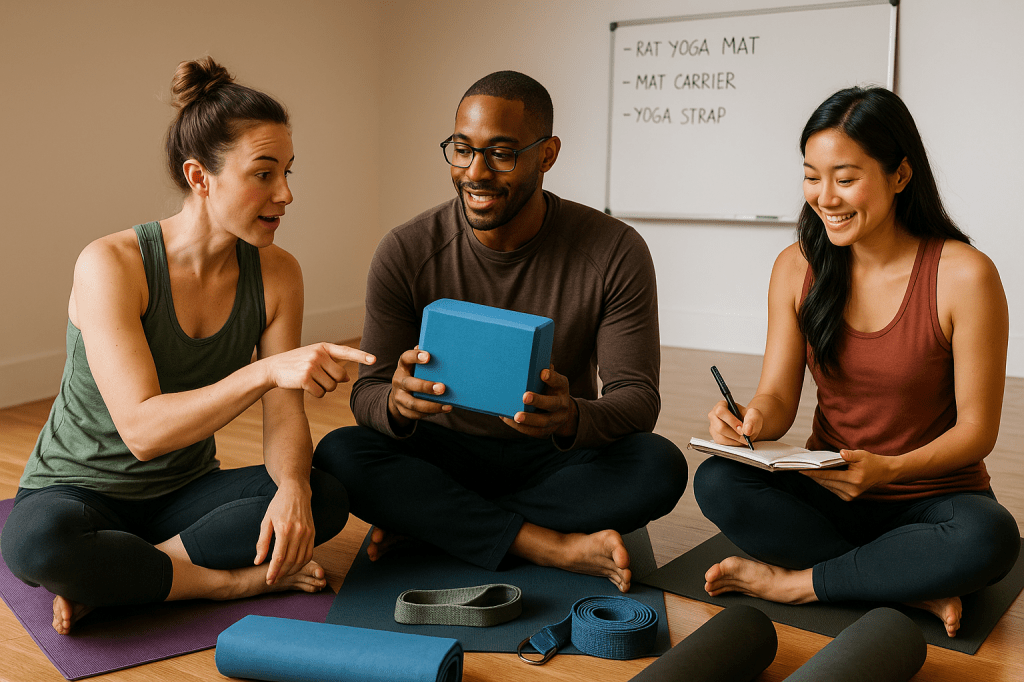
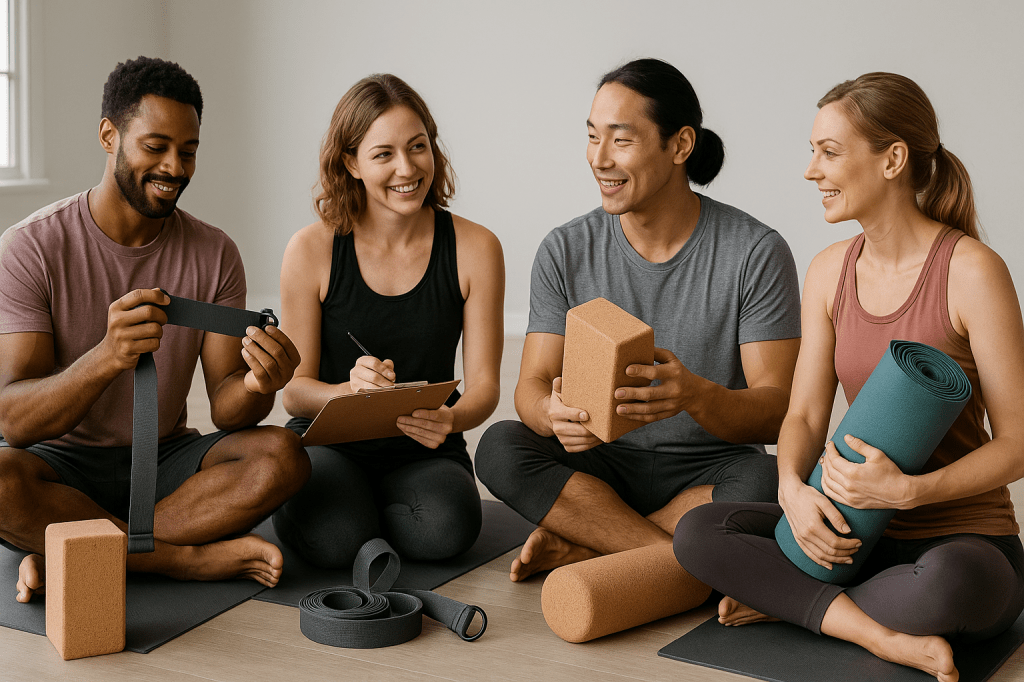
Yoga is a deeply personal and transformative practice. Whether you’re perfecting your Warrior II or just finding time to breathe, the right tools can make all the difference. This guide highlights gym equipment essentials for yogis—complete with reviews, tips, and step-by-step instructions—to help you build a well-rounded, supportive yoga space.

Why Equipment Matters for Your Yoga Practice

The right yoga gear does more than make your setup look good. It offers comfort, support, and structure, helping you move more freely while reducing the risk of injury. With this list, you’ll be able to practice smarter and safer.

  1. Premium Yoga Mat

Purpose: A yoga mat offers a stable, cushioned surface to support comfort and traction during your sessions.

How to Use:

Roll out the mat on a flat surface.

Ensure the grippy or textured side of the mat is facing upward for better traction during your practice.

Use alignment lines (if available) to position hands and feet in poses like Downward Dog.

Suggested: Manduka PRO Yoga Mat – Known for its dense cushioning, it’s ideal for joint support and designed for long-term use.

  1. Yoga Blocks

Purpose: Yoga blocks are useful tools for enhancing stability, improving flexibility, and supporting proper posture during poses.

How to Use:

For hamstring stretches: Place one block under each hand in a forward fold if your hands don’t touch the floor.

For support: Use under your sacrum in Bridge Pose for a supported version.

For seated poses: Use a block to elevate your hips, which can help alleviate strain on your knees and hips.

Suggested: Gaiam Cork Yoga Blocks — Durable, environmentally friendly, and offering a comfortable, natural texture for grip.

  1. Yoga Strap

Purpose: A yoga strap helps you reach farther and hold stretches longer without putting undue strain on your muscles.

How to Use:

Seated Forward Stretch: Sit with your legs extended straight ahead. Wrap the strap around the bottoms of your feet and carefully pull yourself forward, maintaining a long, straight spine.

Shoulder Stretch: Grasp the strap behind your back with both hands and gradually raise it to gently open and stretch your shoulders.

Reclined Leg Stretch: While lying on your back, loop the strap around one foot and slowly raise your leg toward the ceiling, keeping it straight for an effective hamstring stretch.

Recommended: Jade Yoga Strap — Known for its durability and adjustable metal D-rings.

  1. Foam Roller

Purpose: Foam rollers are excellent for muscle recovery, helping to ease tightness and improve blood flow.

How to Use:

To ease tight quadriceps: Lie face down and position the foam roller beneath your thighs. Gently roll from your hips toward your knees to help loosen the muscles.

For back relief: Sit on the floor with the roller positioned behind you. Carefully lean back and move slowly along your spine to massage and relax the muscles.

Pre- or Post-Yoga: Spend 5 to 10 minutes rolling key muscle groups to enhance flexibility and reduce soreness.

Recommended: TriggerPoint GRID Foam Roller — Features a firm, textured surface designed for deep muscle relief.

  1. Meditation Cushion

Purpose: Meditation cushions support correct posture and increase comfort during longer sitting sessions.

How to Use:

Zafu (round cushion): Sit upright near the front edge of the cushion, crossing your legs comfortably before you.

Benefit: Raising the hips slightly tilts the pelvis forward, helping to maintain a natural and upright spinal alignment.

Suggested: Hugger Mugger Zafu & Zabuton Set — Provides sturdy support and includes a removable, washable cover for convenience.

Tips for Choosing Your Yoga Gear

Test materials: When trying out new gear, make sure to check the return policy, especially if you’re unsure about the feel or firmness.

Consider portability: If you often practice at different locations, opt for equipment that’s lightweight and easy to transport.

Research gear & reviews: Reading what fellow yogis have to say can give you valuable insights into a product’s performance and durability.

Stick with essentials first: Begin with a good mat, one block, and a strap—then build out as your practice deepens.

The Benefits of Having the Right Gear

Injury prevention: Props allow you to ease into poses safely.

Improved alignment: You’ll hold better posture without forcing your body.

Enhanced flexibility: Over time, supportive gear can help deepen your range of motion.

Increased consistency: When practice feels better, you’re more likely to return to the mat.

Final Word

The journey of a yogi is unique, but the tools that support it are often shared. Whether you’re seeking balance, flexibility, or peace of mind, these gym equipment must-haves offer exactly that. With trusted gear & reviews to guide your choices, your yoga practice can become not only more accessible—but more powerful.

Remember, it’s not about having everything. It’s about having the right things. Invest in your wellness, take your time exploring what fits, and enjoy the process. Namaste.

Categories
Fitness flexibility & mobility Gym home workout mobility nutrition nutrition & meal recovery & wellness strength training stretching women yogis

Daily Mobility Routine to Prevent Injuries in Yogis

Whether you’re easing into your first downward dog or moving through advanced asanas, the key to a sustainable yoga practice isn’t just flexibility — it’s mobility. This short, effective daily routine supports joint health, reduces injury risk, and enhances your overall movement quality.

What’s the Difference Between Flexibility & Mobility?

Flexibility is how far a muscle can stretch.

Mobility is how well a joint moves under control through that range.

Yoga already boosts flexibility. But when we train mobility, we strengthen those flexible ranges so they’re more resilient — which is critical for preventing injuries.

Your 10-Minute Daily Mobility Routine for Yogis

No equipment needed. Just your body, your breath, and about 10 minutes of focused, mindful movement.

  1. Controlled Shoulder Circles (CARs)

Purpose: Helps unlock the shoulder joint while improving strength and control throughout your range of motion.

Instructions:

Stand or sit tall.

Extend one arm straight out in front of you.

Slowly move it in a full circle overhead and behind, like you’re tracing the biggest circle possible.

Keep the rest of your body still.

Reverse direction after 5 reps.

Reps: 5 slow circles in each direction per arm.

  1. Cat-Cow with Core Engagement

Why: Mobilizes your spine while training breath and core control.

Instructions:

Start on hands and knees.

Inhale: Arch your back, lifting your tailbone and chest (Cow).

Exhale: Gently curve your spine upward, drawing your chin toward your chest and tucking your pelvis under.

Focus on moving one vertebra at a time.

Time: 1 minute of slow, controlled reps.

  1. 90/90 Hip Switches

Why: Opens hips and strengthens rotational movement.

Instructions:

Sit down with both knees bent — position one leg in front of you and the other out to the side, forming roughly 90-degree angles at each knee.

Keep your chest tall.

Carefully twist your hips to move both legs over to the other side, making sure your hands stay lifted off the floor.

Control the motion — avoid rushing.

Reps: 10 switches total (5 per side).

  1. Lunge with Spinal Twist

Why: Stretches hip flexors and thoracic spine — key for many yoga poses.

Instructions:

Step one foot forward into a deep lunge.

Place opposite hand on the floor.

Lift your opposite arm toward the ceiling as you rotate your torso to face your front leg.

Hold 2–3 breaths, then switch.

Reps: 5 reps per side.

  1. Deep Squat Hold with Arm Reaches

Why: Improves ankle, hip, and thoracic mobility.

Instructions:

Stand with feet hip-width apart.

Sink into a deep squat (heels down if possible).

Extend one arm upward as you gently press the opposite elbow against the inside of your knee for support.

Switch arms slowly.

Time: Hold the squat for 1–2 minutes, alternating arm reaches every 20 seconds.

  1. Downward Dog to Plank Rolls

Why: Engages shoulders, spine, and core control through transitions.

Instructions:

Start in Downward Dog.

Roll your spine forward into Plank position, stacking shoulders over wrists.

Roll back into Downward Dog with control.

Avoid collapsing — move smoothly.

Reps: 10 reps total.

  1. Supine Glute Bridge with Knee Pull

Why: Activates glutes, mobilizes hips, and stretches hamstrings.

Instructions:

Position yourself lying on your back, with your knees bent and feet placed about hip-distance apart.

Lift hips into a bridge, then pull one knee toward your chest.

Hold for 2–3 seconds, return foot to floor, repeat on the other side.

Reps: 10 reps each side.

Helpful Tips for Staying Consistent

Pair it with an existing habit (like brushing teeth or before yoga).

Use a timer so you don’t overthink it — just flow.

Stay present. Each rep is a chance to reconnect with your body.

Benefits for Yogis

Reduces injury risk during dynamic flows or deep stretches

Improves joint strength and body control

Supports smoother transitions between poses

Enhances body awareness on and off the mat

Encourages sustainable, long-term movement

Final Thought

Yoga is about more than being flexible — it’s about moving with intention, grace, and control. This mobility routine strengthens the foundation that supports your practice. Add it to your daily rhythm and feel the difference in how you move, stretch, and flow.

Categories
cardio & endurance Fitness Treadmill yogis

Treadmill Workout for Yogis

Yoga often centers on mindfulness, flexibility, and balance—but what if you could add cardio and endurance training that complements your practice without losing that sense of calm? A treadmill workout tailored for yogis can be the perfect way to boost your fitness while maintaining your mindful approach.

Why Yogis Should Add Cardio

While yoga enhances strength and flexibility, it doesn’t always provide enough cardiovascular challenge. Adding treadmill workouts helps build heart and lung endurance, improves circulation, and increases overall stamina—all of which support a more vibrant, longer-lasting yoga session.

How to Do a Treadmill Workout for Yogis: Step-by-Step

Instructions

This workout is designed to blend mindful movement with effective cardio. Take your time, focus on your breath, and move with intention.

  1. Warm-Up (5 minutes)

Set the treadmill to a gentle walking pace, around 2 to 2.5 miles per hour.

Focus: Breathe deeply and evenly, swinging your arms naturally.

Maintain an upright posture with relaxed shoulders and a lengthened spine, similar to the alignment in Mountain Pose (Tadasana).

Mindfulness: Tune into how your feet feel with each step.

  1. Interval Jog-Walk (15 minutes)

Cycle: Jog for 1 minute, then walk briskly for 2 minutes.

Jog speed: 4.5 to 5.5 mph, at a comfortable, sustainable pace.

Walk speed: 3.0 to 3.5 mph, brisk but controlled.

Breathing: Match your breath with steps — inhale for 3 steps, exhale for 3 steps.

Tip: Keep your gaze forward and relax your jaw and shoulders.

  1. Incline Walking (5 to 10 minutes)

Set incline: Start at 3%, gradually increasing to 6-8% as you feel comfortable.

Keep a consistent walking pace between 3 and 3.5 miles per hour.

Engagement: Draw your belly in slightly to activate your core.

Posture: Keep your chest open and spine straight, avoiding leaning forward.

Breath: Slow and controlled, as in Ujjayi breathing (soft constriction in the throat).

  1. Cool Down and Walking Meditation (5 minutes)

Speed: Gradually decrease to 1.5 to 2.0 mph.

Focus: Notice your breath, heartbeat, and how your body feels.

Mindfulness: Use this time like your Savasana — a moment to integrate the workout.

Optional: Close your eyes briefly if it feels safe, or soften your gaze.

Tips for Yogis on the Treadmill

Use a mantra like Inhale peace, exhale tension” to stay grounded.

Stay mindful of your posture — imagine lengthening your spine with every step.

Focus on steady, deep breaths to help maintain mental clarity and sustain your energy.

Listen to your body — if any movement feels off, slow down or take a break.

Benefits You’ll Notice

Adding treadmill cardio improves your endurance for longer yoga flows and helps keep your energy steady through extended poses. The focused breathing you practice on the treadmill also deepens your ability to stay present during challenging asanas. Together, they form a balanced approach to holistic fitness that nurtures both body and mind.

Categories
athletes cardio cardio & endurance exercises fat loss Fitness flexibility & mobility Gym yogis

Top Cardio Exercises for Yogis Lovers

If your usual go-to is a calming yoga flow, you might not think of cardio as a natural fit. But if you’re looking to improve stamina, boost heart health, or simply find more energy throughout your day, mixing cardio & endurance work into your wellness routine can deeply enhance your overall fitness.

This guide is designed for yogis who want to maintain their mind-body connection while exploring movement that elevates the heart rate in a sustainable, mindful way.

Why Should Yogis Add Cardio?

Yoga builds strength, balance, and flexibility—but it often lacks the sustained intensity needed to challenge your cardiovascular system. Adding 2–3 cardio sessions per week can:

Boost your endurance for long practices

Improve oxygen flow for breathwork (pranayama)

Enhance circulation and cardiovascular health

Help with detoxification through sweat

Balance a sedentary lifestyle if you sit often during the day

Best Cardio Exercises for Yogis (With Instructions)

These exercises are gentle on the joints, accessible for all levels, and easy to integrate into a yoga-friendly lifestyle.

  1. Walking or Hiking

Why it works: Low-impact, meditative, and great for stamina.

How to do it:

Aim for 30–45 minutes, 3–4 times per week.

Focus on maintaining an upright posture and relaxed breath.

If you walk after yoga, let your body stay in “flow mode” by moving mindfully, not briskly.

Try breath syncing: inhale for 4 steps, exhale for 4 steps.

Tip: Nature walks offer grounding benefits—perfect for yogis who practice mindfulness or meditation.

  1. Jump Rope

Why it works: Builds coordination and raises your heart rate quickly.

How to do it:

How to Get Started with Jump Rope:

Begin with short bursts—jump for about 30 seconds, then take a 30-second break.

Complete 5 cycles to keep the session around 5 minutes.

Keep your elbows tucked in and aim for quick, light jumps—think of it more like bouncing than leaping.

Focus on soft landings to ease pressure on your joints; imagine you’re skipping quietly on a yoga mat.

Pro tip: Use jump rope as a warm-up before a vinyasa session to get your blood flowing and loosen up tight muscles.

  1. Swimming

Why it works: Full-body, low-impact, and breath-focused.

How to do it:

Swim laps for 20–30 minutes, mixing strokes (freestyle, breaststroke).

Focus on steady, rhythmic breathing—inhale through the mouth, exhale through the nose if possible.

Alternate your pace—swim two laps at a relaxed speed, then follow with one lap at a more vigorous effort.

Tip: Swimming pairs beautifully with yoga’s emphasis on breath control and fluid motion.

  1. Dance or Free Movement

Why it works: Cardio disguised as joy. Great for creativity and emotional release.

How to do it:

Put on your favorite playlist.

Set a timer for 10–20 minutes.

Move freely—there’s no “right” way.

Let your breath and body lead. Don’t think; just move.

Tip: Follow up with a short yin yoga sequence to integrate and settle your energy.

  1. Bodyweight Intervals (Yoga + HIIT Hybrid)

Why it works: Increases heart rate while using functional movement that supports yoga poses.

How to do it:

Perform the following as a 10-minute circuit, 2–3 rounds:

Exercise Duration Instruction
Jumping Jacks 30 seconds Keep shoulders relaxed, land lightly

High Knees 30 seconds Bring knees to hip height, engage your core

Mountain Climbers 30 seconds Keep a strong plank shape, drive knees forward

Rest 30 seconds Breathe deeply and reset posture

Chair Pose Pulses 30 seconds From utkatasana, pulse 2–3 inches up/down slowly

Plank to Down Dog 30 seconds Flow between poses for breath and shoulder mobility

Suggestion: Wrap up your session with a calming pose like savasana or a gentle reclining twist to help your body unwind.

How to Combine Cardio & Yoga

Below is a practical example of how you can organize your weekly schedule:

Day AM PM

Monday Light walk (30 min) Yin Yoga (20–30 min)

Tuesday Vinyasa Yoga (45 min) –

Wednesday Swimming (20–30 min) Gentle stretching

Thursday HIIT-style circuit (20 min) Meditation (10 min)

Friday Rest or easy hike Restorative Yoga

Saturday Free dance (15 min) Flow Yoga

Sunday Long walk or rest Journaling + breathwork

Final Thoughts
Cardio & endurance exercises don’t compete with your yoga—they complement it. When done mindfully, they boost energy, deepen awareness, and improve your resilience both on and off the mat. Start small, listen to your body, and let your practice evolve to support your full fitness potential.

Categories
athletes exercises home workout men Muscle Gain recovery & wellness strength training training Uncategorized yogis

Full Body Strength Workout with Yogis

For yogis, strength training can be a powerful complement to a regular yoga practice. While yoga develops flexibility, balance, and breath awareness, strength training enhances muscle support, stability, and joint health. When these practices are combined, they build a more functional, injury-resistant, and balanced body.

Why Strength Training Benefits Yogis
Many yogis assume strength training might “bulk them up” or reduce flexibility, but the truth is the opposite. Mindful resistance work helps deepen poses, stabilize transitions, and prevent injury by reinforcing the muscles that support joints. Strength doesn’t interfere with yoga—it enhances it.

Full Body Strength Workout for Yogis
No machines or barbells required. Just your bodyweight, a pair of light-to-medium dumbbells, and optional resistance bands. Here’s a yogi-friendly routine to target all major muscle groups.

  1. Chair Pose to Overhead Press
    Muscles: Quads, glutes, shoulders
    Equipment: Dumbbells (optional)

Instructions:

Plant your feet about hip-width apart and bring the dumbbells up to shoulder level, keeping your elbows bent and close to your body.

Inhale as you sink into Chair Pose (Utkatasana), keeping weight in your heels.

Let the air out as you press the weights overhead, rising up tall with a straight, strong posture.

If you want it more poetic or more direct, just say the word!

Lower weights back to shoulders and repeat.

Reps: 3 sets of 10

  1. Plank Rows (Renegade Rows)
    Targets: Core, back, arms
    Gear: Dumbbells

Get into a solid high plank position, gripping the dumbbells just beneath your shoulders, and keep your whole body in a straight line from head to heels.

Engage your core and shift weight slightly to the left.

Row the right dumbbell toward your rib cage, elbow close to body.

Lower it with control and repeat on the other side.

Reps: 3 sets of 8 per side

  1. Glute Bridges
    Muscles: Glutes, hamstrings, lower back
    Equipment: Bodyweight or resistance band

Instructions:

Lie on your back with knees bent, feet flat and hip-width apart.

Arms down by your sides, palms facing the mat.

Inhale, then exhale as you press through your heels to lift hips.

Squeeze your glutes at the top, hold for a breath, then lower slowly.

Reps: 3 sets of 15

  1. Crescent Lunge with Bicep Curl
    Muscles: Legs, glutes, biceps, core
    Equipment: Dumbbells

Instructions:

Step the right foot forward into a deep lunge, back heel lifted.

Hold dumbbells at your sides, elbows close.

As you lower into the lunge, bring those weights up with a smooth curl.

Lower weights and switch sides after each set.

Reps: 3 sets of 10 per side

  1. Wall Sit Hold
    Muscles: Quads, glutes, calves
    Equipment: Wall

Instructions:

Position yourself with your back flat against a wall and step your feet forward about two feet, keeping them hip-width apart.

Slide gently down the wall until your thighs are parallel to the floor, like you’re sitting in an invisible chair, with your knees bent around a right angle.

Keep knees over ankles, core tight, and back flat.

Maintain the pose, keeping your hands free and off your legs for support.

Hold: 3 sets of 30 seconds

Tips for Integration into a Yoga Practice
Begin with breath: Approach each movement as a mindful flow, not a task.

Do this 1–2x per week: You don’t need daily lifting to see results.

Use yoga as recovery: Incorporate restorative flows on rest days.

Listen to your body: Just like yoga, strength work requires self-awareness.

Final Thoughts
When yogis begin strength training with intention and body awareness, it becomes an extension of their practice—not a disruption. Strength brings stability into postures, endurance into sequences, and resilience into daily life. Fitness doesn’t have to be a competition; it can be an exploration. With the right balance, your mat becomes both a place of flexibility and power.