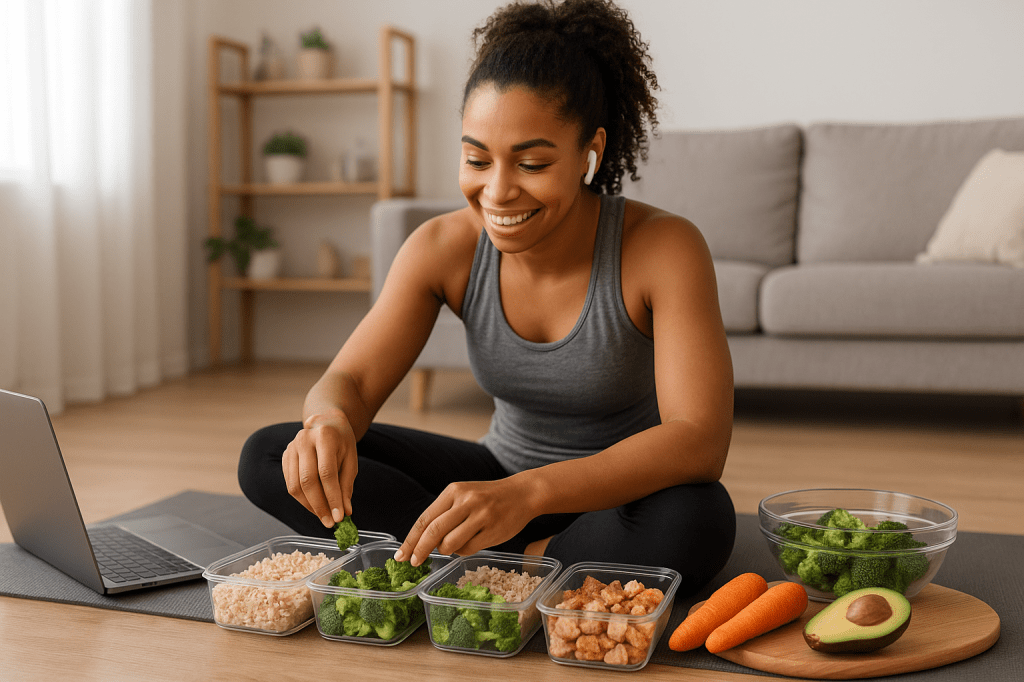
If you’re working out at home, you’re already investing in your health — but are your meals working as hard as you are? Pairing home workouts with intentional nutrition & meal prep can help you recover faster, feel stronger, and stay consistent without the stress of last-minute food choices.
This guide breaks down not just the why, but the how — with real-life instructions you can apply starting this week.
Why Nutrition & Meal Prep Matter
Home workouts give you flexibility — no commute, no crowds, no excuses. But when the fridge is only a few steps away, it’s easy to reach for what’s quick instead of what’s best for your body.
Planning your meals ahead of time helps ensure your nutrition supports your workout goals It also helps regulate energy levels, improve focus, and prevent overeating after workouts.
Step-by-Step Instructions for Healthy Meal Prep
Step 1: Plan Your Workout Days
Take 5 minutes to map out your week. Identify your workout days and rest days.
Example:
Monday: Strength
Wednesday: HIIT/cardio
Friday: Yoga
Saturday: Rest
Tip: You don’t need a complex workout program — just enough structure to plan your meals around.
Step 2: Match Meals to Workout Intensity
Not every day requires the same fuel. Adjust your prep based on your energy needs.
Workout Type Focus What to Include
Strength Muscle repair High-protein moderate carbs
Cardio Endurance Moderate protein, higher carbs
Recovery Anti-inflammatory & hydration Healthy fats, veggies, electrolytes
Step 3: Choose 2–3 Recipes Per Meal Type
Keep it simple. You don’t need 10 new recipes a week. Pick 2–3 each for:
Breakfasts (e.g., overnight oats, veggie omelet muffins, Greek yogurt parfaits)
Lunch/Dinner (e.g., grilled chicken bowls, veggie stir-fry with tofu, salmon & quinoa)
Snacks (e.g., protein bites, boiled eggs, apple with almond butter)
Aim for meals that reheat well and can be stored 3–5 days in the fridge.
Step 4: Grocery Shop with a List
Write down your ingredients for the week ahead. Organize your list by category to save time.
Example Grocery List:
Protein: Chicken breast, canned tuna, tofu, eggs
Carbs: Brown rice, oats, sweet potatoes
Veggies: Spinach, broccoli, bell peppers, carrots
Fats: Avocados, olive oil, almonds
Extras: Greek yogurt, bananas, lemon, herbs/spices
Step 5: Batch Cook 1–2 Times a Week
Choose a day (Sunday works well) to cook and portion meals. A midweek top-up (Wednesday) keeps things fresh.
Basic Batch Cooking Routine:
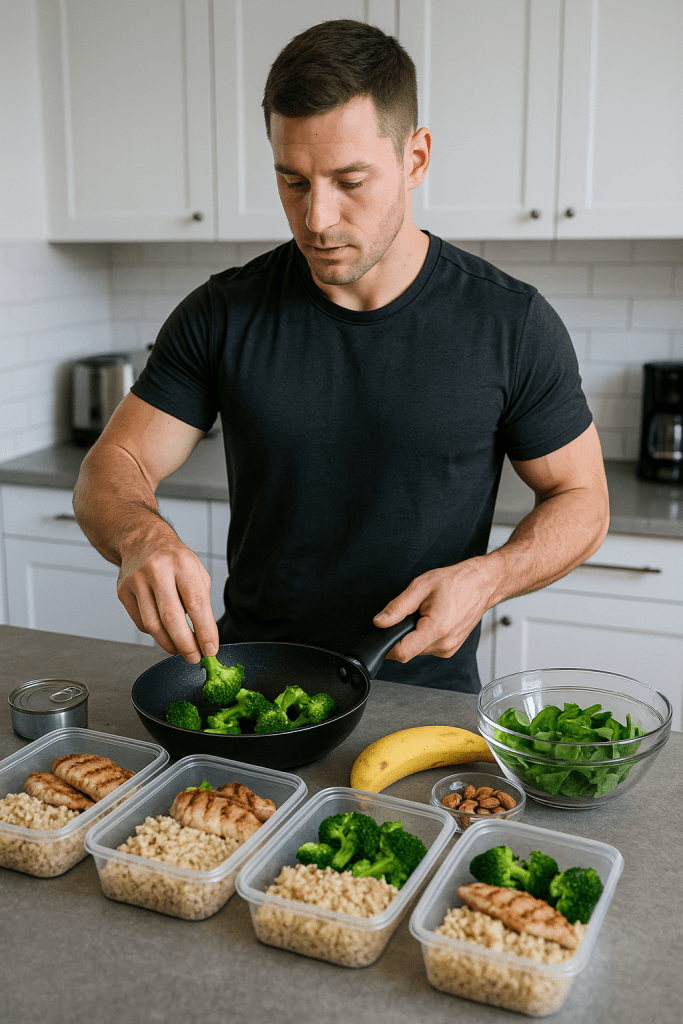
Cook all proteins (bake or grill for easy cleanup)
Roast or steam veggies
Prepare grains (quinoa, rice, or couscous)
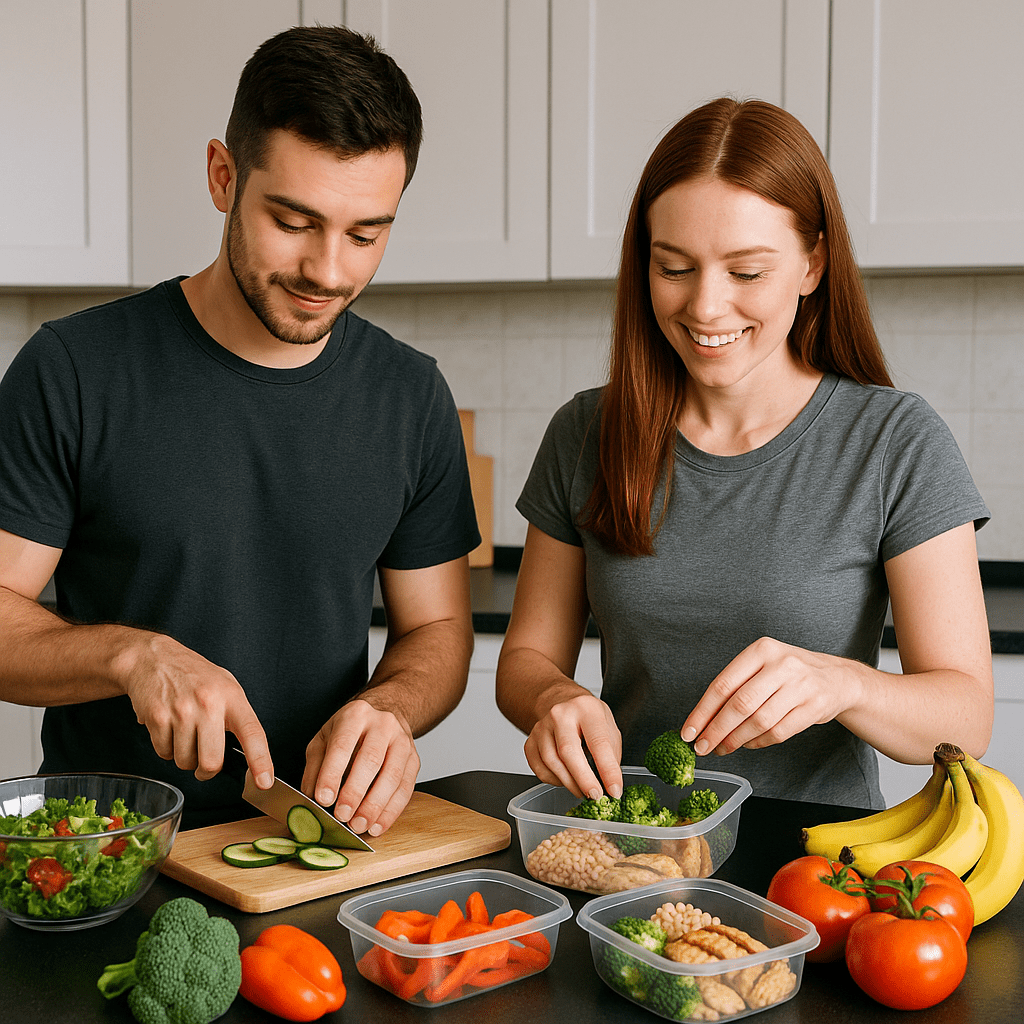
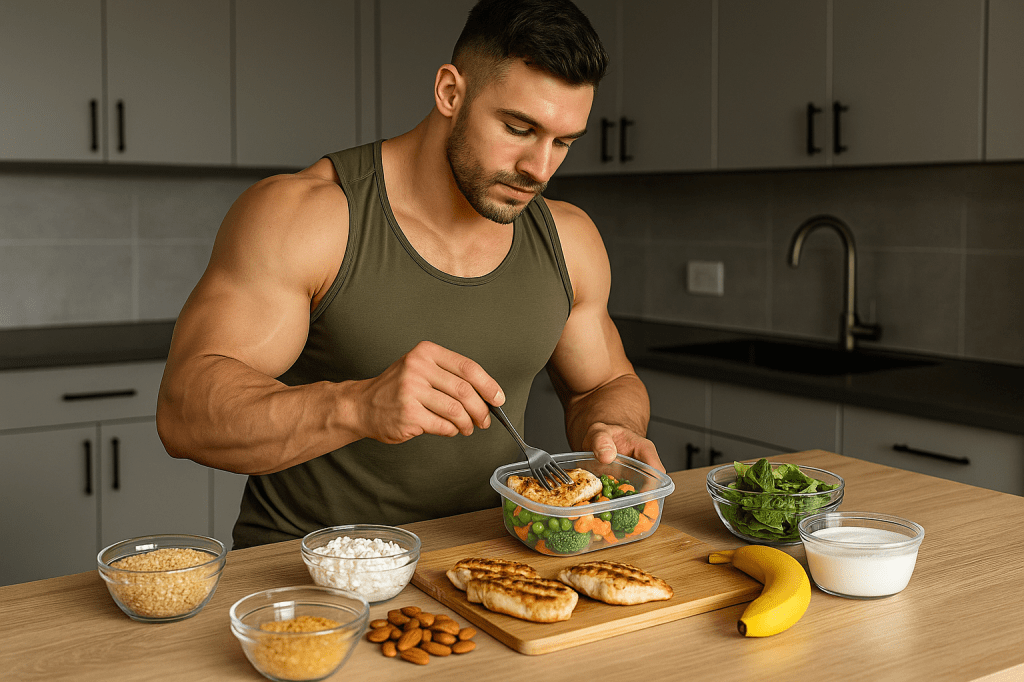
Portion into containers by meal
Store your meals in transparent containers to easily identify what’s inside without opening them. Label with the day if that helps you stay organized.
Step 6: Prep Pre- and Post-Workout Snacks
Keep quick energy and recovery options on hand:
Pre-Workout:
Banana + peanut butter
Rice cake + avocado
Small smoothie with oats
Post-Workout:
Protein shake with fruit
Turkey wrap
Cottage cheese + berries
Step 7: Stick to the System, Not Perfection
Meal prep isn’t about strict dieting. It’s about making your week easier, more nutritious, and more intentional.
If you skip a prep day or order takeout once, don’t scrap the whole week. Get back to your plan the next meal. Progress over perfection.
Benefits You’ll Notice (Quickly)
Less mental energy spent deciding what to eat
Improved performance during your home workouts
Faster recovery and better mood throughout the day
Reduced stress around meals and grocery runs
Final Thoughts
Healthy meal prep isn’t a trend — it’s a strategy. When you pair intentional eating with consistent home workouts, your body responds. You don’t need to be a gourmet chef or a fitness model — just someone with a plan.
Start small. Prep one extra meal this week. Build from there.
You’ve already committed to moving your body — now let your meals move you closer to your goals, too.




 Fitness Guide