Categories
Dinner Fitness fitness-tips Meals nutrition nutrition & meal seniors training

Budget-Friendly Meals for Seniors Nutrition

Maintaining good nutrition is essential for seniors to support overall health, fitness, and well-being. However, eating healthily doesn’t have to be expensive or complicated. With a little planning and smart meal prep, seniors can enjoy nutritious, budget-friendly meals that fuel their bodies and promote vitality.

Why Nutrition & Meal Prep Matter for Seniors

As we age, our nutritional needs change. Seniors often require fewer calories but more vitamins, minerals, and protein to preserve muscle mass and support immune function. Meal prep can be a game-changer—helping seniors avoid unhealthy convenience foods and make the most of their food budget by cooking in batches and reducing waste.

How to Get Started: Step-by-Step Instructions

  1. Plan Your Meals Weekly

Dedicate a brief 15 to 30 minutes each week to organize your upcoming meals.

Choose simple recipes with affordable ingredients.

Make sure to include plenty of vegetables, lean protein sources, and whole grains in your meals.

Write a grocery list based on your plan to avoid impulse buys.

  1. Shop Smart

Buy seasonal fruits and vegetables—they’re fresher and cheaper.

Keep an eye out for deals on essentials such as beans, lentils, and frozen vegetables.

Purchase bulk items that freeze well, such as chicken breasts or brown rice.

  1. Prep Ingredients in Advance

Wash and chop vegetables right after shopping.

Cook grains like rice or quinoa in large batches and store portions in the fridge or freezer.

Prepare protein options like hard-boiled eggs or baked chicken breasts to add to meals quickly.

  1. Cook in Batches

Make larger portions of soups, stews, or casseroles.

Divide cooked meals into single-serving containers.

Freeze or refrigerate portions for easy grab-and-go meals during the week.

  1. Use Simple Seasonings

Keep a small selection of herbs and spices such as garlic powder, paprika, and dried oregano.

These add flavor without extra cost or calories.

Simple, Budget-Friendly Meal Ideas with Instructions

Hearty Lentil Soup

Ingredients: lentils, carrots, onions, garlic, vegetable broth, canned tomatoes, and spices.

Rinse 1 cup of lentils.

Sauté diced onions, garlic, and carrots in a pot until soft.

Combine the lentils, 4 cups of vegetable broth, and a can of diced tomatoes in the pot, stirring thoroughly.

Simmer for 30-40 minutes until lentils are tender.

Season with salt, pepper, and herbs. Portion and refrigerate or freeze leftovers.

Oatmeal with Fruit and Nuts

What you’ll need: rolled oats, either water or milk, fresh or frozen fruit, and a small handful of nuts.

Instructions:

Prepare ½ cup of oats by cooking them in 1 cup of water or milk until soft.

Top with your choice of sliced fruit and a handful of nuts to enhance flavor and nutrition.

Vegetable Stir-Fry with Brown Rice

Ingredients: frozen mixed vegetables, cooked brown rice, soy sauce, and olive oil.

Heat 1 tablespoon olive oil in a pan.

Add frozen vegetables and sauté until heated through.

Stir in 1 cup cooked brown rice.

Add a splash of soy sauce for flavor.

Serve hot as a quick, balanced meal.

Egg and Spinach Wraps

Ingredients: eggs, fresh spinach, whole wheat wraps.

Scramble 2 eggs in a pan.

Add a handful of spinach and cook until wilted.

Lay the egg and spinach mixture onto a whole wheat wrap and roll it up securely.

A simple, protein-rich meal ready in minutes.

Benefits of Staying Fit and Eating Well for Seniors

Good nutrition combined with regular physical activity supports muscle strength, bone health, and cognitive function. Meal prepping reduces stress around mealtime, ensures consistent nutrient intake, and can encourage social interaction when meals are shared with friends or family.

Categories
Fitness Meals nutrition & meal women

Healthy Meal Prep for Women Days

Balancing wellness, work, and everything in between isn’t easy — especially when your schedule leaves little time to think about food. That’s where meal prep can truly change your life. This guide breaks down everything you need to know about nutrition & meal prep specifically for women – with realistic tips, instructions, and benefits that support your fitness and lifestyle.

Why Meal Prep Matters for Women

Whether you’re training, managing a busy household, or simply trying to eat better, prepping your meals helps you:


Maintain energy throughout the day
Avoid last-minute unhealthy food choices
Fuel your body for workouts and recovery
Reduce stress around food decisions
Stay in control of your health goals

How to Start: Step-by-Step Meal Prep Instructions

Here’s a simple and effective way to plan and prep your meals for the week:

Step 1: Plan Your Meals (30 minutes)

Pick 2–3 main meals you enjoy and that align with your goals (e.g., high protein, plant-based, low-carb).

Choose meals that share ingredients to save time and money.

Make sure to include snacks and breakfast in your plan, as they’re commonly missed but important.

Example Weekly Plan:

Breakfast: Overnight oats with almond butter & berries

Lunch: Grilled chicken quinoa bowls

Dinner: Veggie stir-fry with brown rice

Snacks: Greek yogurt, almonds, chopped cucumbers

Step 2: Make a Grocery List (15 minutes)

Break it down into categories: proteins, veggies, grains, dairy, pantry, snacks

Check what you already have at home

Stick to the list to avoid impulse buys

Tip: Use a grocery app or notepad to stay organized.

Step 3: Prep & Cook (1.5–2 hours on your chosen day)

Choose a day when you have time to prep — Sundays work well for many, but midweek is fine too.

Start with ingredients that take longest (e.g., rice, baked sweet potatoes)

While those cook, chop veggies and portion out snacks

Cook proteins (grill, roast, or sauté chicken, tofu, etc.)

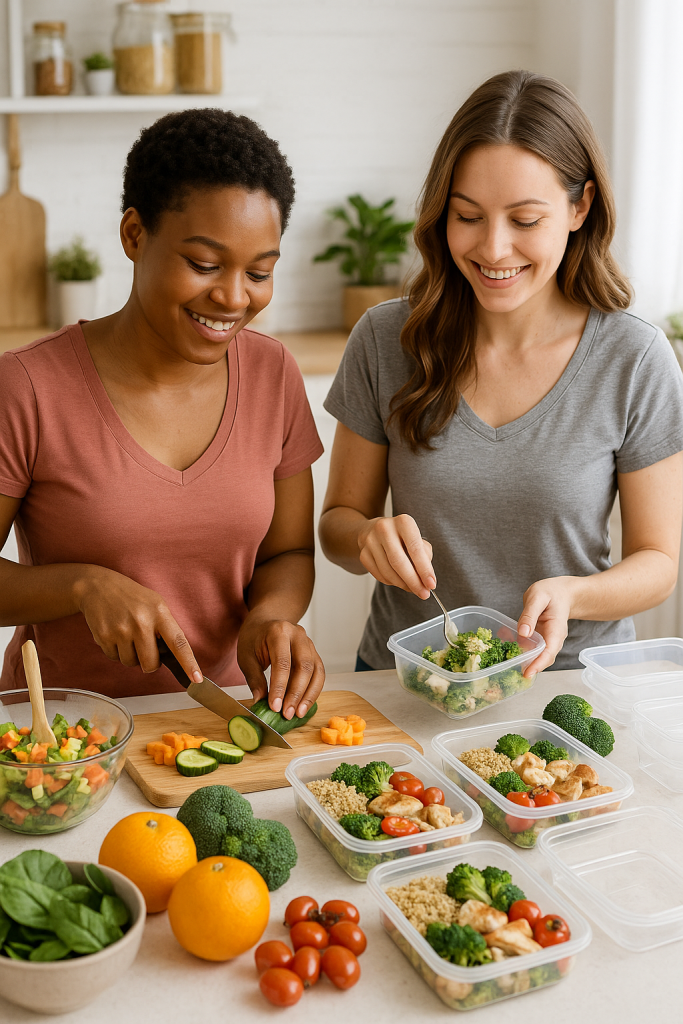
Assemble meals in containers or keep ingredients separate for mix-and-match flexibility

Label containers with contents + date (especially if freezing)

Pro Tip: Use a sheet pan to roast multiple veggies at once for easy cleanup!

Step 4: Store Smart

Use glass or BPA-free containers with tight lids

Separate sauces/dressings to keep meals fresh

Stack meals for easy grab-and-go access

Freezer Tip: Freeze one or two servings for busier weeks — just thaw overnight in the fridge.

Bonus: Quick & Healthy Meal Ideas

Protein Power Bowl

Quinoa + roasted chickpeas + spinach + tahini drizzle

Simple Stir-Fry

Broccoli + carrots + tofu + brown rice + sesame oil

Mason Jar Salad

Start by placing the dressing on the bottom, then add grains and vegetables, finishing with a layer of fresh greens on top.

Tips for Long-Term Success

Keep it flexible: Life happens. Prepping just 2 meals a week is still progress.

Rotate ingredients: Try different grains, proteins, and sauces to avoid burnout.

Prep with a friend: Makes the process more fun and adds accountability.

Pay attention to your body’s signals and tailor your portion sizes and nutrient balance according to your energy needs and daily activity.

Final Thoughts

Meal prepping is more than just a health hack — it’s an act of self-care. By planning ahead, you’re giving yourself the gift of time, energy, and confidence. Whether your goal is to feel better, get stronger, or simply eat more whole foods, meal prep can support every part of your wellness journey.

Start small, stay consistent, and remember: You don’t have to be perfect — just prepared.

Categories
Baths exercises Fitness fitness-tips flexibility Gym home workout Meals men Muscle Gain nutrition recovery recovery & wellness strength training Supplements training women

Top Seniors Supplements for Muscle Growth

As we age, maintaining muscle mass becomes increasingly important—not just for strength, but for overall health, mobility, and quality of life. For seniors dedicated to fitness and wellness, nutrition and meal prep play a crucial role in supporting muscle growth and recovery. While a balanced diet is the foundation, certain supplements can provide targeted support to help seniors maintain and even build muscle effectively.

In this article, we’ll explore the top supplements seniors can consider to enhance muscle growth, alongside practical nutrition and meal prep tips tailored to their unique needs—with easy-to-follow instructions.

Why Muscle Growth Matters for Seniors

Muscle loss, or sarcopenia, naturally occurs as part of aging and can lead to weakness, falls, and reduced independence. But with the right combination of exercise, nutrition, and supplements, seniors can slow or even reverse this decline. Supplementing smartly supports recovery, increases muscle protein synthesis, and boosts overall fitness results.

Key Supplements for Seniors Focused on Muscle Growth (With How-To Use)

  1. Protein Powders (Whey, Casein, or Plant-Based)

Protein is vital for muscle growth and recovery.

Yet, many older adults find it difficult to get sufficient protein through their everyday meals.

Tips for adding protein supplements:

Aim to consume between 20 and 30 grams of protein at every meal to help preserve and grow muscle mass.

Consider adding a scoop of protein powder—typically providing around 20 to 25 grams of protein—into smoothies or mixing it with milk or water for convenience.

For best results, consume protein powder within an hour after completing strength training to aid muscle recovery.

If you choose casein protein, taking it before bed can provide a slow and steady release of amino acids during sleep.

Creatine Monohydrate
Creatine is known for its ability to restore energy stores in muscle cells, which helps enhance strength and speed up recovery times.

How to use creatine effectively:

Consume 3 to 5 grams each day, ideally after exercising, combined with water or juice to enhance absorption.

If using casein, take it before bedtime for slow release during sleep.

  1. Creatine Monohydrate

Creatine helps replenish energy in muscle cells, improving strength and recovery.

How to use:

Consume 3 to 5 grams of creatine each day, preferably following your workout, mixed with water or juice for optimal absorption.

There’s no need for a loading phase; consistent daily use is effective.

Drink plenty of water to stay hydrated while supplementing.

  1. Vitamin D

Vitamin D supports muscle function and bone health.

How to use:

Have your vitamin D levels assessed through a medical checkup with your healthcare provider.

Supplement with 1,000 to 2,000 IU daily, or as advised by a healthcare provider.

Take with a meal that contains fat for better absorption.

  1. Omega-3 Fatty Acids

Omega-3s aid muscle recovery and reduce inflammation.

How to use:

Consume a daily dose of 1,000 mg of EPA and DHA combined—be sure to verify the amounts on your supplement’s label.

Choose high-quality fish oil supplements with purity certification.

Consume with meals to improve digestion and absorption.

  1. Branched-Chain Amino Acids (BCAAs)

BCAAs stimulate muscle repair and reduce soreness.

How to use:

Consume 5 to 10 grams of BCAAs either just before or right after exercising.

Mix with water or your favorite beverage.

Use on rest days to aid recovery if needed.

Nutrition & Meal Prep Tips for Seniors Focused on Muscle Health (Step-by-Step)

Step 1: Prioritize Protein

Incorporate a quality protein source into each meal, such as chicken, fish, legumes, dairy, or protein supplements. Measure approximately 3 to 4 ounces of meat or one serving of protein powder using a kitchen scale or measuring tools.

Step 2: Balance Your Plate

Cover half of your plate with a variety of colorful vegetables, dedicate a quarter to lean proteins, and reserve the last quarter for whole grains or complex carbs.

Step 3: Meal Prep for Consistency

Spend one or two days a week preparing meals in bulk. Prepare lean protein dishes and roast a variety of vegetables, then divide the meals into individual containers. Store them in the refrigerator or freezer for convenient, ready-to-eat options throughout the week.

Step 4: Stay Hydrated

Aim for 6-8 glasses of water daily. Carry a reusable water bottle and sip throughout the day.

Step 5: Incorporate Strength Training

Engage in resistance exercises 2-3 times per week, focusing on major muscle groups. Consult a fitness professional for age-appropriate routines.

Final Thoughts

Building and maintaining muscle as a senior isn’t just about staying fit—it’s about preserving independence, boosting confidence, and improving quality of life. The right combination of nutrition, meal prep, fitness, and carefully chosen supplements can make a meaningful difference.

Important: Always consult your healthcare provider before starting new supplements to ensure they fit your health profile.

With thoughtful planning and dedication, seniors can continue to grow stronger and enjoy the benefits of an active lifestyle.

Categories
beginners Fitness Meals nutrition

Top Beginners Supplements for Muscle Growth

Building muscle as a beginner is exciting — you’re making real changes to your body, gaining strength, and stepping into a new fitness lifestyle. But between gym sessions and meal prepping, the world of supplements can feel overwhelming. Which ones actually work? Which are safe for beginners? And how do you fit them into your nutrition and meal prep routine?

Let’s break it down with a beginner-friendly guide that’s simple, effective, and based on real science — not hype.

  1. Whey Protein: Your Go-To for Gains
    Why it matters:
    Think of whey protein as your post-workout wingman — it’s fast, effective, and gets straight to work helping your muscles bounce back and grow stronger. Super clutch on days when your meals are a little light on protein.

How to use it:

Mix 1 scoop with water or milk post-workout.

Add it to smoothies for a nutrition boost.

Aim for 20–30g of protein per serving.

Meal prep tip:
Use whey protein in overnight oats, protein pancakes, or even baking for extra muscle-friendly meals.

  1. Creatine Monohydrate: Strength and Size
    Why it matters:
    Creatine’s that no-nonsense supplement that actually pulls its weight. It gives your muscles an energy kick during those tough sets and helps you pack on strength and size as you stay consistent.

How to use it:

Take 3–5g daily, with or without food.

No need to “load” — just be consistent.

Stay hydrated!

Quick tip: Mix your creatine with a post-workout shake or something carby — like a banana or oatmeal — to help your body soak it up better.

  1. Omega-3 Fish Oil: Recovery and Wellness
    Why it matters:
    Omega-3s reduce inflammation, improve joint health, and may even support muscle recovery. They’re often overlooked but essential — especially if you’re new to intense workouts.

How to use it:

Take 1–2 grams of combined EPA/DHA daily.

Choose high-quality fish oil (look for purity-tested labels).

Meal prep tip:
Add fatty fish like salmon to your weekly meals to boost natural intake.

  1. Vitamin D3: Energy and Immunity Support
    Why it matters:
    Many beginners don’t realize low vitamin D levels can affect energy, mood, and recovery. If you’re indoors a lot or live in a place with limited sun, supplementing is smart.

How to use it:

Take 1000–2000 IU daily (with a meal that has fat).

Consider a blood test for personalized dosing.

  1. A Quality Multivitamin: Nutritional Insurance
    Why it matters:
    Even with solid nutrition & meal prep, beginners often miss micronutrients that help the body function properly. A multivitamin ensures you’re not running low on key nutrients while you focus on fitness.

How to use it:

Take once daily with food.

Don’t rely on it — whole food should still be your priority.

Instructions for Beginners: Getting Started
Start with the basics: Begin with whey protein and creatine. They offer the biggest bang for your buck.

Keep it simple: Don’t overload your stack. More isn’t always better.

Pay attention to how you’re feeling — more energy, better recovery, extra strength? That’s your progress showing.

Match your supplements with solid meals — they’re there to back up your nutrition and meal prep, not take over.

And remember, don’t expect overnight miracles — supplements work best when you stick with them, just like hitting the gym regularly.

Final Thoughts
Supplements can enhance your muscle growth journey, but only when paired with proper training, recovery, and meal prep. For beginners, sticking to proven basics — like whey protein, creatine, and omega-3s — sets a strong foundation without overwhelming your routine.

Fitness is a journey. Take it one smart step at a time.

Categories
Budget-Friendly Fitness Meals men nutrition

Budget-Friendly Meals for Men Nutrition

When it comes to men’s fitness and nutrition, eating well doesn’t have to mean breaking the bank or spending hours in the kitchen. Budget-friendly meals that support your fitness goals and overall health are entirely achievable with some smart planning and meal prep. This guide will walk you through practical tips, step-by-step instructions, and techniques to create nutritious, affordable meals designed specifically with men’s needs in mind.

Why Focus on Nutrition & Meal Prep?
Nutrition plays a critical role in muscle recovery, energy levels, and overall wellbeing — especially for men who are active or looking to improve their fitness. Meal prep helps streamline your week, reduces impulse eating, and ensures you have balanced meals ready to fuel your body. When done right, it’s not only healthier but also more cost-effective.

Step-by-Step Guide: How to Prep Budget-Friendly Meals for Men
Step 1: Plan Your Weekly Menu
Start by choosing 3–4 meals that use overlapping ingredients to keep costs down and reduce waste. Focus on meals rich in lean protein, complex carbs, and vegetables. For example:

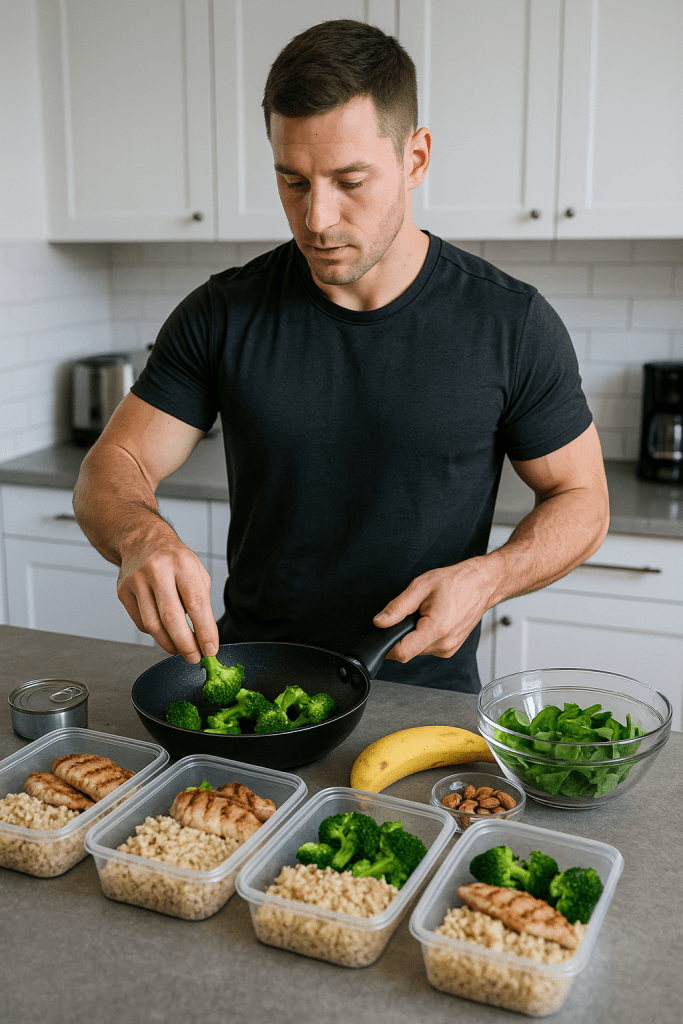
Grilled chicken with brown rice and steamed broccoli

Lentil chili with canned tomatoes and mixed beans

Tuna salad with whole grain bread and spinach

Write down your meals and snacks for the week to create a shopping list.

Step 2: Shop Smart
Use your list to buy ingredients in bulk where possible. Look for sales on frozen vegetables and discounted protein cuts. Avoid pre-packaged or convenience items, which tend to be pricier.

Step 3: Cook in Batches
Set aside 1–2 hours to cook multiple meals at once:

Cook grains (brown rice, quinoa, oats) in large batches.

Roast or grill proteins like chicken thighs or bake a tray of mixed vegetables.

Make a big pot of chili or stew to portion out for several meals.

Step 4: Portion and Store
Divide your cooked meals into single servings using reusable containers. Label each container with the date to keep track of freshness. Store some meals in the fridge for 3–4 days and freeze the rest to extend shelf life.

Step 5: Prepare Healthy Snacks
Make quick grab-and-go snacks such as:

Hard-boiled eggs (boil a dozen at once)

Cut veggies with hummus

Greek yogurt with nuts or berries

Having these ready prevents unhealthy cravings and supports consistent energy levels.

Step 6: Reheat and Enjoy
When it’s mealtime, simply reheat your prepared meals and enjoy a balanced, nutritious dish without the hassle of cooking from scratch.

Key Tips for Budget-Friendly Meal Prep

Mix and match ingredients: Use staples like eggs, beans, and frozen veggies to keep meals varied yet affordable.

Cook once, eat twice: Batch cooking saves time and reduces food waste.

Use versatile seasonings: Basic herbs and spices (garlic, paprika, cumin) add flavor without extra cost.

Hydrate smartly: Drink plenty of water and limit sugary drinks to complement your nutrition efforts.

Benefits of Nutrition & Meal Prep for Men


Consistent Energy: Well-balanced meals help maintain steady energy levels throughout the day.

Improved Fitness Results: Proper nutrition supports muscle growth and faster recovery post-workout.

Reduced Stress: Knowing your meals are ready reduces the daily decision-making load.

Financial Savings: Cooking at home with budget-friendly ingredients beats eating out or relying on convenience foods.

Final Thoughts
Eating well on a budget is definitely doable, especially when you combine smart meal prep with nutrition tailored to men’s fitness goals. By planning meals, shopping strategically, cooking in batches, and prepping snacks ahead of time, you can enjoy delicious, nourishing meals that support your health without stretching your wallet.

Are you ready to take control of your nutrition and meal prep? Start small, stay consistent, and watch your fitness and wellbeing thrive without breaking the bank.

Categories
Fitness home workout Meals nutrition

Budget-Friendly Meals for Home Workouts Nutrition

If you’re dedicated to home workouts but don’t want to break the bank on your nutrition plan, you’re not alone. A solid fitness routine doesn’t have to come with a hefty grocery bill. With the right strategies, you can fuel your body efficiently, support muscle recovery, and stay on track with your goals—all without overspending.

Whether you’re into strength training, cardio, or full-body circuits, what you eat is just as important as how you move. Here’s how to make smart, cost-effective choices when it comes to nutrition & meal prep for your home workouts.

Why Nutrition Matters for Home Workouts
When working out at home, it’s easy to overlook the importance of pre- and post-workout nutrition. But whether you’re pushing through a HIIT session in your living room or doing yoga in your backyard, your body needs the right fuel to perform and recover.

Key benefits of good nutrition during home workouts:

Sustains energy levels

Supports muscle growth and repair

Enhances performance and endurance

Aids in recovery and reduces soreness

Budget-Friendly Nutrition Tips

  1. Plan Your Meals Ahead
    Meal prepping is a powerful tool to control costs and avoid food waste. Take a few hours each week to cook in batches, portion your meals, and store them for easy access.
  2. Choose Whole, Affordable Ingredients
    Staples like oats, brown rice, lentils, eggs, and frozen vegetables offer nutritional value without the price tag. Choose ingredients that can easily fit into a variety of dishes throughout the week.
  3. Use Protein Smartly
    Protein is crucial for muscle recovery, but it doesn’t have to be expensive. Canned tuna, Greek yogurt, chickpeas, and peanut butter are all affordable options.
  4. Embrace the Power of Leftovers
    Don’t shy away from repeating meals or reusing ingredients. Yesterday’s baked chicken can be today’s protein-packed salad or wrap.
  5. Hydration Still Counts
    Water is free and underrated. Stay hydrated to support digestion and recovery, especially when you’re working out at home where it’s easy to forget.

Sample Meal Prep Ideas
Before your workout, try a slice of banana topped with peanut butter or enjoy a warm bowl of oats mixed with fresh berries.

Post-Workout: Scrambled eggs with sweet potato and spinach, or a tuna and quinoa salad

For snacks, go with crunchy roasted chickpeas, hard-boiled eggs, or blend up a protein-packed smoothie at home.

Final Thoughts
Smart meal prep and intentional nutrition don’t have to strain your wallet. With a little planning and a focus on nutrient-dense, affordable foods, your home workouts can be just as effective as any gym session—without the cost.

Staying healthy shouldn’t be expensive. With these tips, your meals will work as hard as you do.