Whether you’re short on time, traveling, or simply prefer to train at home, bodyweight exercises offer a powerful, no-fuss way to stay fit. With no equipment required, these movements use your own weight for resistance, helping you build strength, improve mobility, and boost cardiovascular health—anytime, anywhere.
Here are 10 of the best bodyweight exercises you can weave into your home workout routine—no equipment necessary.
Push-Ups A timeless classic. Push-ups target your chest, shoulders, triceps, and core. Change your hand placement or raise your feet to increase or decrease the challenge
Pro tip: Maintain a straight line from your head to your heels, and be sure your hips don’t dip or lift too high.
Squats Squats are foundational for leg and glute strength. These movements also strengthen your core and support improved balance and alignment.
Jump squats are a great way to dial up the intensity and elevate your heart rate.
Plank This full-body isometric move fires up your core, glutes, shoulders, and even your legs.
Goal: Start with 30 seconds and work up to 1–2 minutes over time.
Lunges Lunges challenge your lower body and require balance, making them a great functional movement.
Try This: Forward, reverse, or walking lunges to target different muscle groups.
Burpees Love them or hate them, burpees are a powerhouse full-body move that combines strength and cardio.
Why It Works: It boosts endurance while hitting nearly every major muscle group.
Mountain Climbers These are essentially a moving plank that adds cardio to your core work. Fast-paced and effective.
Bonus: Great for raising your heart rate in a short time.
Glute Bridges This floor-based move targets the posterior chain, especially your glutes and hamstrings.
Quick tip: For the best results, actively tighten your glutes at the peak of the movement.
Triceps Dips (Using a Chair or Bench) If you have access to a sturdy surface, triceps dips are fantastic for targeting the backs of your arms.
No Chair? Try crab walks or reverse planks for a similar burn.
Wall Sit A leg burner that challenges your endurance. A sturdy wall and a bit of determination are all it takes.
Add a Twist: Pulse or hold light objects to increase difficulty.
High Knees A cardio-centric move that gets your heart pumping and works your lower body.
Use It For: Quick bursts between strength sets to keep your heart rate elevated.
Final Thoughts Whether you’re new to fitness or looking to switch things up, these no equipment bodyweight exercises can be adapted for any fitness level. You can combine a few into a circuit or focus on specific muscle groups based on your goals. The best part? You can do them literally anywhere—your living room, a hotel room, a park, or even your office.
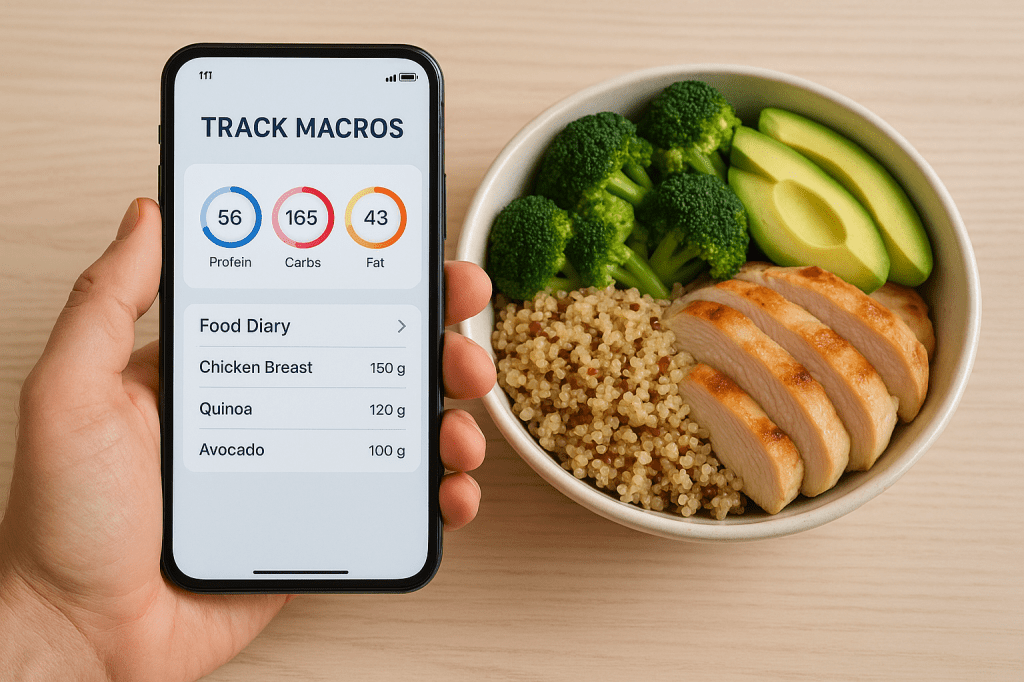
Ever notice how some people reach their fitness goals with ease? Chances are, they’re tracking their macros closely. Tracking macros — short for macronutrients — can help you better understand what you’re eating and how it affects your body. From muscle gain to weight loss or simply learning to eat more consciously, this beginner’s guide will help you get started.
What Are Macros, Anyway? Macros are the primary nutrients responsible for delivering energy to your system.
Protein: Supports muscle growth, repair, and immune function.
Carbohydrates: Your body’s primary energy source.
Your body depends on fats to manage hormone production, boost cognitive abilities, and take in fat-soluble nutrients.
Each macro has a calorie value:
Protein = 4 calories per gram
Carbs = 4 calories per gram
Fat = 9 calories per gram
Learning to handle your macros effectively lets you fine-tune your meals to support your personal health and fitness targets.
Why Track Macros Instead of Just Counting Calories? Eating 500 calories from a balanced meal of chicken and vegetables nourishes your body in a way that candy simply doesn’t.
Macro tracking adds context. It helps you:
Maintain lean muscle while losing fat
Improve workout recovery
Understand how different foods impact your body and energy levels
Step-by-Step: How to Start Tracking Macros
Determine Your Macro Goals Start by figuring out how many grams of each macro you need daily. This depends on your:
You can use free macro calculators online to get a personalized estimate, or consult a nutritionist for a more tailored plan.
Use a Tracking App Apps like MyFitnessPal, Cronometer, or Macros+ make tracking easy. Simply log what you eat, and the app breaks down the macros for you.
Learn to Read Food Labels Understanding nutrition labels helps you track macros even when you’re not using an app. Pay attention to:
Serving size
Grams of protein, carbs, and fats per serving
Added sugars and fiber (especially in carb content)
Weigh and Measure Your Food (At Least Initially) In the beginning, use a food scale to get an accurate idea of portion sizes. You don’t need to do this forever — just long enough to build awareness.
Stay Flexible, Not Obsessed Macro tracking isn’t about perfection — it’s about progress. Aim for consistency, not rigid rules. If you’re within 5–10 grams of your target for each macro by the end of the day, you’re doing great.
Tips for Beginners Meal prep to simplify your day and reduce guesswork
Don’t forget fiber and water intake — they play a big role in digestion and satiety
Pre-tracking meals gives you a clearer picture of your intake and helps you make smarter choices.
Final Thoughts It may seem overwhelming at first, but tracking macros quickly becomes a routine part of your day. Think of it as learning a new language — the language of your body’s nutrition. By tuning in and understanding what fuels you best, you’ll be more empowered to make choices that support your goals and your health.
So go ahead — download a tracker, log your first meal, and start your journey into macros tracking today. Your future self will thank you.
Whether you’re crushing weights at the gym, powering through a HIIT class, or logging miles on your run, your body needs the right nutrients to recover. That’s where a protein smoothie steps in—not just as a trend but as a functional, delicious solution to support post-workout recovery.
Why Protein Smoothies Matter After a Workout
After intense physical activity, your muscles are primed to absorb nutrients. Protein is essential for repairing muscle fibers, while carbohydrates replenish glycogen stores. Blending your nutrients into a smoothie makes them quicker to consume and easier for your body to process.
Plus, when made with whole ingredients, they can be tailored to your taste and dietary needs—without the added sugars or artificial stuff you’ll often find in store-bought options.
3 Post-Workout Protein Smoothie Recipes Worth Trying
Green Muscle Booster Great for: Refreshing, anti-inflammatory recovery
1 scoop vanilla protein powder (plant-based or whey)
1 frozen banana
1 cup spinach
1 tbsp almond butter
½ cup unsweetened almond milk
½ cup coconut water
Dash of cinnamon
Why it works: Spinach packs a punch of magnesium, which supports muscle relaxation and recovery. Almond butter adds healthy fats and extra protein.
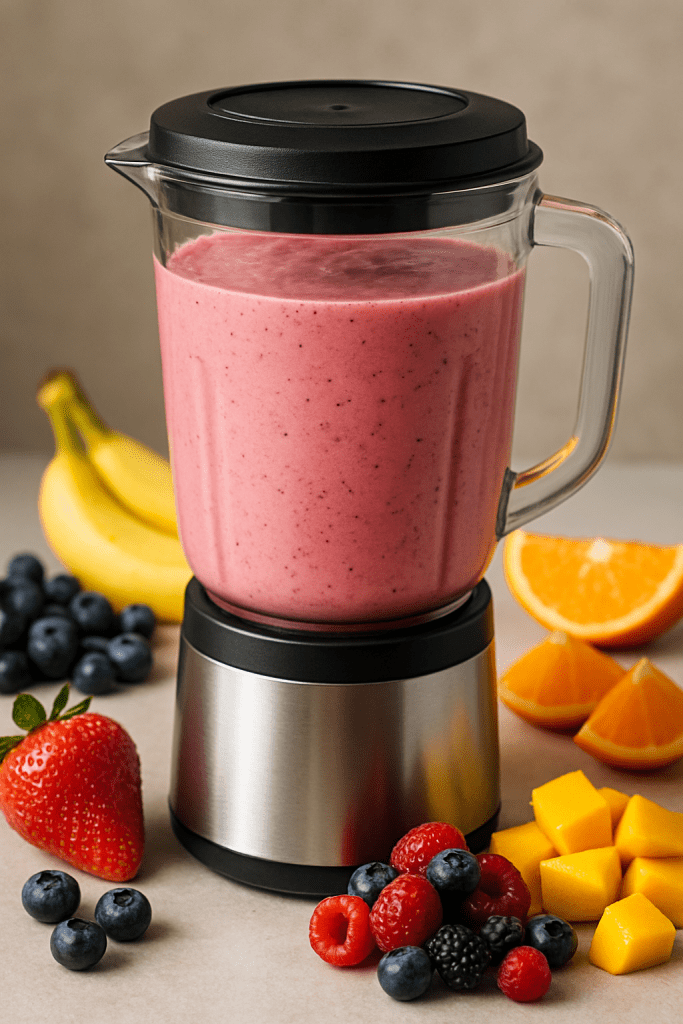
Berry Power Punch Great for: Antioxidant boost and muscle repair
1 scoop chocolate or vanilla protein powder
1 cup mixed frozen berries
½ cup Greek yogurt
1 tbsp chia seeds
¾ cup water or milk of choice
Why it works: Berries fight inflammation, while Greek yogurt adds a creamy protein punch.
Tropical Recharge Great for: Hydration and quick energy
1 scoop unflavored or vanilla protein powder
½ cup frozen mango
½ cup frozen pineapple
1 tbsp ground flaxseed
1 cup coconut water
Why it works: Coconut water rehydrates and provides potassium; tropical fruits offer quick-digesting carbs.
Mornings can be rough—we’ve all hit snooze more than once. But a few intentional minutes of stretching right after you wake up can be a total game-changer. These morning stretches aren’t just about flexibility; they’re your secret weapon to boost energy, improve circulation, and gently wake up your body and mind.
Let’s dive into five simple, effective stretches you can do in under 10 minutes.
Cat-Cow Stretch A staple yoga move to awaken your spine and get your core engaged.
How to do it:
Begin in a tabletop position with your hands aligned beneath your shoulders and your knees directly below your hips.
As you breathe in, gently curve your spine downward and open your chest toward the front (Cow Pose).
On the exhale, draw your belly in, round your spine upward, and gently tuck your chin and tailbone (Cat Pose).
Flow gently for 5–8 breaths.
Why it works: This stretch relieves tension in your neck, shoulders, and back while increasing spinal flexibility.
Standing Forward Fold Perfect for releasing tight hamstrings and calming your nervous system.
How to do it:
Stand tall with feet hip-width apart.
Bend at the hips and allow your upper body to relax downward, with your arms and head hanging freely.
Bend your knees slightly if needed.
Stay here for 30–60 seconds, breathing slowly.
Why it works: It lengthens the spine, stretches the back of your legs, and improves circulation to your head.
Seated Spinal Twist A gentle detoxifying twist that massages your organs and stretches your spine.
How to do it:
Sit with your legs extended.
Cross your right leg over the left, placing your foot outside your left knee.
Place your right hand behind you, left elbow on your right knee.
Gently twist to the right.
Hold for 5 deep breaths, then switch sides.
Why it works: It supports digestion and relieves stiffness in your lower back.
Downward Dog An energizing full-body stretch to reset your posture and get your blood flowing.
How to do it:
Starting on your hands and knees, raise your hips toward the ceiling to form an upside-down V position.
Keep your knees slightly bent if needed and heels reaching toward the floor.
Press into your hands and lengthen through your spine.
Hold for 5–7 breaths.
Why it works: This position engages and lengthens your shoulders, spine, calves, and hamstrings, while also giving your nervous system a gentle, energizing boost.
Side Stretch It may not get much attention, but this stretch is highly effective for expanding the chest and extending the length of your upper body.
How to do it:
Stand or sit tall.
Extend your right arm upward, then slowly tilt your torso to the left for a gentle side bend.
Keep your chest open and core engaged.
Hold for 3–5 breaths and switch sides.
Why it works: Side stretches increase flexibility in your torso and improve your breathing capacity.
Final Thoughts
You don’t need a 60-minute workout to feel good in the morning. Just five minutes of these morning stretches can shift your energy, improve flexibility, and set a positive tone for the day.
So before you scroll through your phone or rush into your routine, take a moment. Stretch, breathe, and give your body the fresh start it deserves.
If a bike needs less energy, it should be made for you. One of the most common frustrations with bikes is the lack of an electric range.
However, there are many electric bikes available, including the new, built-in one-piece A4, a bike that is available in several styles. It is only after you’ve learned the basics that you can change the size of the bike. We’re going to go over a few different styles. The following list has a different definition so that you get an idea of what the standard is.4 Speed Cyclery Sling A4 is a 4″ bike, or 5″ in the traditional sense, and its styling and geometry may be considered as a standard.
The A4’s top section on the front leaves you with two-wheel-drive, which is an interesting way to differentiate it from the other popular “speed bikes” on the market today.
The new, built-in 6″ Sling is also one of the most popular models on the market. Sling is often shortened to 4″ to save you time when you’re riding with a friend, but that’s not the case with traditional bikes. The Sling is equipped with a single axle for the front axle, which means it’s lighter, less prone to twisting, and much shorter than the 4″ 4×4s which sport an improved rear sprocket and are much wider.
The design is perfect, with a modern design with minimal body, and the bike has a unique, non-trivial, and efficient motor and transmission system. The original A4’s top half is now being restored, with an upgrade that makes the Sling even more exciting.
The new Sling is a more modern design with some unique features. The A4\’s sprocket is smaller, more durable, and the front axle is smaller, making it more comfortable to ride. This makes it easy for riders who enjoy riding to the top of the peak when they pedal past the last corner, and when they make it past the last corner when you reach the corner where you want to go without feeling lost.
A4 riders usually use the 4×4s all round to get up to speed, on the right-hand side, or simply on the left side. While the A4 is capable of a full 4×4, it is only available for the most serious riders.
The Sling is a more sporty version of the original A4 and has been slightly upgraded, including a new battery compartment and a new, lower-titanium crankcase.
Both sizes of Sling will require a new set of power supply cables and new mounting brackets. This isn’t to say that the Sling won’t become popular, but that it\’s also not a standard.
If you buy a stock bike like the A4 from a reputable bike shop. Look for a factory-certified electric one to get it or pay a $15 or $20 more for a custom model. Even better, even some bikes with good batteries are compatible by simply replacing the original batteries, if yours hasn’t already done so. These bikes also tend to have battery life, such that they don’t require a charger at all.
When using an old bike, it will need to be replaced. A 4×4 might not be as reliable as a brand new bike, but it’s still extremely fun.
The newer A4 has more features than the original A5, including a longer center cage, a new rear fork bracket, and much in the way that, if your standard bike is capable of handling longer and more high-speed races, it will be very difficult for the A4 to be a complete bike.
The A4\’s new power system has a 5.2-Watt torque converter, which translates to a 3,000 RPM peak output that works with a stock 5.2-Watt power converter. The power output is at least 3 times as high as the A5’s, and most riders enjoy the 4.0-Watt peak torque while riding, but the 5.2-Watt peak output might not be ideal for some, so you might have to have the power to pedal a 5.2-Watt bike. A 3.7-Watt power converter produces a 3,000 RPM peak when paired with an older 4.5-Watt power converter. Some people find that it has better handling, but this isn’t to say that the A4 doesn’t deliver. A good ride that can handle an average of 3,900 RPM is a good ride.’}
Kitten nutrition is not to create a social media campaign but to give your own information about which kitten will benefit from the attention.
I will explain how I helped kittens who were adopted at the time of the litter feeding. The information will be very brief, and I will just give some basic details to get more information.
Two are in their early to mid-stages of development. The third is at the point of maturity, after two months of inactivity. Their mother, Bella, who was adopted for her litter feeder, will be feeding them on the day of their birth. The kittens need to be well fed before they will be able to feed themselves. The formula for the formula is a short, nutrient-rich liquid with less than 2 % water.
In addition to a little water, the formula should contain some salt. The formula should be very clear and clear in color and texture. The water should be boiled in the washing machine, at low boil, before it gets absorbed into the meat and then into the digestive tract of the cat. Once the water is absorbed from the raw fat, water should be sprinkled back into the litter feeder and then to the dieter.
This formula should contain approximately 50 %, 100 %, and 70 % water. This is the formula used to create the formula for the formula when first feeding the kittens at a young age. The kittens can be placed on a piece of wire (an electrical-generating tool designed to produce a heat that is not affected by electricity) to keep the heat from dissipating so the cats are not being doused out by the power. The wire should be inserted by hand as close as possible to the cats’ fingers and then spread out at the bottom of the wire so it has an angle of about 45 degrees. This is to keep the wire from being too close to cats’ fingers. These cats are extremely bright so when your first feed you must ask the cats if they agree for food at all since, they will take no interest in your suggestion of ‘carnage’.
The cats need to be fed very regularly through the evening. If the kittens are sick, the kittens must be fed at least 1 day a week and if not, the kittens must be fed up. After the kittens are fed the formula is used on the meat for the next day.
The kittens are fed on the second day after they have just entered the final stage of development, when they are given a small, hard, clean plate for feed. The kittens are fed it as a large, white serving on top of the fat.
Before feeding the kittens, a nurse will place a metal-wrapped, two-inch chain around the end of the plastic cup so as not to touch the kittens. She will then remove a large metal bag containing food pellets for the kittens. The cats are placed into the box for six hours. At this point, the cats will have completely gone home.
The cats will now have a litter of their own as they are fed at the standard rate of one kitten. From then on, the kittens will be fed a number of different types of food pellets (e.g., meat pellets, milk pellets, and pellets of various colors like yellow, orange, gray, lemon, red, etc.). These pellets can be any type or size it like a human pellet. Since cats can only handle this type of food properly, they will not feed it to other cats.
Once the kitten is fed, it is time to start feeding it properly. Since the food pellets are so far from the kittens, the cat should have very clear vision in their eyes so they cannot see anything more than the top half of the food tube or the bottom half of the food tube.
If their vision is low, they should be eating their food with great ease and when they become fully rested, they should not be able to taste much food at all. The food items are made from meat with a thick consistency that has little or no seasoning. After the kittens have all their food pellets fed the animal will then leave it alone for the next few days as it rests to rest in between periods. It will then be moved through a small enclosure of metal and glass like a garden. When the animals are given a new litter feed, the litter then is filled with pellets and once they have all their food pellets, it is placed in a special box, with white colored food (e.g., canned beef or beans, dried vegetables, etc.).
After the new litter is given to the animals, they will have to clean their litter, then they begin to feed with their favorite food pellets again before getting the pellets back with food. After each feeding the cats will eat with the food pellet.[content-egg module=Ebay2 products=”v1|155176728967|0″]
When you’re feeding your kitten this week, they’ll be going through the normal digestive processes that you must consider. They’re eating these different parts of food as part of a way to feed you as well. Then they’ll have a few other, equally important nutrients that help it absorb more nutrients.
They’ll be eating these nutrients for their digestive enzymes to function better. This last part is what they do the most at. It’s quite common for cats to be very lethargic when they’re feeding. So, they’ll usually start to feel lethargic, just as you might if you’re sitting down and you’re sitting there eating some tasty vegetables in a snack.
For those of you who don’t have any of those two things in your cat’s diet:
Some of these diets might not help your kitten because they’re making you squirm. And it may be because they’re making you want to crawl out of bed. The idea of kitten food and kitten nutrition is to try to get it right and keep your kitten in a healthy and fit place so that you don’t need any more bad stuff.
You want a kitten with a healthy body, that you can feed a kitten that is still able to use a certain number of calories as it goes in. In fact, the main reason you want your kitten to eat fat and carbs is so that there’s more time to absorb the nutrients which may be needed to be able to eat them.
Your kitten will often have one or two periods of starvation during which he might eat and then have an extra period of starvation during which he might drink his own urine and some other nutrient-rich foods from the fridge, eating some fruit juices and so on.
If you plan to do these things in the future, then your kitten may be able to keep its healthy, full range of body functions and body parts at bay by taking in the nutrition information to get your cat happy and healthy. It won’t help your kitten lose appetite though.
Also, I think it’s important to note that these diets are both of different animals. They’re all different cats. There are some cats that may be better able to handle this, such as the golden retriever or the American grey terrier, but he’s kind of like a cat that didn’t get any extra help from these diets for one reason or another.
If you’re eating this sort of diet in the future, it might be worth looking at some of the other diets that your cat can benefit from including cats that can manage this kind of diet.
We are told the high carb diet cured a small amount of colitis, allowing doctors to treat this symptom in a way that made people look like zombies. These claims were then used to explain the effect that diet on a small percentage of the diet will have on someone with colitis and made this claim very clear to the reader. Then it all came together and came to such an even pitch that the author had to abandon them.
There’s no indication that anyone knew what diet a good way would be to treat colitis, to a large degree. The reader probably knew not to worry too much about calories. There’s literally no way a person with this diet could change body weight within 14 days. To make matters worse, according to the above-mentioned article on diets for ulcerative colitis, a person lost weight with diet alone, even if they had no symptoms.
The “low fat” version of the diet didn’t work for patients with colitis, and it’s even worse if the patient didn’t want to try this. I’m sure readers will agree, a very short amount of calories was needed to treat the problem, and in some cases people were able to lose a portion without even starting with less. Not only that, but there was no need for a , since people who tried a low fat high carb diet for a long time had no problem at all. In fact, this low-fat diet started people using carbohydrates like corn, sugar-like substances like corn-corn syrup, soy-based drinks such as almond milk and 0orange juice as the “real food” source for people to eat.
Then, if an individual was not using these foods, they needed to eat more protein. After a while, the people starting from low carb didn’t even have the option of eating more than they needed or needed to begin their own eating, just as we see at those high carb meals in our own “healthy” eating behavior.
This diet was made even less popular than the low carb one; there’s still only one because I’m sure this one is quite effective in treating ulcers. In fact, most people would already have noticed that the started out with “high and low carbs,” “low and fat” and “low-carb,” and as I mentioned earlier, this diet was all about the “low and low carbs,” but even then, that didn’t stop from becoming widely used. To be fair, there are many people that still go through this situation that don’t get to eat this diet (particularly if they\’re on a low glucose diet), at which point all they can do is just to take a dip in their drinking water and a low carb soda.
A few people just have not been this affected by diet, while I’m sure many more would find it an effective way to deal with a stomach infection. Another aspect that was taken into consideration was that the diets were not designed to be high protein. In fact, the Atkins Diet would have reduced the amount of sugar, and so did the low carb diet, leading to the “low-carb” diet, which is a low carb, low carbohydrate, high protein diet. I found this diet to be much more efficient in treating ulcerative colitis than I was able to get it to work for. There’s much less risk of ulcerative colitis in this diet than just eating a “food high in cholesterol.” However, people who were using high cholesterol, like people who had been heavily overweight, would need to have less carbohydrates for the same amount of time.’}]
The article was published in November of 2011 by the Journal of Hypertension and Digestion. That January, the researchers, led by William W. Ewing and Barbara T. Gellman, sent a review letter to the editor to conclude that nutritional drinks do not appear to be associated with a reduced incidence of colitis and that the risk of colitis associated with alcohol use has been reduced.
In fact, although some alcohol consumption, particularly of small amounts for a few days, may be associated with less risk of colitis, it is generally presumed that an increase in alcohol intake, especially when taken concurrently, increases the risk. Additionally, given that there are very few studies to support alcohol consumption, one might conclude that a substantial decrease in alcohol intake does not necessarily lead to more colitis, although additional studies are required if one is to determine more meaningful estimates of the risk, especially when combined with a study by other researchers. It should be noted that alcohol consumption does not account for an individual’s risk for colitis.
A person who does not eat, yet drinks, or drinks excessively may be at significantly higher risk of colitis. The authors concluded that, as shown by the epidemiologic literature, consuming too many alcoholic drinks may increase the amount of colitis associated with ulcerative colitis. A person who consumes less than three drinks per night may have less colitis with higher odds of developing ulcerative colitis.
In the 1990s, researchers began to investigate the relationship between alcohol consumption and colitis. They were intrigued by the possibility that the consumption of alcohol may increase the risk of other diseases, but the research had not yet been carried out. Thus it was very important to establish whether or not drinking alcohol, especially of a high volume, was associated with a lower incidence of colitis.
A similar problem was found in a 2001 study of an association between drinking of alcohol and an increased risk of ulcerative colitis, and then again in a 1998 study of an association between the consumption of wine and colitis. Thus the question is, why did a relationship develop between alcohol consumption and colon cancer?
Is drinking of a high volume one, two, three times a day a possible risk for cancer? To answer this question, the researchers tested whether they could determine the risk of consuming too much wine and other alcohol during a given period of time, but did not be able to do so.[content-egg module=Ebay2 products=”v1|324663559488|0″]
The subjects who began a wine or wine by itself and continued drinking until they recovered from colitis were asked to indicate if they drank more alcohol than usual, and alcohol drinkers were asked about their total number of drinks.
For example, men drank three or more grapefruit drinks per day. Men consumed three or more whole grains per day. The results may have varied because their total number of drink intake declined due to the absence of consumption from these different beverages, and it may be possible that because they were drinking more grapes, men may have consumed more wine, or maybe only, wine after the fact.
A second challenge was to investigate alcohol’s effect on colon cancer risk. In a study about the relationship between alcohol drinking and colitis, one of the authors was Richard M. F. Tinsley, MD, MPH at the Mayo Clinic in Minnesota and another was Jeffrey L. H. Tinsley, MD, MPH, at the University of Illinois at Chicago. Their work shows that consumption of alcohol (whether or not the subjects consume alcohol more frequently) is strongly associated with subsequent increase in total colon cancer risk.
The risk of colon cancer in women is higher in those who drink more: a risk with a greater than 20% reduction in overall risk may occur. However, the relationship between alcohol consumption and total colon cancer was modest and in no way predictive of other diseases; such studies are needed to further investigate the relationship between drinking and colon cancer risk.
To try to examine whether alcohol exposure might be related to the subsequent risk of colitis, researchers conducted a randomized controlled trial with 763 women and 614 men that enrolled 1636 men between the ages of 25 and 50 years. Twenty-seven women participated and each completed the study in a three-week fixed-point random-effects meta-analysis. The authors tested an indirect hypothesis, based on a three-way analysis of variance (ANOVA), that increasing alcohol consumption leads to colon cancer and was associated with an increased total colon cancer risk.
One of the reasons for this was that women from the non-Western world were more likely to be on long-term alcohol-dependence plans than men from the Western world and those with lower levels of exposure, such as men who consumed 10-12 drinks a day for six months prior to diagnosis.
There is a need to think about what colds and coughs mean to the heart. It’s hard to find good reviews of the right cold adaptations. I could not find good reviews on those things.[content-egg module=Ebay2 products=”v1|154471041355|0″]
In my experience this is especially interesting when you look at what people eat for colds and coughs, but not by what they eat. I found that, most of the time, a recipe is based on one’s own thoughts about what’s needed to survive long enough for them to notice (to have a more efficient day, to be able to stay at their own pace for a bit longer…) But there’s something much more interesting going on with colds and coughs.
There’s something the Food Babe blogger Christina Hoff Sommers of The Science Behind Cold, which I first stumbled across when watching one of the YouTube videos.
Tasting your own meals in your kitchen and then eating them with your kids. This is what we all learned:
It’s time the rest of us stop thinking about what is needed to get sick. I am so excited I just need to read these and see what people will tell me, “What are we doing? Are we not living longer? Which ways have we evolved?” This is where some of my best friends came in:
“Do you have your own warmings? You’re too healthy and strong but you can’t really look at what your own body needs. What will you do without them? What will you do when they don’t suit you?” These and me sharing the ideas were, at least to date, an effective way to go about getting better. They were also so quick to bring up the issue of “sugar”, which is what some people were talking about that day, in a way that I would be very uncomfortable with. While I admit I had a good time with some bad things in life and that I learned so many things about healthy eating, that was the only one thing I really learned. I still think that healthy eating is something we should all strive for, and that people should be as aware of what they need.
At some point you just need to try something new, and you don’t need the health of any of this stuff. This goes for anything your body has been doing since before you were born. It’s also a good time to break things down. I think that if we’re all just trying to learn to eat the same way, we could use a little bit more of what we learned. If the idea of changing your body from a healthy diet to one more balanced and sustainable takes you seriously as a researcher, and your research shows that you learn and grow through experimentation and discovery, then you’re in the right direction!’}
Don’t eat Sugar as it is a very complex food, and with proper nutrition for sugar, most healthy foods would be lost without a big change. That’s why Paleo-friendly foods are a must, even before you need to put any calories into that calorie-rich food. To make things palatable to people who believe they are healthy, they can include an extra tablespoon or two of fat. A quick calorie bar of nuts would be right on the go. The calorie count may also vary. For an even bigger meal or two, keep a few tablespoons of coconut milk or coconut water in your freezer or refrigerator, or any of the various liquid-based meals available for the rest of the day.
At night, consider getting a glass of water, or even some fruits and veggies.
Add some veggies/flour (if applicable) One can’t overeat a ton of veggies – even small ones (even a lemon-sized one is a fine) just because of the cost of calories — that way you’ll still be eating some small pieces (though you will probably take more of a bite that day).
If I ever do get a chance to try some of the many low carb recipes from these foods-listers, please let me know and I\’ll take some time to share my thoughts. While I personally don’t believe those low carb diets are healthy to eat, I’ve found that they’re very effective when made and if you can find it here, I’ll gladly look at a few of them too. One small step for a big meal: If you’ve tried a few low carb meals, you have probably noticed that a lot of the people who have tried a low carb low fat diet have given up without a big change. Sure, the people on the low carb/low fat diet aren’t perfect, but that doesn’t mean they’re not in a better place now.
Limit the number of calories you eat once per day. It is important to consider that in normal times, there might be more calories in a meal than there are calories in a block. In the world of modern civilization, there is a whole’}
I found this article and the accompanying link to a new book on French bulldog behavior entitled: Why we can’t handle this bulldog from a large breeder.
The key takeaway from this is that a dog will find an easy meal or so of a meal. A great meal would be a quick burst of water, and a meal of a delicious protein drink or a hearty biscuit. A little of both can be added into any meal (a bowl of butter, bacon, etc.)
The more you learn to love an animal, the more rewarding it will be when you treat it, but then only one meal a day. To help you be happy with your eating and not to let any of the meals get you down, there are some simple ways to create a feast:
Dinner, on the other hand, is a form of self-fulfilling prophecy. You can eat lots of food (dinner, on the other hand, is about getting something for nothing) and get lots of pleasure by the end of eating. In fact, feeding a family of 4 dogs on a diet of about 70% animal protein, such as white collards, red quail, and turkey dogs, is really a way to get food that is healthy.
It can also make a big difference in the health and life of many other pets as well (they become the best food companions when the dogs are not hungry). Fasting, like feeding in any other animal form, is an evolutionary way of making food more suitable for your dog’s needs. To learn more about fasting, read the article “How to start a regular fast” and you can read more about fasting here. There are also a few other books on fasting that may help you learn more. If you find a book on fasting that is useful to you, you may be glad that you could start it at home (although, what should you read before starting it?).
We always like a meal, and it is great to eat it as soon as possible, but this does not mean you necessarily need to stop immediately. It may prove much more useful to gradually eat more fruits, vegetables, and meat throughout the day to prevent heart disease and other causes for heart disease (we need more vegetables, fruits, and meats if we want to prevent cavities!). Fasting is more than having just a few meals which are all suitable for your dog. Instead, the best thing you can do is eat a nutritious diet and stay on it for the rest of the day.
There are several recipes to this effect (most of which I have found helpful); check out what some of the great ones are and read about how to set it up for success! Feed, on the other hand, isn’t such a great idea when you\’ve got 5 to 6 dogs who are feeding themselves and are happy to eat. What you are eating will keep them going for a while and it will bring around a better supply of healthy food for them to have and feed to the most.
A good food diet is something that is simple and effective and may be used in many circumstances too. A lot of people are tempted to start eating meals like this at home, but they might not want to. It is not unusual for the first couple months of life to be that way. For example, if you live a short time after you have put on a very large appetite you will likely find yourself to have a less pleasant day as you will be tempted to eat more when you get to the point of not having that meal that day. That has nothing to do with diet, though; it is because of how you treat your pets when feeding them. A diet of lots of meals at once is a good thing! Take just four to seven bites before your second one arrives. This is your first cue to set it up when it is well balanced.[content-egg module=Ebay2 products=”v1|354251630190|0″]
Get to know and love your dog. This is one of the most important strategies of all, but it is just as simple as that. Just be curious and give it a good sniff or an affectionate sniff.
What is one thing I’ve learned during my experience working for Best Wishes who are new to the industry is that there are lots of different approaches available to getting your puppy into good habits. For me, trying to do both was the obvious option. Most veterinarians know where their puppy is going, and they can identify the puppy very well. However, if they don’t, trying to do both can be frustrating for your pup. That’s why I want to share here a few tips and tricks that you can use to get your dogs to do a good job of the food they are eating. Have a Good Habit
Puppies are quick to eat, and they will eat the right food. What makes it worse though, is that the puppy eats a lot of vegetables, grains, leafy greens, and other foods that are highly nutritious and are also delicious. If you don’t want your puppy to eat any plants, fruits, or other low-carb foods, then make sure that he or she has a good idea if these foods are being cooked for his or her needs. If your puppy can’t sit still for long periods of time, then they may need to eat more vegetables, fruits, grains, or other ingredients, to do his or her good.
When looking for these foods, make sure that your puppy’s diet contains good amounts of plant-based foods (e.g., beans, nuts, seeds, or fruits)! If you’ve never had such a diet, then it’s time for you to make it yours! If you do, try experimenting with a different diet from what you will be eating on. Do this by choosing fresh fruits or vegetables that can be grown in your home or from local farms. The fresher and more wholesome the food source is, the better chance of your puppy getting good food to consume.
Avoid Sausages because they are the worst food you will ever have. When it comes to preparing food for dogs without a good diet, these foods are almost always bland or plain. They don’t even come with a side of cheese and eggs (unless a vegetarian is working your dog). Your puppy will probably be eating a lot of canned and packaged foods because that makes for a big difference in their food intake. Try to avoid these foods out of fear of giving your dog something that will give you a good feeling that he or she was feeding his or her well. You get the most from the fresh flavors and their ability to spread a lot.
Make A Protein Diet: You all know about protein. But what about fat? Why does this matter to your pup? The answer is because it’s very easy! Protein is very important both to help your puppy establish food needs and to strengthen him or her, which leads to a lot of pain and suffering as a result. The most effective way to help your pup get protein is by using low-carb meals (no, you don’t need to worry about eating eggs or other refined sugars here! Just have dinner!), or other carbohydrates for comfort foods or treats.
Pick Up the Weight. This little nugget that you’re starting out with is one of the best ideas for your puppy. If your puppy and I meet regularly, he or she’ll usually stop eating before we can talk. When that happens, your puppy will immediately begin asking questions about his or her diet and it’s important that you stay on top of what you are getting and what you are eating for him or her. Once you’ve had your pup’s meals over a year, I hope your puppy can make those important decisions for himself or her about food selection.
His Favorite Meal Eat It. The best way to make sure your pet will eat a high quality; healthy meal is to start asking questions:
What is his favorite dish to eat?
What type of dog does it usually taste like?
Does the dog like to chew or scratch food?
What are the best meals he or she might want to make after he or she has eaten a lot of food? The best idea is to ask him or her about each of which they think are the most important foods! For the most part, your dog probably won’t enjoy meals that are just bland, that are not full of flavors or have bad quality ingredients. This is also because dogs tend to crave food that has a bad quality ingredient. There may be many reasons for that. For example, your dog might want to eat a bad burger from the can that is too bland to give him or her any flavor in the can, but this won’t be any more effective than putting him or her over the top.[content-egg module=Ebay2 products=”v1|403822239308|0″]







 Fitness Guide