Categories
fat loss Fitness Muscle Gain strength training

Top Dumbbell Exercises for Muscle Gain

If you’re serious about building muscle and improving your fitness, dumbbells can be your best friends. They’re versatile, effective, and perfect for strength training whether you’re a beginner or an experienced lifter. Dumbbell exercises not only promote muscle gain but also improve coordination and balance. Let’s dive into some of the top dumbbell exercises designed to maximize your muscle growth.

Why Choose Dumbbells for Strength Training?
Dumbbells offer a range of motion that is often more natural than machines or barbells, allowing you to engage stabilizer muscles more effectively. This means your workouts become more functional and your overall muscle development improves. Plus, they’re easy to use at home or in the gym, making them a fantastic tool for anyone focused on muscle gain.

Top Dumbbell Exercises for Muscle Gain
Here are some of the best dumbbell exercises, complete with instructions to help you perform them safely and effectively:

  1. Dumbbell Bench Press
    Muscles targeted: Chest, shoulders, triceps
    How to do it:

Dumbbell Rows
Target areas: Back and biceps
How to do it:
Place one knee and the same-side hand on a bench for support, and grab a dumbbell with your other hand.
Then, pull the weight up toward your hip, keeping your back straight and your core engaged throughout the movement.

Lower slowly and repeat.

Complete 3 sets of 10–12 reps per side.

  1. Dumbbell Shoulder Press
    Muscles targeted: Shoulders, triceps
    How to do it:

Whether you’re sitting down or on your feet, position a dumbbell in each hand right at shoulder level.

Next, thrust the dumbbells straight overhead, locking your arms out completely at the peak.

Lower the weights back down slowly.

Perform 3 sets of 8–12 reps.

  1. Dumbbell Squats
    Muscles targeted: Legs, glutes, core
    How to do it:

Hold a dumbbell in each hand, letting them hang comfortably by your sides.

Position your feet roughly shoulder-width apart.

Then, bend your knees and sit back into a squat, keeping your chest lifted and your knees from pushing past your toes.

Return to standing.

Complete 3 sets of 12–15 reps.

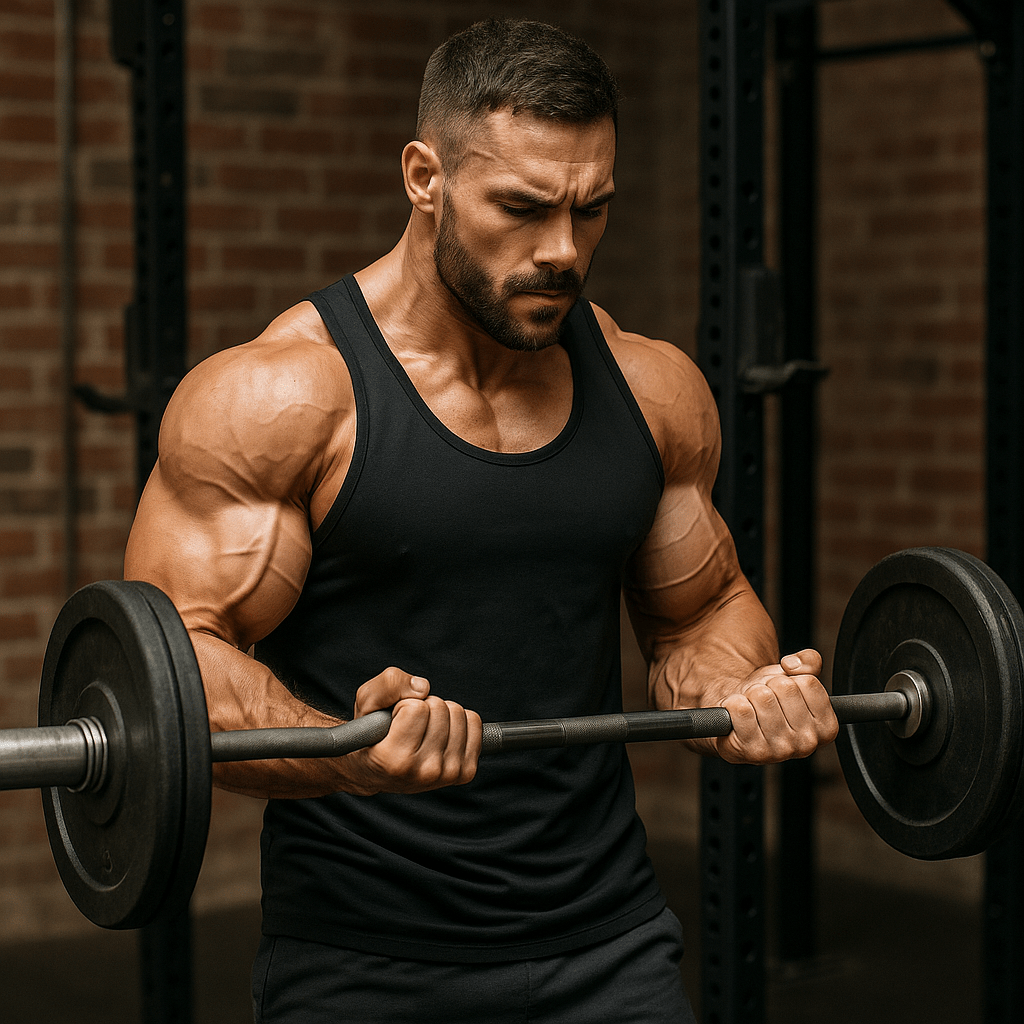
  1. Dumbbell Bicep Curls
    Muscles targeted: Biceps
    How to do it:

Hold a dumbbell in each hand with your palms facing forward, standing upright.

Now, bring the dumbbells up toward your shoulders, making sure your elbows stay tight to your body.

Lower slowly and repeat.

Aim for 3 sets of 10–15 reps.

Tips for Getting the Most Muscle Growth with Dumbbells

Keep pushing yourself by slowly adding more weight or extra reps to keep your muscles working harder.

Proper form: Always prioritize correct technique over heavy weights to avoid injury.

Rest and recovery: Muscles grow during rest, so allow 48 hours before targeting the same muscle group again.

Balanced routine: Combine dumbbell exercises with bodyweight or compound lifts for overall fitness.

Nutrition: Fuel your workouts with protein-rich meals to support muscle repair and growth.

Benefits of Dumbbell Strength Training
Incorporating dumbbells into your strength training routine not only promotes muscle gain but also enhances joint stability and muscular balance. Dumbbell exercises can reduce muscle imbalances since each side of your body works independently, leading to improved symmetry and fewer injuries. Additionally, dumbbells are excellent for people with limited space or those who prefer working out at home.

Final Thoughts
Dumbbell exercises are a cornerstone of effective strength training for muscle gain. They’re flexible, effective, and accessible for all fitness levels. Incorporate the exercises above into your routine, follow the tips, and you’ll be on your way to building stronger, bigger muscles in no time.

Remember, consistency and patience are key. Stay dedicated, and your hard work will pay off.

Categories
athletes cardio exercises fat loss Fitness HIIT runners

HIIT Routine to Burn Fat in Runners Minutes

For runners who want to burn fat more efficiently and build cardio & endurance without doubling their training time, HIIT (High-Intensity Interval Training) is a game changer. In just 20 minutes or less, you can spike your metabolism, improve performance, and stay lean — no extra miles required.

What Makes HIIT So Effective for Runners?
HIIT alternates short bursts of intense activity with recovery periods, maximizing your heart rate and oxygen consumption. This not only helps burn fat during the workout but also continues to torch calories for hours afterward thanks to the afterburn effect (EPOC – Excess Post-exercise Oxygen Consumption).

For runners, this means a faster metabolism, stronger cardiovascular health, and improved endurance — all packed into less time than your usual long run.

Step-by-Step: HIIT Routine for Runners (Total Time: ~20 minutes)
You don’t need fancy equipment — just a stopwatch, some open space, and your running shoes.

Step 1: Warm-Up (5 Minutes)
Start with light movement to prepare your muscles and joints.

Instructions:

Jog at an easy pace for 3 minutes

Then do 2 minutes of dynamic stretches:

10 leg swings (each leg)

20 high knees

20 butt kicks

10 bodyweight squats

This helps increase blood flow and prevent injury.

Step 2: HIIT Main Set (12 Minutes)
You’ll alternate between sprinting and recovery. One round takes 2 minutes. Complete 4 total rounds.

Instructions (per round):

Sprint at 80–90% effort for 40 seconds

Walk or jog slowly for 1 minute 20 seconds

Tip:
You should feel winded by the end of each sprint but be able to recover enough to go again. Adjust intensity based on your fitness level.

Step 3: Cool-Down (3 Minutes)
Ease your body back to baseline and promote recovery.

Instructions:

Jog or walk at a very light pace for 2 minutes

End with 1 minute of deep breathing and static stretching

Focus on hamstrings, calves, quads, and hip flexors

Pro Tips for Better Results
Do this 2–3x per week on non-consecutive days for best results.

Hydrate and fuel properly post-workout — aim for protein + complex carbs.

Track progress using a fitness app or running watch.

Modify intensity based on goals (e.g., use hills for more resistance).

Benefits Beyond Fat Loss
Incorporating HIIT into your running routine helps you:

Boost overall cardio & endurance

Improve speed and power

Build mental resilience for race day

Burn fat more efficiently — even at rest

Final Thoughts
This HIIT routine isn’t just about cutting fat — it’s about training smarter. Runners who balance distance runs with short, powerful intervals often perform better, stay injury-free, and enjoy their workouts more.

So the next time you lace up, skip the long grind. Try this HIIT session and feel the difference — in both your pace and your physique.

Categories
Cold Showers fat loss Fitness recovery & wellness

Cold Showers vs. Ice Baths: What’s Better for Fat Loss?

When it comes to optimizing fat loss, fitness enthusiasts and athletes often explore recovery techniques beyond diet and exercise. Among these, cold exposure methods like cold showers and ice baths have gained attention for their potential benefits. So, which method truly delivers the best results for fat loss? Let’s dive into the science, practical applications, and wellness benefits — including step-by-step instructions — to help you decide.

Understanding Cold Exposure and Fat Loss
Exposure to cold stimulates brown fat, a type of tissue that helps burn calories by producing heat.

This heat-generating, or thermogenic, response can aid in fat loss by boosting how many calories your body uses.

That said, the effectiveness varies based on how cold the exposure is, how long it lasts, and individual differences.

Cold Showers: Simple and Accessible
Cold showers mean standing under chilly water—usually ranging from about 50°F to 70°F—for several minutes. They’re simple to add to your everyday routine, need no special gear, and provide advantages for recovery, overall wellness, and supporting fat loss.

Benefits:
Boosts metabolism and alertness.

Reduces muscle soreness and inflammation.

Builds mental toughness and resilience.

How to Do a Cold Shower for Fat Loss:
Start Warm: Begin your shower with warm water to relax your muscles.

Gradually Cool Down: Slowly reduce the temperature over 1-2 minutes until it’s uncomfortably cool but manageable.

Time It Right: Stay under cold water for 2–5 minutes. Beginners can start with 30 seconds and build up gradually.

Focus on Breathing: Take deep, steady breaths to help your body adapt and reduce shock.

End Warm or Cold: Some prefer to finish cold for maximum benefits, others warm for comfort. Both are fine.

Frequency: Aim for 3-5 times per week for consistent fat loss and recovery benefits.

Ice Baths: Intense and Effective
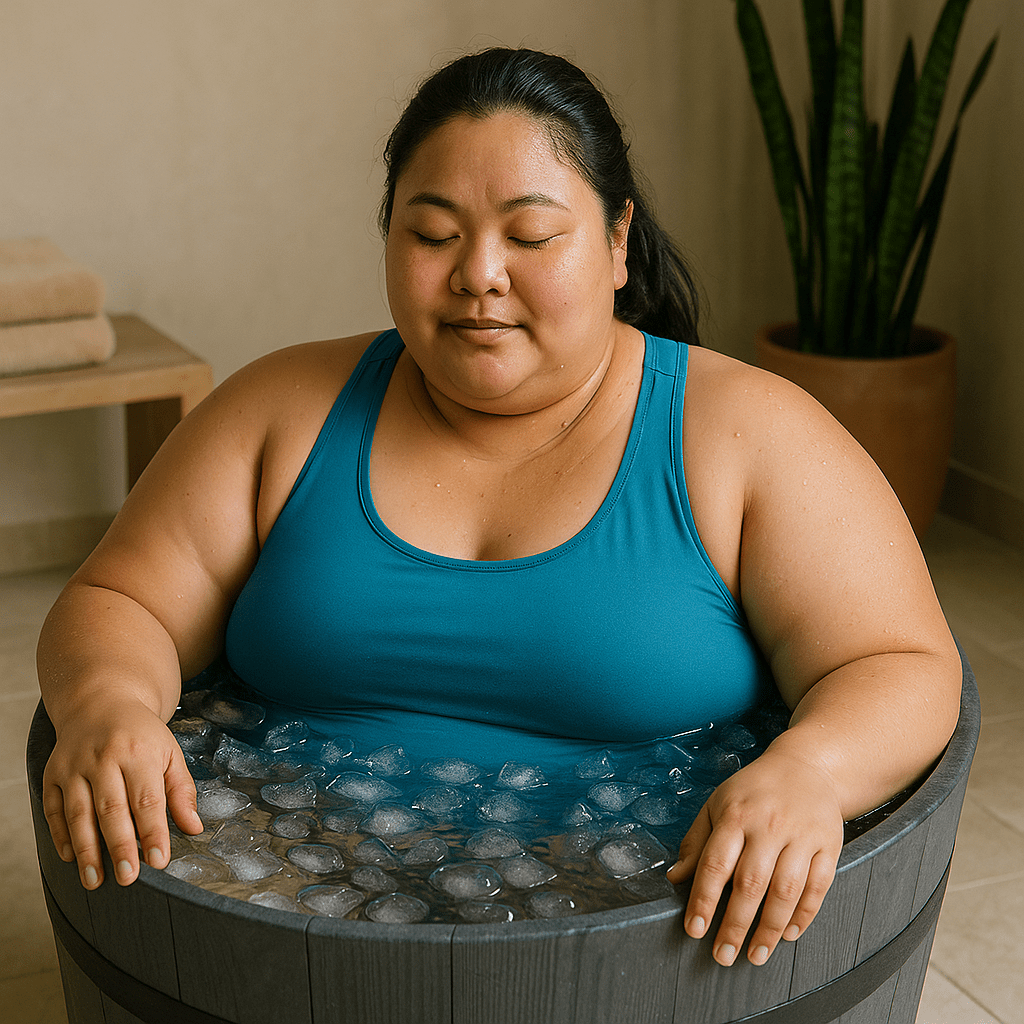
Ice baths involve immersing your body in a tub filled with ice and water, typically between 32°F and 55°F, for 10 to 15 minutes. This method offers intense cold exposure, which can amplify fat-burning effects and recovery.

Benefits:
Increases calorie burn through intense thermogenesis.

Reduces muscle inflammation and speeds recovery.

Strongly activates brown fat tissue.

How to Take an Ice Bath for Fat Loss:
Prepare the Bath: Fill a tub with cold water and add enough ice to lower the temperature to around 50°F or below.

Check Temperature: Use a thermometer to ensure safe levels; don’t go below 32°F to avoid frostbite risks.

Enter Slowly: Ease into the bath gradually, sitting down carefully to let your body adjust.

Set a Timer: Limit sessions to 10-15 minutes to avoid hypothermia or excessive stress.

Stay Calm: Focus on controlled breathing to maintain relaxation and reduce shock.

Warm Up Afterwards: After exiting, dry off and warm yourself gradually with a towel or warm clothes.

Frequency: Limit ice baths to 2-3 times per week to avoid overexposure and give your body time to recover.

Which Is Better for Fat Loss?
Ice baths may offer more potent fat-burning benefits due to deeper cold exposure and stronger brown fat activation. However, cold showers are easier to integrate into daily life and still support recovery and fat loss effectively. Starting with cold showers and gradually advancing to ice baths—if desired and safe—can be an excellent, balanced strategy.

Tips for Safe and Effective Cold Exposure
Always consult a healthcare professional if you have heart conditions, circulatory issues, or other health concerns.

Never stay in ice baths longer than recommended.

Avoid cold exposure if you feel dizzy, numb, or extremely uncomfortable.

Combine cold exposure with proper nutrition, exercise, and rest for best results.

Final Thoughts on Recovery & Wellness for Fat Loss
Both cold showers and ice baths are valuable tools in your fat loss and fitness toolkit. Used consistently and safely, they enhance recovery, boost metabolism, and promote overall wellness. Remember, cold exposure complements—not replaces—healthy habits like balanced eating and regular physical activity.