Categories
athletes exercises fat loss Fitness recovery & wellness

Mindfulness Techniques for Fat Loss Athletes: A Guide to Recovery & Wellness

In the journey of fat loss, athletes often focus intensely on workouts, nutrition, and calorie deficits. Yet, one crucial element frequently overlooked is the role of mindfulness in enhancing recovery and overall wellness. Incorporating mindfulness techniques can not only improve mental clarity and reduce stress but also accelerate fat loss and optimize fitness outcomes. Here’s a fresh take on how mindful practices contribute to fat loss success and why recovery matters just as much as training.

The Intersection of Mindfulness, Fat Loss, and Recovery

Fat loss isn’t merely about burning calories; it’s a holistic process involving physical, mental, and emotional well-being. Recovery and wellness play vital roles in this balance, helping the body repair, rebuild, and adapt to training stress. Mindfulness, the practice of being fully present and aware without judgment, supports this recovery phase by calming the nervous system and improving hormonal balance, both of which are essential for fat metabolism.

Why Mindfulness Matters for Fat Loss Athletes

High stress levels can significantly hinder progress in fat loss efforts. Chronic stress elevates cortisol levels, which can promote fat storage and hinder recovery. Mindfulness techniques help regulate this response by encouraging relaxation and reducing the mental chatter that fuels anxiety. This creates a more favorable internal environment for fat loss and muscle preservation.

Effective Mindfulness Techniques to Enhance Recovery & Wellness (With Instructions)

Focused Breathing Exercises

How to do it:

Choose a calm, distraction-free spot and sit in a comfortable position with your spine upright.

Gently close your eyes and take a deep breath in through your nose, slowly counting to four, allowing your abdomen to expand.

Pause and hold the breath for a count of four.

Continue this breathing pattern for 5 to 10 minutes, keeping your attention fully on each inhale and exhale.

When to practice: After workouts, during stressful moments, or before sleep to promote relaxation and enhance recovery.

Body Scan Meditation

How to do it:

Find a comfortable seated or lying position and gently close your eyes.

Slowly bring your attention to your toes, noticing any sensations without judgment.

Gradually move your focus up through your legs, hips, torso, arms, neck, and head.

Whenever your thoughts drift away, softly redirect your attention to the area of your body you were focusing on.

Spend about 10–15 minutes completing the scan.

When to practice: Use this technique daily or whenever you feel muscle tightness or mental stress.

Mindful Movement

How to do it:

Choose a gentle movement practice like yoga, tai chi, or stretching.

Move slowly and deliberately, paying full attention to how your body feels with each movement.

Focus on your breath, coordinating it with your motions.

Avoid rushing—allow yourself to feel each stretch or posture fully.

Practice for at least 15–30 minutes.

When to practice: On rest days, post-workout, or anytime you want to enhance flexibility and circulation.

Gratitude Journaling

How to do it:

Keep a small notebook or digital journal.

Each day, write down 3 things you’re grateful for related to your fitness journey (e.g., strength gained, progress made, support received).

Reflect on these entries and let positive feelings build.

When to practice: At the start or end of your day, helping cultivate a positive mindset and reduce stress.

Benefits of Integrating Mindfulness into Your Fat Loss Routine

Improved Sleep Quality: Mindfulness calms the mind, leading to deeper, more restorative sleep—key for recovery and fat loss.

Enhanced Focus: Better mental clarity helps maintain disciplined nutrition and training habits.

Reduced Inflammation: Stress reduction lowers systemic inflammation, supporting faster recovery and metabolic health.

Sustainable Motivation: A mindful approach nurtures self-compassion, preventing burnout and promoting a healthier relationship with fitness.

Final Thoughts

Fat loss athletes striving for peak fitness should consider mindfulness not just as a mental exercise but as a strategic tool for recovery and wellness. By weaving mindful practices into your routine with these clear, easy-to-follow instructions, you create a balanced foundation that supports your body’s natural ability to lose fat efficiently and sustainably. Remember, achieving fitness involves more than just working out—it requires a balanced focus on both recovery and mental wellness.
Categories
athletes beginners Fitness fitness-tips flexibility flexibility & mobility gear & reviews Gym home workout men mobility Muscle Gain recovery recovery & wellness training yogis

Best Yogis Shoes for Beginners: A Guide to Gear & Reviews for Yogis

If you’re just starting your yoga journey, choosing the right gear can make all the difference — especially when it comes to footwear. While traditional yoga is often practiced barefoot, beginner yogis exploring various fitness styles or hybrid workouts might benefit from specialized shoes designed to enhance comfort, stability, and performance. In this guide, we’ll explore the best yogis shoes for beginners, sharing gear insights, reviews, and practical instructions to help you elevate your practice safely and effectively.

Why Consider Shoes for Yoga Beginners?

Yoga is more than just poses — it’s about balance, alignment, and connection to your body and surroundings. Although barefoot practice is classic, some beginner yogis prefer lightweight, flexible shoes that offer grip, protection, and support. This is especially true if you:

Practice outdoors or in chilly environments

Combine yoga with fitness routines like Pilates, barre, or light cardio

Have foot sensitivity or injuries that need extra cushioning

Want to enhance stability during standing or balancing poses

The right yogi shoes can provide traction on slippery surfaces, help maintain proper foot alignment, and boost confidence in your movements.

What to Look for in Beginner Yoga Shoes

When choosing shoes for yoga, prioritize these features:

Flexibility: The shoe should bend and move naturally with your foot.

Grip: Look for soles with excellent traction to prevent slipping.

Breathability: Yoga can get sweaty, so breathable materials keep your feet cool and dry.

Lightweight: Heavy shoes restrict movement; aim for light designs.

Minimal Cushioning: Too much padding can reduce your sense of connection to the floor.

Instructions: How to Choose and Use Yoga Shoes for Beginners

Step 1: Assess Your Needs

Consider why you want yoga shoes. Are you practicing outdoors, combining yoga with other workouts, or needing foot protection? This will guide your choice.

Step 2: Try Them On

Visit a store or order online with a flexible return policy. When trying shoes on:

Wear thin socks or practice barefoot to simulate yoga conditions.

Check that toes can move freely and that the shoe feels snug but not tight.

Step 3: Break Them In

Use your shoes around the house or during light warm-ups before wearing them in full sessions. This helps the materials soften and molds to your feet.

Step 4: Practice Mindfully

Use shoes primarily for hybrid workouts or outdoor yoga. Avoid wearing them during traditional barefoot sequences to maintain foot strength and natural movement.

Step 5: Care for Your Shoes

Clean your shoes after use according to manufacturer instructions. Air them out to prevent odors and maintain hygiene.

Top Picks: Best Yogis Shoes for Beginners

  1. Nike Free RN Flyknit

Flexible soles and breathable knit uppers give a barefoot feel with protection, perfect for yoga and fitness cross-training.

  1. Vibram FiveFingers KSO EVO

Toe-separated design promotes natural foot function and balance — great for enhancing proprioception in yoga.

  1. Adidas Adipure Trainer

Lightweight, breathable, and grippy, this trainer is ideal for indoor and outdoor yoga sessions.

  1. FREETOO Minimalist Shoes

An affordable option offering flexibility, breathability, and slip resistance for beginner yogis on a budget.

Final Thoughts: Elevate Your Practice with the Right Gear

Starting yoga is a rewarding step toward better fitness and mindfulness, and your gear can support this journey in meaningful ways. While yogi shoes aren’t mandatory, they offer practical benefits for beginners venturing into fitness hybrids or those needing extra foot support. By following these simple instructions, you can select and use shoes that enhance comfort, flexibility, and grip—helping you build a strong foundation for a fulfilling and balanced yoga practice.

Remember, yoga is ultimately about connecting with your body and breath, whether barefoot or shod. Gear is just one piece of the puzzle, but it can help you step confidently onto your mat.

Categories
athletes cardio cardio & endurance exercises Fitness fitness-tips HIIT home workout men runners running

Top Cardio Exercises for Athlete Lovers

When it comes to performance and long-term athletic success, cardio & endurance training isn’t just helpful — it’s essential. Whether you’re training for a race, a sport, or just love feeling strong and energized, integrating smart cardio exercises can make all the difference.

Here’s a lineup of top cardio workouts, complete with easy-to-follow instructions, so you can build fitness with intention.

  1. High-Intensity Interval Training (HIIT)

A go-to for athletes who want to burn fat, boost endurance, and build speed.

Instructions:

Choose an exercise (e.g., sprinting, cycling, or bodyweight moves like burpees).

Go all out for 30 seconds.

Recover at a slower pace for 60–90 seconds.

Repeat the sequence for 20 to 30 minutes, tailoring the duration to match your fitness ability and endurance.

Start and finish your workout with 5 minutes of light activity to prepare your body and aid recovery.

Expert advice: Keep your bursts brief but powerful — training with intention beats simply doing more.

  1. Long-Distance Running

Ideal for building mental and physical endurance — key for athletes in any discipline.

Instructions:

Start with a warm-up jog for 5–10 minutes.

Run at a steady, moderate pace (where you can still talk) for 30–60 minutes.

Gradually increase your weekly mileage by no more than 10% to avoid injury.

Stretch post-run and stay hydrated.

Tip: Use a running app or watch to track pace and progress.

  1. Swimming

A full-body, joint-friendly cardio option that builds lung capacity and total endurance.

Instructions:

Begin with 2–4 easy laps to warm up.

Switch up your swim strokes—such as freestyle, breaststroke, and backstroke—to keep your workout balanced and engaging.

Swim continuously at a moderate pace for 20 to 40 minutes, taking short breaks of 30 to 60 seconds as needed.

Use equipment like a kickboard or pull buoy to concentrate on specific muscle groups and improve technique.

Tip: Focus on controlled breathing — exhale underwater, inhale quickly during turns.

  1. Rowing (Machine or Water)

Combines strength and cardio in a single, low-impact workout.

Instructions (on a rowing machine):

Start with 5 minutes of light rowing to warm up.

Maintain proper form: drive with your legs, lean back slightly, then pull the handle to your chest.

Try 5 intervals of 500m sprints with 1-minute rest between.

Cool down with 3–5 minutes of easy rowing.

Tip: Set the damper (resistance) between 3–5 for endurance work.

  1. Cycling (Indoor or Outdoor)

Great for leg strength, cardio health, and building steady-state endurance.

Instructions:

Warm up with 5–10 minutes of easy pedaling.

Ride for 30–60 minutes at a moderate pace.

Include intervals: 2 minutes hard pedaling, 3 minutes easy — repeat 5–8 times.

If indoors, use a spin bike and follow a guided session or playlist.

Tip: To make longer rides more comfortable, opt for a seat with extra padding or try wearing cycling shorts with built-in cushioning.

Jump Rope

An energetic, skillful cardio exercise that enhances both your coordination and endurance.

Instructions:

Use a rope that reaches your armpits when stepped on.

Warm up by skipping slowly for 1–2 minutes.

Perform 3–5 sets of 1 minute jumping + 30 seconds rest.

Helpful hint: Maintain a relaxed grip and keep your elbows tucked in to improve control and efficiency.

Final Thoughts

Whether you’re training on the field or simply love moving with purpose, incorporating a mix of these cardio & endurance exercises will build a rock-solid fitness foundation. The key is consistency — doing the work week after week, while listening to your body.

Mix things up, challenge yourself, and most importantly — enjoy the journey. Cardio doesn’t have to be boring or repetitive. It can be powerful, fun, and transformative when done right.

Categories
athletes beginners Budget-Friendly busy schedules cardio cardio & endurance exercises Fitness fitness-tips flexibility flexibility & mobility gear & reviews Gym home workout men mobility Muscle Gain recovery & wellness strength training stretching training women workouts yogis

Gym Equipment Must-Haves for Yogis

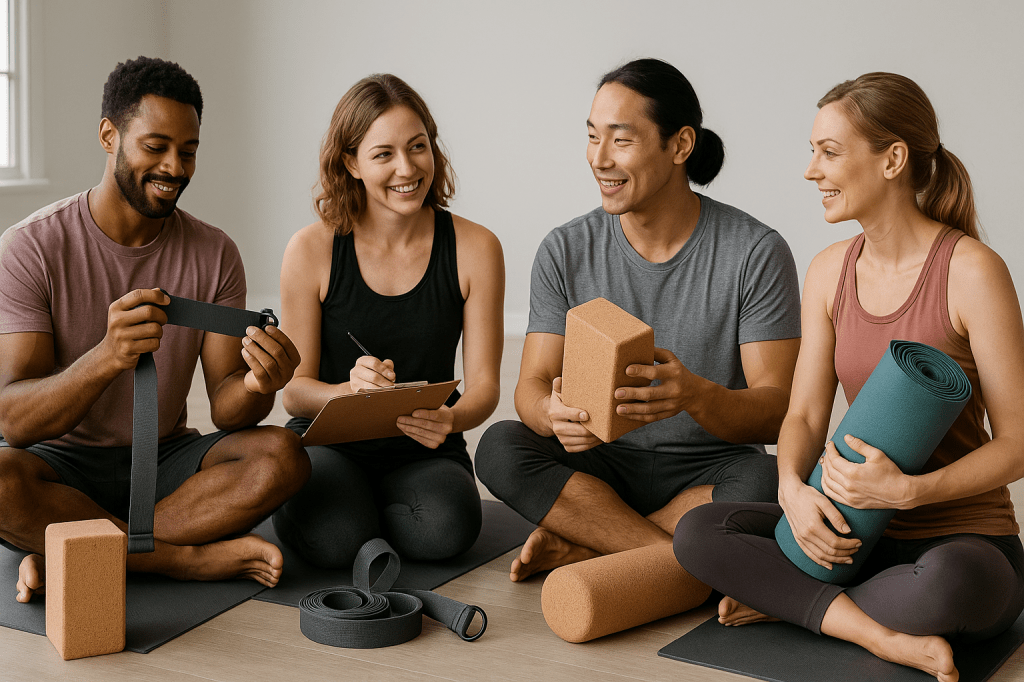
Yoga is a deeply personal and transformative practice. Whether you’re perfecting your Warrior II or just finding time to breathe, the right tools can make all the difference. This guide highlights gym equipment essentials for yogis—complete with reviews, tips, and step-by-step instructions—to help you build a well-rounded, supportive yoga space.

Why Equipment Matters for Your Yoga Practice

The right yoga gear does more than make your setup look good. It offers comfort, support, and structure, helping you move more freely while reducing the risk of injury. With this list, you’ll be able to practice smarter and safer.

  1. Premium Yoga Mat

Purpose: A yoga mat offers a stable, cushioned surface to support comfort and traction during your sessions.

How to Use:

Roll out the mat on a flat surface.

Ensure the grippy or textured side of the mat is facing upward for better traction during your practice.

Use alignment lines (if available) to position hands and feet in poses like Downward Dog.

Suggested: Manduka PRO Yoga Mat – Known for its dense cushioning, it’s ideal for joint support and designed for long-term use.

  1. Yoga Blocks

Purpose: Yoga blocks are useful tools for enhancing stability, improving flexibility, and supporting proper posture during poses.

How to Use:

For hamstring stretches: Place one block under each hand in a forward fold if your hands don’t touch the floor.

For support: Use under your sacrum in Bridge Pose for a supported version.

For seated poses: Use a block to elevate your hips, which can help alleviate strain on your knees and hips.

Suggested: Gaiam Cork Yoga Blocks — Durable, environmentally friendly, and offering a comfortable, natural texture for grip.

  1. Yoga Strap

Purpose: A yoga strap helps you reach farther and hold stretches longer without putting undue strain on your muscles.

How to Use:

Seated Forward Stretch: Sit with your legs extended straight ahead. Wrap the strap around the bottoms of your feet and carefully pull yourself forward, maintaining a long, straight spine.

Shoulder Stretch: Grasp the strap behind your back with both hands and gradually raise it to gently open and stretch your shoulders.

Reclined Leg Stretch: While lying on your back, loop the strap around one foot and slowly raise your leg toward the ceiling, keeping it straight for an effective hamstring stretch.

Recommended: Jade Yoga Strap — Known for its durability and adjustable metal D-rings.

  1. Foam Roller

Purpose: Foam rollers are excellent for muscle recovery, helping to ease tightness and improve blood flow.

How to Use:

To ease tight quadriceps: Lie face down and position the foam roller beneath your thighs. Gently roll from your hips toward your knees to help loosen the muscles.

For back relief: Sit on the floor with the roller positioned behind you. Carefully lean back and move slowly along your spine to massage and relax the muscles.

Pre- or Post-Yoga: Spend 5 to 10 minutes rolling key muscle groups to enhance flexibility and reduce soreness.

Recommended: TriggerPoint GRID Foam Roller — Features a firm, textured surface designed for deep muscle relief.

  1. Meditation Cushion

Purpose: Meditation cushions support correct posture and increase comfort during longer sitting sessions.

How to Use:

Zafu (round cushion): Sit upright near the front edge of the cushion, crossing your legs comfortably before you.

Benefit: Raising the hips slightly tilts the pelvis forward, helping to maintain a natural and upright spinal alignment.

Suggested: Hugger Mugger Zafu & Zabuton Set — Provides sturdy support and includes a removable, washable cover for convenience.

Tips for Choosing Your Yoga Gear

Test materials: When trying out new gear, make sure to check the return policy, especially if you’re unsure about the feel or firmness.

Consider portability: If you often practice at different locations, opt for equipment that’s lightweight and easy to transport.

Research gear & reviews: Reading what fellow yogis have to say can give you valuable insights into a product’s performance and durability.

Stick with essentials first: Begin with a good mat, one block, and a strap—then build out as your practice deepens.

The Benefits of Having the Right Gear

Injury prevention: Props allow you to ease into poses safely.

Improved alignment: You’ll hold better posture without forcing your body.

Enhanced flexibility: Over time, supportive gear can help deepen your range of motion.

Increased consistency: When practice feels better, you’re more likely to return to the mat.

Final Word

The journey of a yogi is unique, but the tools that support it are often shared. Whether you’re seeking balance, flexibility, or peace of mind, these gym equipment must-haves offer exactly that. With trusted gear & reviews to guide your choices, your yoga practice can become not only more accessible—but more powerful.

Remember, it’s not about having everything. It’s about having the right things. Invest in your wellness, take your time exploring what fits, and enjoy the process. Namaste.

Categories
athletes beginners cardio & endurance cycling exercises fat loss Fitness fitness-tips flexibility flexibility & mobility home workout men mobility Muscle Gain recovery & wellness runners strength training stretching women

Cycling vs. Running: Which Is Better for Athletes?

For athletes serious about fitness and performance, cardio & endurance training is non-negotiable. Two of the most effective—and debated—methods are cycling and running. Each offers unique benefits, but the best choice depends on your body, your sport, and your training goals.

Below, we break down the benefits of each and include step-by-step instructions so you can integrate them into your fitness routine effectively.

Running: High-Impact, High-Return

Why athletes use it: Running is a classic way to build cardio endurance, shed fat, and enhance mental resilience.

How to Use Running for Athletic Training

  1. Start with short, slow runs:

Beginner: 2–3 runs per week, 20–30 minutes each.

Focus on easy pace, where you can still hold a conversation.

  1. Build endurance safely:

Increase your distance by no more than 10% per week to avoid injury.

Add one longer run per week for endurance-building.

  1. Add intervals for performance:

1–2x/week, include short sprints (e.g., 30s fast, 90s recovery x 6 rounds).

This improves speed and cardiovascular capacity.

  1. Recovery is key:

Use foam rolling, stretching, and rest days.

Always listen to your body—shin splints and knee pain are early warning signs.

Cycling: Low-Impact Power Builder

Why athletes use it: Cycling builds serious leg strength and cardio fitness with less impact on joints.

How to Use Cycling for Athletic Training

  1. Choose your setup:

Outdoor bike for long rides and natural terrain challenges.

Stationary or spin bike for convenience and interval workouts.

  1. Begin with base rides:

3x/week, 45–60 minutes at a steady, moderate pace.

Keep RPMs (cadence) between 80–100 for efficiency.

  1. Incorporate interval training:

Example: 5 rounds of 1-minute sprint + 2 minutes easy pedaling.

Builds both speed and endurance while staying joint-friendly.

  1. Add resistance:

Use hills or gear tension to simulate climbing.

Great for strength and sport-specific conditioning (e.g., soccer, skiing).

  1. Don’t skip recovery rides:

Easy 30-minute spin sessions on off-days help promote blood flow and aid muscle repair.

Choosing What’s Best for You

Here’s a quick guide to help you decide:

Goal Go With Why
Max calorie burn Running Higher energy output per minute
Joint health Cycling Less impact on knees/ankles
Build mental toughness Running Pushes through physical discomfort
Cross-train or rehab Cycling Safe for injured or sore athletes
Explosive leg strength Cycling Simulates power output sports like sprinting or skating

Tips for Balancing Both in Your Routine

  1. Mix it up:

Alternate running and cycling days to avoid burnout or injury.

  1. Prioritize based on season:

In off-season? Use cycling to maintain endurance with lower impact.

Pre-season? Focus more on running for sport-specific conditioning.

  1. Track progress:

Use a fitness tracker or app to monitor distance, pace, heart rate, and recovery.

  1. Hydrate and fuel properly:

Endurance workouts demand serious nutrition. Don’t neglect pre- and post-training meals.

Final Thoughts

There’s no universal winner between running and cycling—they’re both powerful tools for building cardio & endurance. The smart athlete knows when and how to use each to complement performance, reduce injury risk, and meet specific fitness goals.

Whether you’re sprinting down a track or grinding up a hill on two wheels, the key is consistency, smart programming, and listening to your body.

Categories
athletes exercises Fitness fitness-tips flexibility Gym home workout men mobility recovery & wellness strength training stretching training women workouts yoga

Mindfulness Techniques for Flexibility Athletes

Flexibility athletes—whether you’re a yoga enthusiast, dancer, gymnast, or contortionist—know the importance of maintaining and improving range of motion. But flexibility is about more than just stretching; it’s deeply connected to recovery and wellness, and mindfulness plays a pivotal role in this holistic approach to fitness.

Why Mindfulness Matters for Flexibility Athletes

Incorporating mindfulness into your routine isn’t just a trendy wellness buzzword. Mindfulness—being fully present and aware during movement and recovery—helps athletes connect with their bodies on a deeper level. This connection promotes better control, reduces injury risk, and enhances recovery times.

Mindfulness Techniques That Boost Flexibility and Recovery (with Instructions)

  1. Focused Breathing During Stretching

Breathing deeply and mindfully during stretches relaxes muscles and improves flexibility. Here’s how to do it:

Find a comfortable stretch position that you can hold for 20-30 seconds without pain.

When you’re comfortable, softly close your eyes to improve your focus.

Slowly inhale through your nose for a count of four, feeling your stomach lift as you breathe in.

Hold the breath gently for around two seconds.

Then, release the air steadily through your mouth over a count of six, imagining the muscle tension melting away as you exhale.

Repeat this breathing cycle 3–5 times while maintaining the stretch.

  1. Body Scan Meditation Post-Workout

A body scan helps identify and release muscle tension after training. Follow these steps:

Lie down comfortably on your back in a quiet space.

Close your eyes and take three deep breaths, relaxing your body with each exhale.

Slowly bring your attention to your toes. Notice any sensations—warmth, tightness, or ease.

Gradually move your focus upward to your feet, ankles, calves, knees, thighs, hips, abdomen, chest, back, shoulders, arms, neck, and finally your head.

As you notice tension, imagine breathing into that area and releasing the tightness on each exhale.

Spend 5–10 minutes completing the scan.

  1. Mindful Movement Practices

Deliberate, gentle movements help improve both your body’s awareness and its ability to stretch. Try this simple routine:

Choose 5–10 minutes for a gentle flow, such as a slow yoga sequence or tai chi basics.

Move deliberately from one posture to another, paying attention to how each joint feels.

Breathe naturally and keep your focus on the sensation of movement.

If your mind wanders, gently bring it back to your body.

Take your time, letting your breathing and movements flow together naturally.

  1. Visualization Techniques

Mental imagery supports physical flexibility by calming the mind and motivating your practice. Here’s how to practice:

Sit or lie down in a relaxed position. Close your eyes.

Take a few deep breaths to center yourself.

Picture your muscles lengthening and becoming supple as you stretch. Visualize your joints moving freely without resistance or pain.

Imagine warmth and healing energy flowing into any tight or sore areas.

Spend 3–5 minutes in this visualization before or after your workout.

The Benefits of Combining Mindfulness with Flexibility Training

Enhanced Recovery & Wellness: Mindfulness promotes relaxation and reduces stress hormones, which accelerates muscle repair and decreases soreness.

Improved Flexibility & Performance: Being mindful during stretches encourages you to listen to your body’s limits, avoiding overstretching while gradually expanding your range.

Better Mental Clarity & Focus: Mindfulness helps reduce distractions, allowing you to fully engage with your fitness routine and maintain consistency.

Injury Prevention: Awareness of body sensations helps detect early signs of strain or fatigue, leading to smarter training decisions.

Getting Started: Practical Tips

Spend 5 to 10 minutes daily focusing on mindful breathing or performing a body scan.

Explore mindfulness apps designed specifically for athletes or flexibility exercises to guide your practice.

Make mindfulness a regular part of both your warm-up and cool-down sessions.

Keep a journal to track how mindfulness impacts your flexibility progress and recovery.

By weaving mindfulness into your flexibility routine, you’re investing in your body’s long-term health and performance. With these easy-to-follow instructions, recovery and wellness become a natural and enjoyable part of your fitness journey.

Categories
athletes exercises Fitness Muscle Gain strength training

Build Muscle with These Athletes’ Compound Exercises

When it comes to building muscle and enhancing athletic performance, compound exercises are the cornerstone of effective strength training. Unlike isolation moves that target a single muscle, compound exercises engage multiple muscle groups simultaneously, making them a time-efficient and powerful way for athletes to increase strength, improve fitness, and reduce injury risk.

Why Compound Exercises Matter for Athletes

Athletes rely on functional strength — the ability to perform movements that mimic real-world activities or their specific sport. Compound exercises perfectly align with this goal because they replicate multi-joint motions, promote muscle coordination, and boost overall power.

By incorporating compound lifts into your training routine, you stimulate greater muscle activation, leading to improved muscle growth and strength gains. Additionally, these exercises enhance core stability and joint health, essential for athletic longevity.

Top Compound Exercises for Muscle Building and Athletic Fitness

Here are some foundational compound exercises every athlete should consider, along with step-by-step instructions to perform them safely and effectively:

  1. Squats

Targets: Quadriceps, hamstrings, glutes, core, and stabilizing muscles.

How to Perform a Squat:

Place your feet roughly between hip and shoulder width, allowing your toes to angle outward slightly.

Engage your core and keep your chest up.

Gradually lower yourself by bending at the hips and knees, as though you’re lowering into a seated position.

Lower yourself until your thighs are roughly parallel to the floor, or as far as your flexibility comfortably permits.

Drive upward by pressing firmly through your heels to rise back to the starting stance.

Make sure your knees stay aligned with your toes during the entire motion.

  1. Deadlifts

Targets: Hamstrings, glutes, lower back, traps, and grip.

How to Perform a Deadlift:

Set your feet about hip-width apart and position the barbell just in front of your shins.

Hinge at your hips and bend your knees to grasp the bar with hands just outside your knees.

Tighten your core muscles, maintain a straight back, and keep your chest upright.

Drive upward by pushing firmly through your heels, extending your hips and knees while keeping the barbell close to your body during the lift.

Once fully upright, begin lowering the bar by first hinging at your hips, followed by bending your knees in a controlled manner.

  1. Bench Press

Targets: Chest, shoulders, triceps.

How to Perform a Bench Press:

Position yourself flat on the bench with your feet planted solidly on the ground for stability.

Grip the bar with your hands placed slightly wider than shoulder distance.

Carefully lift the bar off the rack and begin lowering it in a controlled motion toward the center of your chest.

As you lower the bar, keep your elbows angled roughly 45 degrees away from your body.

Press the bar upward until your arms are extended, keeping the motion steady and controlled.

Avoid snapping your elbows straight; instead, stop just short of full lockout to maintain muscle tension.

  1. Pull-Ups and Chin-Ups

Targets: Upper back, biceps, grip strength.

How to Perform a Pull-Up:

Grab the pull-up bar with your palms facing away for a pull-up or toward you for a chin-up, placing your hands roughly shoulder-width apart.

Hang with your arms fully extended.

Activate your upper back muscles and begin pulling yourself upward by bending your elbows, aiming to bring your chest close to the bar.

Perform the movement with control, avoiding any swinging or using momentum to assist.

Lower yourself down slowly and with control until your arms are fully extended.

Overhead Press
Muscle Groups Worked: Shoulders, triceps, upper chest.

How to Perform the Overhead Press:

Position your feet about shoulder-width apart and hold a barbell or dumbbells at shoulder level, keeping your palms facing forward.

Tighten your core muscles and maintain a neutral, straight spine throughout the movement.

Raise the weight above your head until your arms are fully extended.

Avoid arching your back; keep your ribs down and core tight.

Slowly lower the weight back to shoulder height.

Tips for Effective Strength Training with Compound Movements

Focus on Form First: Proper technique is critical. Begin with lighter loads to perfect your technique before increasing the weight.

Progressive Overload: Gradually increase weights or reps to continuously challenge muscles and stimulate growth.

Balanced Routine: Incorporate compound exercises targeting all major muscle groups to avoid imbalances and reduce injury risk.

Adequate Recovery: Strength training is intense; allow muscles time to repair and grow with rest days and proper nutrition.

The Benefits Beyond Muscle Growth

Compound exercises do more than build muscle. For athletes, they:

Enhance coordination and balance by requiring multiple muscles and joints to work together.

Improve cardiovascular fitness due to their demand on large muscle groups.

Support functional movement patterns, making athletic performance more efficient and powerful.

Reduce injury risk through strengthened muscles and improved joint stability.

Incorporating compound exercises into your strength training routine is a proven way to build muscle and elevate your athletic fitness. By focusing on these foundational movements and following smart training principles, you can unlock your full potential and enjoy the benefits of enhanced strength, performance, and overall wellness.

Categories
athletes cardio cardio & endurance exercises fat loss Fitness flexibility & mobility Gym yogis

Top Cardio Exercises for Yogis Lovers

If your usual go-to is a calming yoga flow, you might not think of cardio as a natural fit. But if you’re looking to improve stamina, boost heart health, or simply find more energy throughout your day, mixing cardio & endurance work into your wellness routine can deeply enhance your overall fitness.

This guide is designed for yogis who want to maintain their mind-body connection while exploring movement that elevates the heart rate in a sustainable, mindful way.

Why Should Yogis Add Cardio?

Yoga builds strength, balance, and flexibility—but it often lacks the sustained intensity needed to challenge your cardiovascular system. Adding 2–3 cardio sessions per week can:

Boost your endurance for long practices

Improve oxygen flow for breathwork (pranayama)

Enhance circulation and cardiovascular health

Help with detoxification through sweat

Balance a sedentary lifestyle if you sit often during the day

Best Cardio Exercises for Yogis (With Instructions)

These exercises are gentle on the joints, accessible for all levels, and easy to integrate into a yoga-friendly lifestyle.

  1. Walking or Hiking

Why it works: Low-impact, meditative, and great for stamina.

How to do it:

Aim for 30–45 minutes, 3–4 times per week.

Focus on maintaining an upright posture and relaxed breath.

If you walk after yoga, let your body stay in “flow mode” by moving mindfully, not briskly.

Try breath syncing: inhale for 4 steps, exhale for 4 steps.

Tip: Nature walks offer grounding benefits—perfect for yogis who practice mindfulness or meditation.

  1. Jump Rope

Why it works: Builds coordination and raises your heart rate quickly.

How to do it:

How to Get Started with Jump Rope:

Begin with short bursts—jump for about 30 seconds, then take a 30-second break.

Complete 5 cycles to keep the session around 5 minutes.

Keep your elbows tucked in and aim for quick, light jumps—think of it more like bouncing than leaping.

Focus on soft landings to ease pressure on your joints; imagine you’re skipping quietly on a yoga mat.

Pro tip: Use jump rope as a warm-up before a vinyasa session to get your blood flowing and loosen up tight muscles.

  1. Swimming

Why it works: Full-body, low-impact, and breath-focused.

How to do it:

Swim laps for 20–30 minutes, mixing strokes (freestyle, breaststroke).

Focus on steady, rhythmic breathing—inhale through the mouth, exhale through the nose if possible.

Alternate your pace—swim two laps at a relaxed speed, then follow with one lap at a more vigorous effort.

Tip: Swimming pairs beautifully with yoga’s emphasis on breath control and fluid motion.

  1. Dance or Free Movement

Why it works: Cardio disguised as joy. Great for creativity and emotional release.

How to do it:

Put on your favorite playlist.

Set a timer for 10–20 minutes.

Move freely—there’s no “right” way.

Let your breath and body lead. Don’t think; just move.

Tip: Follow up with a short yin yoga sequence to integrate and settle your energy.

  1. Bodyweight Intervals (Yoga + HIIT Hybrid)

Why it works: Increases heart rate while using functional movement that supports yoga poses.

How to do it:

Perform the following as a 10-minute circuit, 2–3 rounds:

Exercise Duration Instruction
Jumping Jacks 30 seconds Keep shoulders relaxed, land lightly

High Knees 30 seconds Bring knees to hip height, engage your core

Mountain Climbers 30 seconds Keep a strong plank shape, drive knees forward

Rest 30 seconds Breathe deeply and reset posture

Chair Pose Pulses 30 seconds From utkatasana, pulse 2–3 inches up/down slowly

Plank to Down Dog 30 seconds Flow between poses for breath and shoulder mobility

Suggestion: Wrap up your session with a calming pose like savasana or a gentle reclining twist to help your body unwind.

How to Combine Cardio & Yoga

Below is a practical example of how you can organize your weekly schedule:

Day AM PM

Monday Light walk (30 min) Yin Yoga (20–30 min)

Tuesday Vinyasa Yoga (45 min) –

Wednesday Swimming (20–30 min) Gentle stretching

Thursday HIIT-style circuit (20 min) Meditation (10 min)

Friday Rest or easy hike Restorative Yoga

Saturday Free dance (15 min) Flow Yoga

Sunday Long walk or rest Journaling + breathwork

Final Thoughts
Cardio & endurance exercises don’t compete with your yoga—they complement it. When done mindfully, they boost energy, deepen awareness, and improve your resilience both on and off the mat. Start small, listen to your body, and let your practice evolve to support your full fitness potential.

Categories
athletes exercises home workout men Muscle Gain recovery & wellness strength training training Uncategorized yogis

Full Body Strength Workout with Yogis

For yogis, strength training can be a powerful complement to a regular yoga practice. While yoga develops flexibility, balance, and breath awareness, strength training enhances muscle support, stability, and joint health. When these practices are combined, they build a more functional, injury-resistant, and balanced body.

Why Strength Training Benefits Yogis
Many yogis assume strength training might “bulk them up” or reduce flexibility, but the truth is the opposite. Mindful resistance work helps deepen poses, stabilize transitions, and prevent injury by reinforcing the muscles that support joints. Strength doesn’t interfere with yoga—it enhances it.

Full Body Strength Workout for Yogis
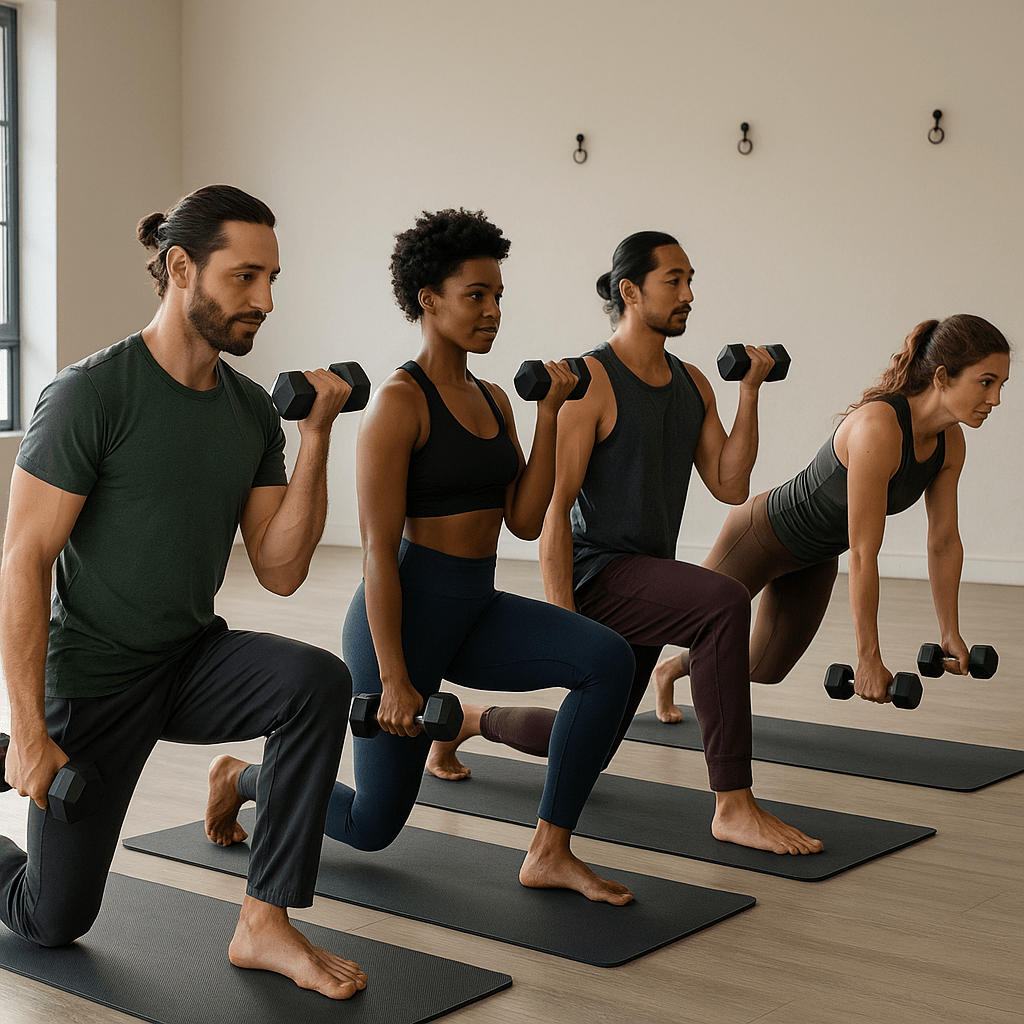
No machines or barbells required. Just your bodyweight, a pair of light-to-medium dumbbells, and optional resistance bands. Here’s a yogi-friendly routine to target all major muscle groups.

  1. Chair Pose to Overhead Press
    Muscles: Quads, glutes, shoulders
    Equipment: Dumbbells (optional)

Instructions:

Plant your feet about hip-width apart and bring the dumbbells up to shoulder level, keeping your elbows bent and close to your body.

Inhale as you sink into Chair Pose (Utkatasana), keeping weight in your heels.

Let the air out as you press the weights overhead, rising up tall with a straight, strong posture.

If you want it more poetic or more direct, just say the word!

Lower weights back to shoulders and repeat.

Reps: 3 sets of 10

  1. Plank Rows (Renegade Rows)
    Targets: Core, back, arms
    Gear: Dumbbells

Get into a solid high plank position, gripping the dumbbells just beneath your shoulders, and keep your whole body in a straight line from head to heels.

Engage your core and shift weight slightly to the left.

Row the right dumbbell toward your rib cage, elbow close to body.

Lower it with control and repeat on the other side.

Reps: 3 sets of 8 per side

  1. Glute Bridges
    Muscles: Glutes, hamstrings, lower back
    Equipment: Bodyweight or resistance band

Instructions:

Lie on your back with knees bent, feet flat and hip-width apart.

Arms down by your sides, palms facing the mat.

Inhale, then exhale as you press through your heels to lift hips.

Squeeze your glutes at the top, hold for a breath, then lower slowly.

Reps: 3 sets of 15

  1. Crescent Lunge with Bicep Curl
    Muscles: Legs, glutes, biceps, core
    Equipment: Dumbbells

Instructions:

Step the right foot forward into a deep lunge, back heel lifted.

Hold dumbbells at your sides, elbows close.

As you lower into the lunge, bring those weights up with a smooth curl.

Lower weights and switch sides after each set.

Reps: 3 sets of 10 per side

  1. Wall Sit Hold
    Muscles: Quads, glutes, calves
    Equipment: Wall

Instructions:

Position yourself with your back flat against a wall and step your feet forward about two feet, keeping them hip-width apart.

Slide gently down the wall until your thighs are parallel to the floor, like you’re sitting in an invisible chair, with your knees bent around a right angle.

Keep knees over ankles, core tight, and back flat.

Maintain the pose, keeping your hands free and off your legs for support.

Hold: 3 sets of 30 seconds

Tips for Integration into a Yoga Practice
Begin with breath: Approach each movement as a mindful flow, not a task.

Do this 1–2x per week: You don’t need daily lifting to see results.

Use yoga as recovery: Incorporate restorative flows on rest days.

Listen to your body: Just like yoga, strength work requires self-awareness.

Final Thoughts
When yogis begin strength training with intention and body awareness, it becomes an extension of their practice—not a disruption. Strength brings stability into postures, endurance into sequences, and resilience into daily life. Fitness doesn’t have to be a competition; it can be an exploration. With the right balance, your mat becomes both a place of flexibility and power.

Categories
athletes cardio exercises fat loss Fitness HIIT runners

HIIT Routine to Burn Fat in Runners Minutes

For runners who want to burn fat more efficiently and build cardio & endurance without doubling their training time, HIIT (High-Intensity Interval Training) is a game changer. In just 20 minutes or less, you can spike your metabolism, improve performance, and stay lean — no extra miles required.

What Makes HIIT So Effective for Runners?
HIIT alternates short bursts of intense activity with recovery periods, maximizing your heart rate and oxygen consumption. This not only helps burn fat during the workout but also continues to torch calories for hours afterward thanks to the afterburn effect (EPOC – Excess Post-exercise Oxygen Consumption).

For runners, this means a faster metabolism, stronger cardiovascular health, and improved endurance — all packed into less time than your usual long run.

Step-by-Step: HIIT Routine for Runners (Total Time: ~20 minutes)
You don’t need fancy equipment — just a stopwatch, some open space, and your running shoes.

Step 1: Warm-Up (5 Minutes)
Start with light movement to prepare your muscles and joints.

Instructions:

Jog at an easy pace for 3 minutes

Then do 2 minutes of dynamic stretches:

10 leg swings (each leg)

20 high knees

20 butt kicks

10 bodyweight squats

This helps increase blood flow and prevent injury.

Step 2: HIIT Main Set (12 Minutes)
You’ll alternate between sprinting and recovery. One round takes 2 minutes. Complete 4 total rounds.

Instructions (per round):

Sprint at 80–90% effort for 40 seconds

Walk or jog slowly for 1 minute 20 seconds

Tip:
You should feel winded by the end of each sprint but be able to recover enough to go again. Adjust intensity based on your fitness level.

Step 3: Cool-Down (3 Minutes)
Ease your body back to baseline and promote recovery.

Instructions:

Jog or walk at a very light pace for 2 minutes

End with 1 minute of deep breathing and static stretching

Focus on hamstrings, calves, quads, and hip flexors

Pro Tips for Better Results
Do this 2–3x per week on non-consecutive days for best results.

Hydrate and fuel properly post-workout — aim for protein + complex carbs.

Track progress using a fitness app or running watch.

Modify intensity based on goals (e.g., use hills for more resistance).

Benefits Beyond Fat Loss
Incorporating HIIT into your running routine helps you:

Boost overall cardio & endurance

Improve speed and power

Build mental resilience for race day

Burn fat more efficiently — even at rest

Final Thoughts
This HIIT routine isn’t just about cutting fat — it’s about training smarter. Runners who balance distance runs with short, powerful intervals often perform better, stay injury-free, and enjoy their workouts more.

So the next time you lace up, skip the long grind. Try this HIIT session and feel the difference — in both your pace and your physique.