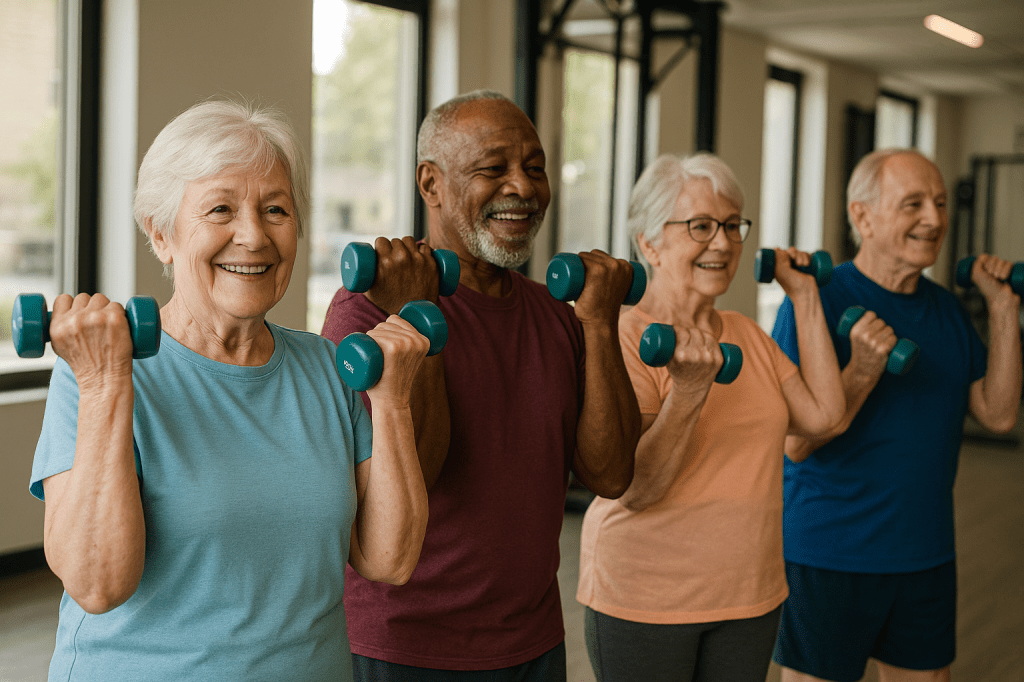
Staying active as we get older isn’t about doing more — it’s about moving with purpose. For older adults, strength training is one of the most effective ways to maintain muscle, boost vitality, and stay independent. One of the best ways to do that? Compound exercises.
These exercises work several muscles and joints at the same time, helping you build practical, full-body strength while improving coordination and balance. Whether you’re just starting out or easing back into a routine, this guide offers simple, senior-friendly exercises to help you gain strength safely and confidently.
Why Strength Training Is So Important for Seniors
As we get older, we naturally begin to lose muscle — a process that can affect how we move, balance, and even how efficiently our bodies burn calories. Adding strength training to your regular schedule can provide benefits such as:
Improve stability and reduce fall risk
Maintain or increase muscle mass
Support better posture and joint health
Boost metabolism and energy levels
Prevent falls and injuries
Strengthen bones and joints
Improve posture and reduce back pain
Boost confidence and mental clarity
And here’s the good news — it doesn’t take hours in the gym to feel stronger. With the right approach, a few short sessions per week can deliver real results.
Top Compound Exercises for Seniors (with Instructions)
You can perform these exercises either at home or in a fitness center, using minimal or no equipment. Always start with a short warm-up like marching in place or gentle arm swings for 3–5 minutes.
- Chair Squats
Muscles Worked: Legs, glutes, core
Instructions:
Stand facing a sturdy chair with your feet positioned hip-width apart.
Extend your arms straight ahead to help maintain balance as you move.
Slowly bend your knees and lower your body toward the chair.
Gently touch the seat with your hips — don’t sit fully — then press through your heels to stand back up.
Repeat 8–12 times.
Tip: Keep your back straight, and make sure your knees follow the direction of your toes as you lower down.
- Wall Push-Ups
Muscles Worked: Chest, shoulders, arms
Instructions:
Stand facing a wall, arms-length away.
Press your palms against the wall so they’re level with your shoulders.
Slowly bend your elbows and lean your body toward the wall with control.
Push back to your starting position.
Repeat 8–15 times.
Tip: Maintain a straight line from your head down to your heels throughout the movement. Don’t let your hips sag.
- Seated Band Rows
Muscles Worked: Upper back, biceps
Instructions:
Sit tall on a stable chair or bench with a resistance band firmly placed around the bottoms of your feet.
Grip the ends of the band with your hands, keeping your palms facing inward.
Draw the band toward your waist while keeping your elbows tucked in close to your body.
Squeeze your shoulder blades together, then slowly return.
Repeat 8–12 times.
Tip: Avoid shrugging your shoulders. Focus on your back doing the work.
- Step-Ups
Muscles Worked: Legs, glutes, balance
Instructions:
Stand facing a solid, low-height step or platform.
Place one foot on the step, press through your heel, and lift your other foot up.
Step back down, one foot at a time.
Alternate the leading leg.
Do 8–10 reps per leg.
Tip: Use a wall or railing for balance if needed. Go slow and controlled.
- Dumbbell or Bodyweight Deadlifts
Muscles Worked: Hamstrings, glutes, lower back
Instructions:
Stand with feet hip-width apart, holding light dumbbells (or with arms hanging naturally if using bodyweight).
With a flat back, hinge at your hips and lower the weights toward your knees or shins.
Squeeze your glutes and return to standing.
Repeat 8–12 times.
Tip: Think “hips back” rather than “bend over.” Don’t round your spine.
Getting Started: Safety Tips for Seniors
Check with your healthcare provider before beginning any new workout program.
Warm up first with gentle movement to get your blood flowing.
Use proper form — quality matters more than quantity.
Stay hydrated and rest between sets if needed.
Start slow — 2 to 3 sessions per week is a great beginning.
Stop if you feel pain (a little soreness is normal, but sharp pain isn’t).
Final Thoughts
Building strength doesn’t require bulky weights or specialized gear. With the right exercises — done consistently — you’ll feel stronger, more balanced, and more capable in everyday life. Strength training is one of the most effective ways seniors can protect their health, independence, and confidence.
Start where you are. Progress at your pace. And remember: every rep is a step toward a stronger you.
 Fitness Guide