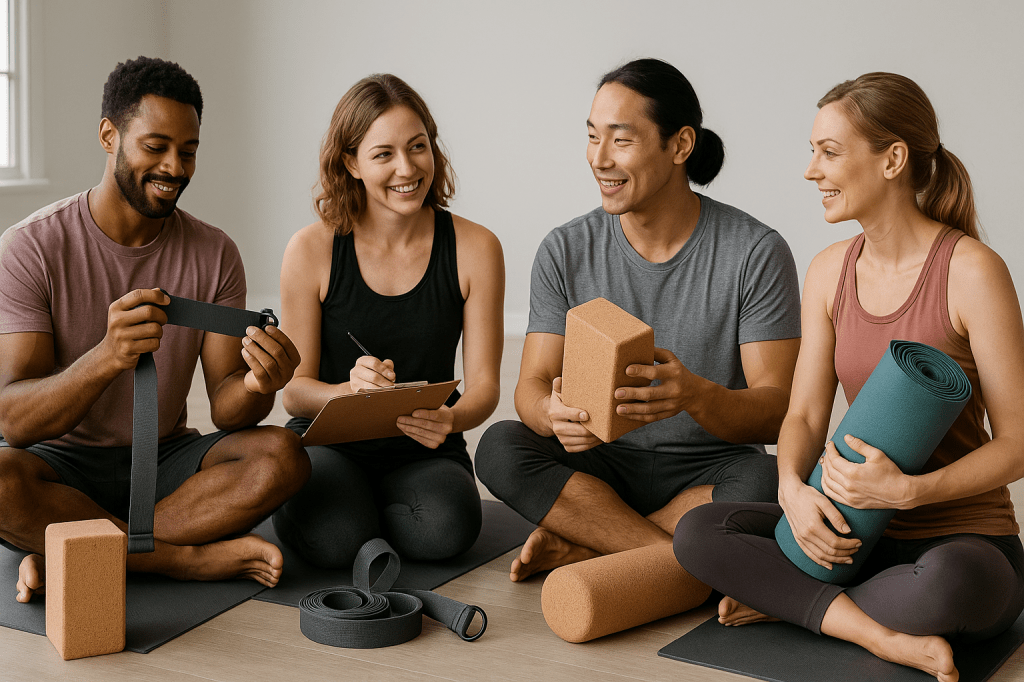
Yoga is a deeply personal and transformative practice. Whether you’re perfecting your Warrior II or just finding time to breathe, the right tools can make all the difference. This guide highlights gym equipment essentials for yogis—complete with reviews, tips, and step-by-step instructions—to help you build a well-rounded, supportive yoga space.
Why Equipment Matters for Your Yoga Practice
The right yoga gear does more than make your setup look good. It offers comfort, support, and structure, helping you move more freely while reducing the risk of injury. With this list, you’ll be able to practice smarter and safer.
- Premium Yoga Mat
Purpose: A yoga mat offers a stable, cushioned surface to support comfort and traction during your sessions.
How to Use:
Roll out the mat on a flat surface.
Ensure the grippy or textured side of the mat is facing upward for better traction during your practice.
Use alignment lines (if available) to position hands and feet in poses like Downward Dog.
Suggested: Manduka PRO Yoga Mat – Known for its dense cushioning, it’s ideal for joint support and designed for long-term use.
- Yoga Blocks
Purpose: Yoga blocks are useful tools for enhancing stability, improving flexibility, and supporting proper posture during poses.
How to Use:
For hamstring stretches: Place one block under each hand in a forward fold if your hands don’t touch the floor.
For support: Use under your sacrum in Bridge Pose for a supported version.
For seated poses: Use a block to elevate your hips, which can help alleviate strain on your knees and hips.
Suggested: Gaiam Cork Yoga Blocks — Durable, environmentally friendly, and offering a comfortable, natural texture for grip.
- Yoga Strap
Purpose: A yoga strap helps you reach farther and hold stretches longer without putting undue strain on your muscles.
How to Use:
Seated Forward Stretch: Sit with your legs extended straight ahead. Wrap the strap around the bottoms of your feet and carefully pull yourself forward, maintaining a long, straight spine.
Shoulder Stretch: Grasp the strap behind your back with both hands and gradually raise it to gently open and stretch your shoulders.
Reclined Leg Stretch: While lying on your back, loop the strap around one foot and slowly raise your leg toward the ceiling, keeping it straight for an effective hamstring stretch.
Recommended: Jade Yoga Strap — Known for its durability and adjustable metal D-rings.
- Foam Roller
Purpose: Foam rollers are excellent for muscle recovery, helping to ease tightness and improve blood flow.
How to Use:
To ease tight quadriceps: Lie face down and position the foam roller beneath your thighs. Gently roll from your hips toward your knees to help loosen the muscles.
For back relief: Sit on the floor with the roller positioned behind you. Carefully lean back and move slowly along your spine to massage and relax the muscles.
Pre- or Post-Yoga: Spend 5 to 10 minutes rolling key muscle groups to enhance flexibility and reduce soreness.
Recommended: TriggerPoint GRID Foam Roller — Features a firm, textured surface designed for deep muscle relief.
- Meditation Cushion
Purpose: Meditation cushions support correct posture and increase comfort during longer sitting sessions.
How to Use:
Zafu (round cushion): Sit upright near the front edge of the cushion, crossing your legs comfortably before you.
Benefit: Raising the hips slightly tilts the pelvis forward, helping to maintain a natural and upright spinal alignment.
Suggested: Hugger Mugger Zafu & Zabuton Set — Provides sturdy support and includes a removable, washable cover for convenience.
Tips for Choosing Your Yoga Gear
Test materials: When trying out new gear, make sure to check the return policy, especially if you’re unsure about the feel or firmness.
Consider portability: If you often practice at different locations, opt for equipment that’s lightweight and easy to transport.
Research gear & reviews: Reading what fellow yogis have to say can give you valuable insights into a product’s performance and durability.
Stick with essentials first: Begin with a good mat, one block, and a strap—then build out as your practice deepens.
The Benefits of Having the Right Gear
Injury prevention: Props allow you to ease into poses safely.
Improved alignment: You’ll hold better posture without forcing your body.
Enhanced flexibility: Over time, supportive gear can help deepen your range of motion.
Increased consistency: When practice feels better, you’re more likely to return to the mat.
Final Word
The journey of a yogi is unique, but the tools that support it are often shared. Whether you’re seeking balance, flexibility, or peace of mind, these gym equipment must-haves offer exactly that. With trusted gear & reviews to guide your choices, your yoga practice can become not only more accessible—but more powerful.
Remember, it’s not about having everything. It’s about having the right things. Invest in your wellness, take your time exploring what fits, and enjoy the process. Namaste.
 Fitness Guide