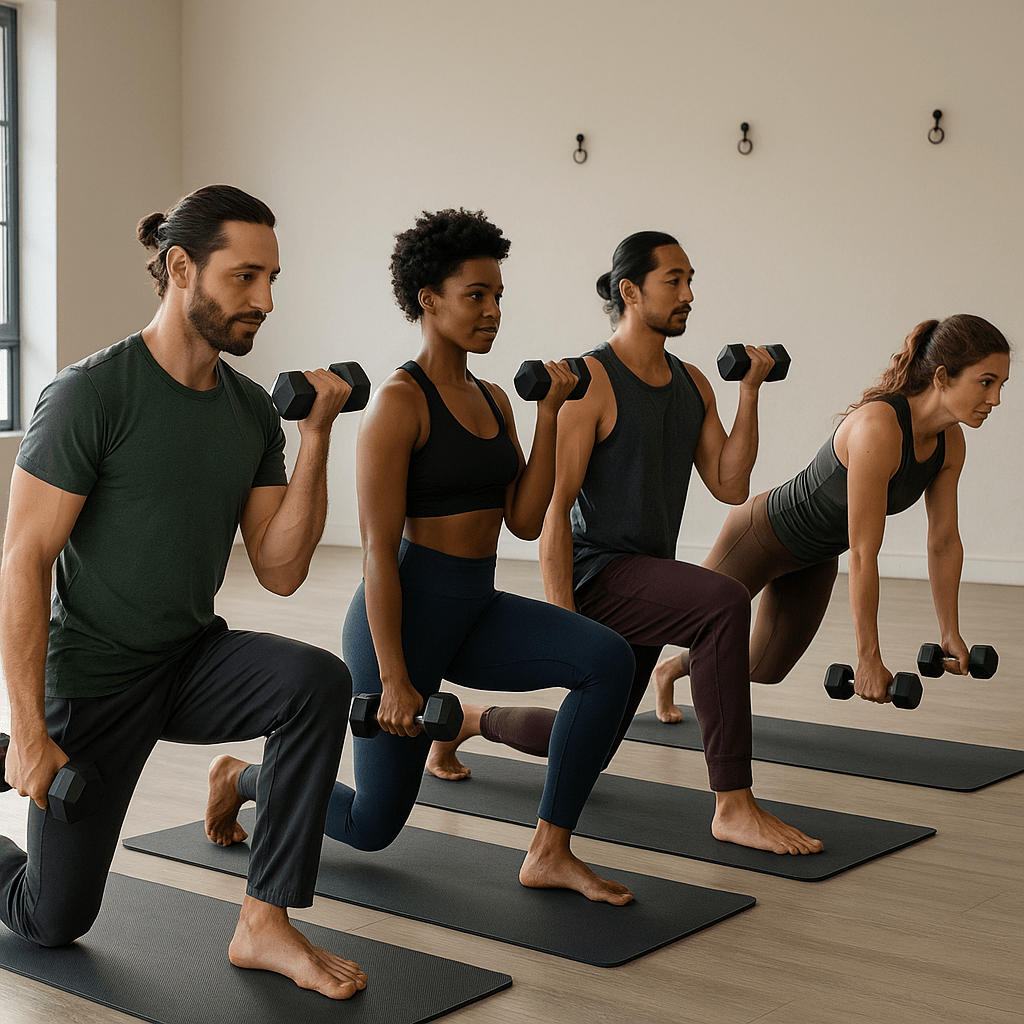
For yogis, strength training can be a powerful complement to a regular yoga practice. While yoga develops flexibility, balance, and breath awareness, strength training enhances muscle support, stability, and joint health. When these practices are combined, they build a more functional, injury-resistant, and balanced body.
Why Strength Training Benefits Yogis
Many yogis assume strength training might “bulk them up” or reduce flexibility, but the truth is the opposite. Mindful resistance work helps deepen poses, stabilize transitions, and prevent injury by reinforcing the muscles that support joints. Strength doesn’t interfere with yoga—it enhances it.
Full Body Strength Workout for Yogis
No machines or barbells required. Just your bodyweight, a pair of light-to-medium dumbbells, and optional resistance bands. Here’s a yogi-friendly routine to target all major muscle groups.
- Chair Pose to Overhead Press
Muscles: Quads, glutes, shoulders
Equipment: Dumbbells (optional)
Instructions:
Plant your feet about hip-width apart and bring the dumbbells up to shoulder level, keeping your elbows bent and close to your body.
Inhale as you sink into Chair Pose (Utkatasana), keeping weight in your heels.
Let the air out as you press the weights overhead, rising up tall with a straight, strong posture.
If you want it more poetic or more direct, just say the word!
Lower weights back to shoulders and repeat.
Reps: 3 sets of 10
- Plank Rows (Renegade Rows)
Targets: Core, back, arms
Gear: Dumbbells
Get into a solid high plank position, gripping the dumbbells just beneath your shoulders, and keep your whole body in a straight line from head to heels.
Engage your core and shift weight slightly to the left.
Row the right dumbbell toward your rib cage, elbow close to body.
Lower it with control and repeat on the other side.
Reps: 3 sets of 8 per side
- Glute Bridges
Muscles: Glutes, hamstrings, lower back
Equipment: Bodyweight or resistance band
Instructions:
Lie on your back with knees bent, feet flat and hip-width apart.
Arms down by your sides, palms facing the mat.
Inhale, then exhale as you press through your heels to lift hips.
Squeeze your glutes at the top, hold for a breath, then lower slowly.
Reps: 3 sets of 15
- Crescent Lunge with Bicep Curl
Muscles: Legs, glutes, biceps, core
Equipment: Dumbbells
Instructions:
Step the right foot forward into a deep lunge, back heel lifted.
Hold dumbbells at your sides, elbows close.
As you lower into the lunge, bring those weights up with a smooth curl.
Lower weights and switch sides after each set.
Reps: 3 sets of 10 per side
- Wall Sit Hold
Muscles: Quads, glutes, calves
Equipment: Wall
Instructions:
Position yourself with your back flat against a wall and step your feet forward about two feet, keeping them hip-width apart.
Slide gently down the wall until your thighs are parallel to the floor, like you’re sitting in an invisible chair, with your knees bent around a right angle.
Keep knees over ankles, core tight, and back flat.
Maintain the pose, keeping your hands free and off your legs for support.
Hold: 3 sets of 30 seconds
Tips for Integration into a Yoga Practice
Begin with breath: Approach each movement as a mindful flow, not a task.
Do this 1–2x per week: You don’t need daily lifting to see results.
Use yoga as recovery: Incorporate restorative flows on rest days.
Listen to your body: Just like yoga, strength work requires self-awareness.
Final Thoughts
When yogis begin strength training with intention and body awareness, it becomes an extension of their practice—not a disruption. Strength brings stability into postures, endurance into sequences, and resilience into daily life. Fitness doesn’t have to be a competition; it can be an exploration. With the right balance, your mat becomes both a place of flexibility and power.
 Fitness Guide